Taking Wegovy at Night? Why Timing Can Make or Break Your Results

Weight loss meds like GLP-1s have changed the game for so many people. For a long time, if you wanted semaglutide, your only option was a weekly shot. Now that daily pills exist, it’s way easier for anyone who hates needles to get in on the action.
Naturally, having a daily pill means figuring out how to fit it into your real life. One question that comes up all the time is super practical: Can I just take my Wegovy pill before bed?
Taking meds at night makes a lot of sense on paper. Mornings are usually chaotic, and it feels like taking it before sleep might help you sleep right through annoying side effects like a upset stomach. The short answer? No. Taking your Wegovy pill at night won’t work.
While the medication is super effective, it only works if your body actually absorbs it. Once you see what happens in your stomach when you swallow that tablet, it makes total sense why mornings are non-negotiable.
What Actually Happens When You Swallow the Pill
To understand why the clock matters so much, you have to look at how the tablet is built. The main ingredient in Wegovy is pretty delicate. If you swallowed it like a regular vitamin, your stomach acid would tear it apart in seconds before it ever hit your bloodstream.
To fix this, scientists added a clever little protective coating to the pill. When the tablet hits your stomach, that coating briefly creates a small “safe zone” around itself, dialing down the local acid just enough for the medicine to pass through your stomach lining.
Here’s the catch: that protective shield only works on a completely empty stomach. If there is any food, coffee, or even a glass of juice sitting in your belly, the shield gets destroyed instantly. Once that happens, your stomach acid burns up the medicine before your body can use it.
Why Bedtime Dosing Breaks the Medicine
Your stomach is rarely empty when you go to sleep. Even if you finish dinner by 6:00 PM, your digestive system is still hard at work hours later, especially if you had a late snack or a glass of wine. If you take your pill at night, it will almost certainly land on top of digesting food.
When that happens, the protective layer dissolves too early, your stomach digests the pill like a piece of food, and very little of the active medicine makes it into your blood. You end up wasting the dose, and your weight loss progress stalls out.
Study after study shows the same thing: people who strictly stick to the morning rules get great results. People who take the pill with food or too much liquid lose out on most of the benefits.
The Rulebook: How to Take It Right
The guidelines for this medicine aren’t just arbitrary rules they are the exact conditions required for the pill to actually work:
- Take it first thing in the morning: Right when your feet hit the floor.
- Sip a tiny bit of water: Use four ounces (about half a cup) max. Too much water dilutes the stomach environment the pill needs.
- Wait at least 30 minutes: Don’t eat, drink anything else (including coffee), or take other pills for at least half an hour. Waiting up to 60 minutes is even better if you can manage it.
Taking it at night isn’t an option if you want it to work. Empty stomach, morning light, that’s the magic combo.

Don’t Waste Your Money
Let’s be real, these medications are expensive. Whether you are paying out of pocket or navigating insurance copays, you want every single tablet to count.
Taking your pill at night basically neutralizes the medicine. You’re essentially flushing your money down the drain if your body can’t absorb the dose. Following the morning routine protects your investment and makes sure you’re actually getting what you paid for.
Pill vs. Shot: A Quick Reality Check
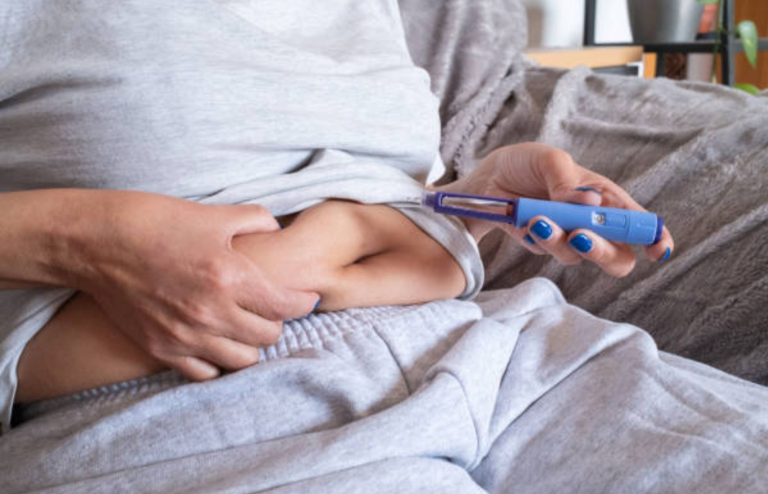
If you used to take a weekly injection, these strict rules might feel annoying. With the weekly shot, timing doesn’t matter much. You can do it morning or night, with or without food, because the needle delivers the drug into the fat under your skin, skipping your stomach completely.
The pill trades the pain of needles for the discipline of a routine. If you know you can’t commit to waiting 30 minutes for your morning coffee, the weekly shot might actually be a much better fit for your lifestyle.
Simple Ways to Make the Morning Routine Stick
Building a new habit takes a few days, but these small tricks make it effortless:
- Put it on your nightstand: Keep your pill bottle and a small glass of water right next to your alarm. Take it the second you wake up.
- Distract yourself during the wait: Use those mandatory 30 minutes to shower, pick out your clothes, or walk the dog. By the time you’re done getting ready, you’re clear to eat breakfast and grab your coffee.
Quick Questions People Ask
Can I drink black coffee with the pill?
Nope. Plain water only. Even plain black coffee kicks your stomach acid into high gear, which will ruin the pill. Save your coffee for after your 30-minute timer goes off.
What if I wake up at 2 AM to go to the bathroom?
Skip taking it then. Wait until you’re actually waking up for the day. Taking it in the middle of the night means it might run into dinner from earlier, blocking absorption.
Why do I feel nauseous in the morning?
Mild nausea is pretty common when starting GLP-1s while your body adjusts. However, taking the pill with too much water or eating too soon can make stomach upset worse. If it doesn’t fade after a few weeks, give your doctor a call.
What if I forget and eat breakfast right away?
Don’t panic, and do not take a second pill. Just accept that today’s dose won’t be as effective, and get back on track with your normal routine tomorrow morning.
Can I swallow my other morning pills at the same time?
No. Take your Wegovy pill completely on its own. Wait at least 30 minutes before taking any other daily prescriptions, vitamins, or supplements.
How does this version feel for your readers? If you want to tweak the tone or adjust any specific sections, just let me know!
References
Aroda, V. R., Rosenstock, J., Terauchi, Y., Altuntas, Y., Lalic, N. M., Morales, V. D., Jeppesen, O. K., Lindholm, A., & Buse, J. B. (2019). PIONEER 1: Randomized clinical trial of the efficacy and safety of oral semaglutide monotherapy in comparison with placebo in patients with type 2 diabetes. Diabetes Care, 42(9), 1724–1732. https://doi.org/10.2337/dc19-0749
Baekdal, T. A., Breitschaft, A., Donevan, S., Bæk, A. D., & Hartmann, B. (2021). Effect of various dosing schedules on the pharmacokinetics of oral semaglutide: A randomized trial in healthy subjects. Clinical Pharmacokinetics, 60(6), 781–792. https://doi.org/10.1007/s40262-020-00974-5
Buckley, S. T., Bækdal, T. A., Vegge, A., Maarbjerg, S. J., Pyke, C., Ahnfelt-Rønne, J., Madsen, K. G., Schjellerup, A. M., Bjerregaard, S., Jensen, L. B., Hartman, B., & Bæk, A. D. (2018). Transcellular stomach absorption and local absorption enhancing action of sodium N-(8-[2-hydroxybenzoyl] amino) caprylate (SNAC) with oral semaglutide. Science Translational Medicine, 10(467), Article eaar7047. https://doi.org/10.1126/scitranslmed.aar7047
Knop, F. K., Aroda, V. R., do Vale, R. D., Holst-Hansen, T., Laursen, P. N., Rosenstock, J., & Rubino, D. M. (2023). Oral semaglutide 50 mg once daily for obesity in adults (OASIS 1): A randomized, double-blind, placebo-controlled, phase 3 trial. The Lancet, 402(10403), 705–719. https://doi.org/10.1016/S0140-6736(23)01185-6