How Tirzepatide Supports Heart Health in Diabetes ?
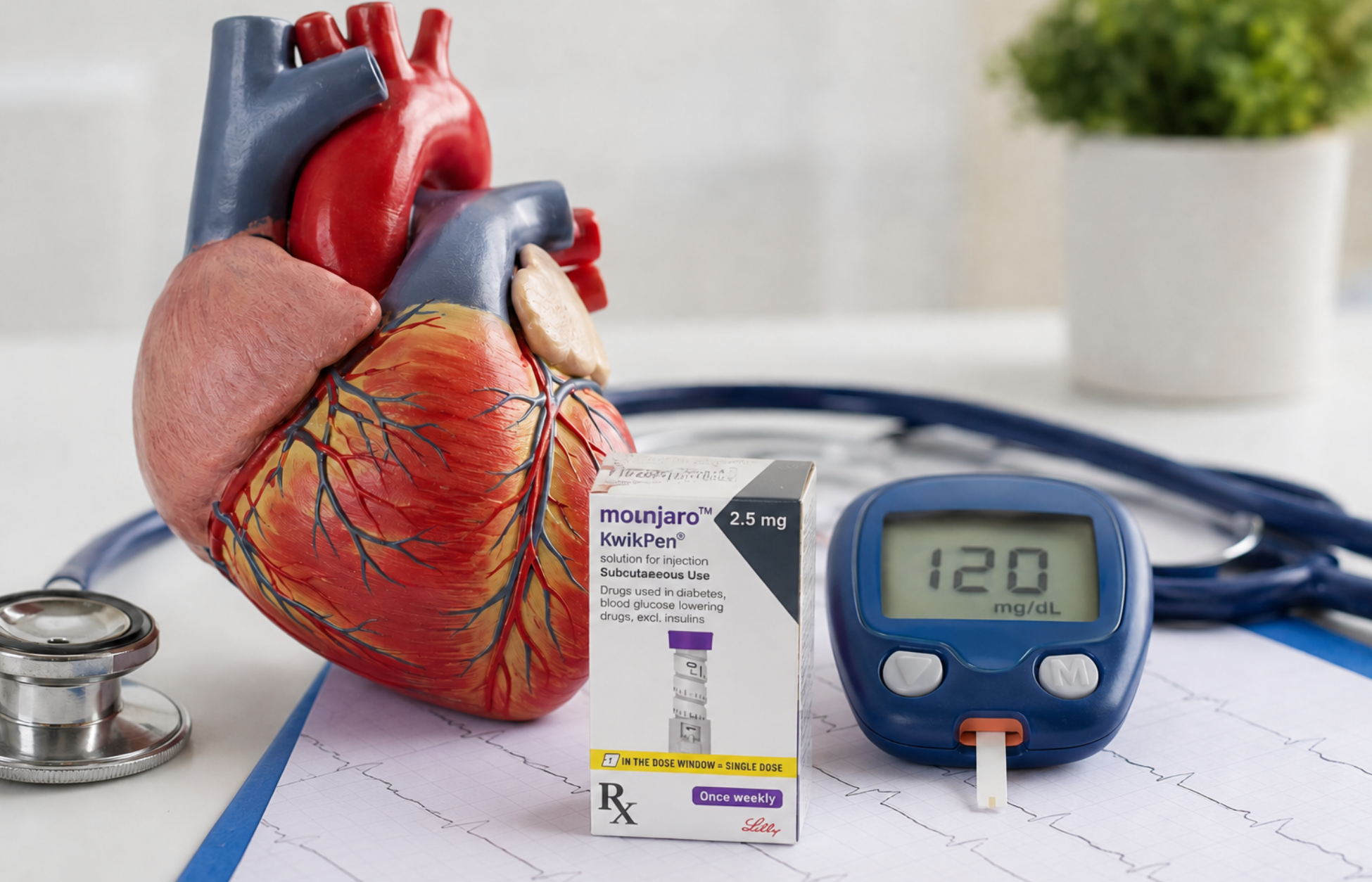
A major study published in The BMJ found that tirzepatide, sold under the brand name Mounjaro, may help protect heart health in adults with type 2 diabetes. The study focused on people who already had cardiovascular disease. The findings suggest that tirzepatide may reduce the risk of serious cardiovascular events.
Tirzepatide may also provide other important benefits. It can improve blood sugar control and support weight loss in people with type 2 diabetes. These results suggest that tirzepatide could offer benefits beyond blood sugar management. Its potential heart-protective effects may be especially important for people with type 2 diabetes and existing heart disease.
Researchers analyzed medical records from nearly 53,000 patients aged 40 and older. They compared about 35,000 people taking tirzepatide with more than 17,000 people taking sitagliptin. Sitagliptin is a common diabetes medication. However, it does not provide the same added heart protection as tirzepatide.
Over one year, patients taking tirzepatide had fewer serious heart problems than those taking sitagliptin. These included heart attacks, strokes, and deaths from cardiovascular causes.
About 2.9% of people taking tirzepatide experienced a major cardiovascular event. In comparison, 4.4% of those taking sitagliptin had one. This translates to a 32% lower overall risk. The biggest benefit came from a reduction in heart attacks. However, the risk of stroke was similar in both treatment groups.

Patients taking tirzepatide also had fewer hospital visits for infections and lower death rates overall. Because these extra benefits go beyond heart health, scientists want to do more research to figure out how the drug produces these effects in the body.
The study used careful statistical methods to mimic a controlled clinical trial, but real-world observational studies always have limits. For example, unmeasured lifestyle or health differences between patient groups might partly explain why people on tirzepatide did so well.
An editorial in the same medical journal urged caution. The authors pointed out that while heart attacks went down, stroke rates did not change, showing that the drug’s effects are somewhat mixed depending on the specific condition measured.
Another key detail was that about 21% of the patients were also taking SGLT-2 inhibitors, which are separate diabetes drugs known to protect the heart. Extra testing showed tirzepatide still had a clear benefit, but researchers cannot say for sure if it works better than optimized SGLT-2 inhibitor therapy on its own.
Overall, these findings match what doctors have seen with similar diabetes medications, such as GLP-1 drugs. Right now, the FDA approves tirzepatide for type 2 diabetes and weight management.
Doctors considering tirzepatide for patients with high heart risk should weigh this new evidence alongside standard treatments while waiting for results from full clinical trials.