GLP-1-Induced Skin Changes Drive Demand for Molecular-Grade Topical Interventions

The use of GLP-1 receptor agonists creates a secondary market for targeted topical treatments. Patients need these products to deal with skin issues that arise from rapid weight loss caused by medication. As a result, the personal care industry feels more pressure to develop products that meet these needs. To address this, AV Laboratories has introduced a molecular nourishment platform called AVL SOM3.
AV Laboratories bases its formulation approach on cellular science and stem cell research. Specifically, the AVL SOM3 technology includes 20 amino acids to help produce natural collagen and elastin. Master formulator Sylwia Pawlaczyk notes that rapid physical changes create new demands on the skin’s appearance. The formulations combine clinical actives with nutrients to improve structure, hydration, and barrier strength.
The biological reasons for GLP-1-related skin issues go beyond just fat loss. The company highlights that dermal white adipose tissue signaling, fibroblast activity, and collagen metabolism are important factors. Additionally, GLP-1 receptor agonists reduce appetite, which can lead to lower overall nutritional intake. As a result, not getting enough protein limits the amino acids necessary for healthy skin. Fast facial fat loss during GLP-1 treatment leads to sudden skin laxity. This situation results in quick disruptions to the support structures of the skin instead of slow, age-related changes. Because of this, the demand has grown for topical solutions that can help address this structural loss. The company shared its approach at a major world congress, aiming to connect metabolic medicine with long-term skin health.
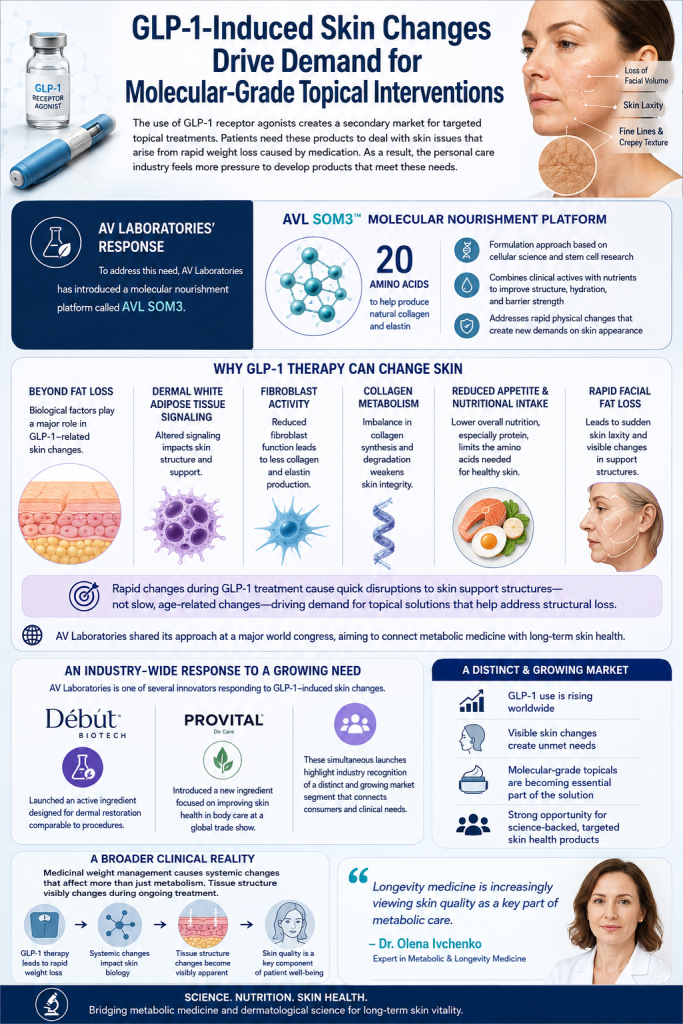
AV Laboratories is just one player responding to skin changes caused by GLP-1. For example, Debut has launched an active ingredient designed for dermal restoration comparable to procedures. Furthermore, Provital introduced a new ingredient aimed at improving skin health in body care at a global trade show. These simultaneous launches show that the industry recognizes a distinct and growing market segment that connects consumers and clinical needs.
The overlap of GLP-1 use and skin care product development reflects a broader clinical reality. Medicinal weight management causes systemic changes that affect more than just metabolism. For instance, tissue structure visibly changes during ongoing treatment. Dr. Olena Ivchenko points out that longevity medicine is increasingly viewing skin quality as a key part of metabolic care.