Oral Medication Prescriptions Surge as Development Pipeline Advances

According to recent research, the oral semaglutide formulation has a sizable lead in the developing pharmaceutical market. The top tablet recorded 18,410 prescriptions in its second week of commercial availability. During the same period, just 3,707 prescriptions were written for the main competitive oral medication. In the weight control market, this difference gives the company a significant early edge.
GLP-1 receptor agonists work by imitating the incretin hormone, which controls the stomach and suppresses appetite. Since needles frequently make patient adherence difficult, oral administration is a significant clinical achievement. These formulations also make it easier to treat type 2 diabetes and obesity over the long run. As a result, the oral section is extremely important for both public health and commerce.
Enrollment for a Phase 3 trial contrasting a novel combination therapy with tirzepatide has been completed. Cagrilintide and semaglutide are used in this experimental treatment to improve metabolic results. To ascertain the effectiveness of this direct comparison, preliminary data analysis is still in progress. These results will affect how weight control medications are positioned in the competitive market going forward.
By late 2026, regulatory officials anticipate making a decision regarding the novel combo therapy. The manufacturer is simultaneously seeking authorization in other important therapeutic areas. Recently, a Phase 3 trial for a sickle cell disease treatment achieved all of its main goals. In particular, the drug improved hemoglobin levels and decreased vaso-occlusive crisis rates by 27%.
In late 2026, the business intends to file regulatory papers for the sickle cell treatment. In addition, management plans to apply for a pediatric oral formulation. Investors have also received guidance from officials regarding next quarterly earnings reports. As a result, during those disclosures, the market expects more information about clinical trial outcomes.
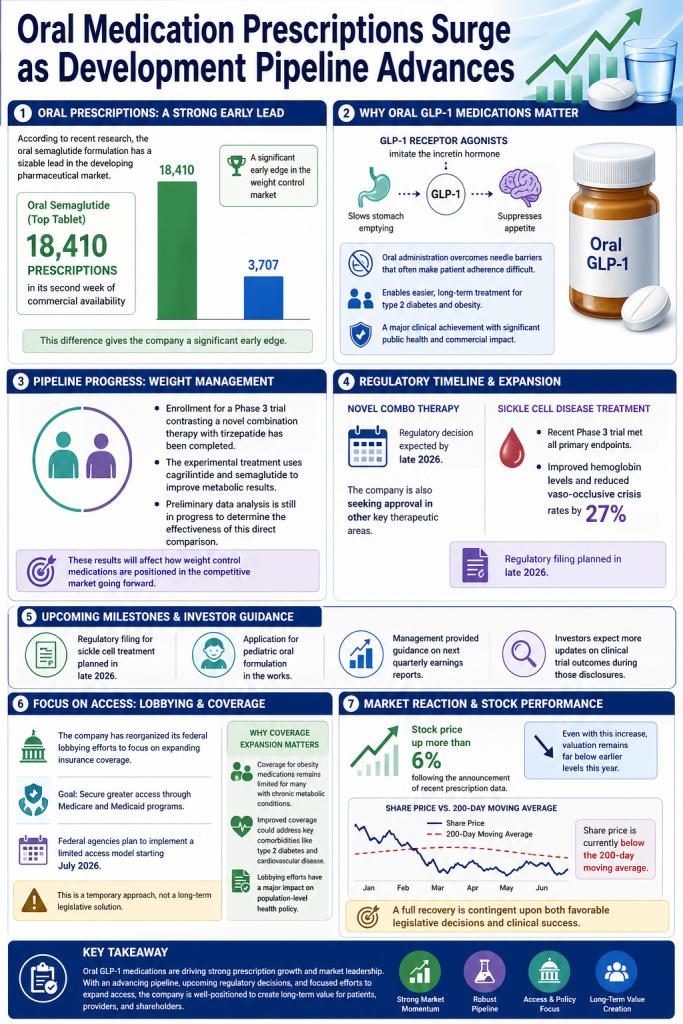
In order to concentrate on increasing insurance coverage, the organization has reorganized its federal lobbying activities. Securing more access through Medicare and Medicaid programs is the goal of this new strategic team. Federal agencies now intend to start using a limited access paradigm in July 2026. However, this scheme is not a long-term legislative solution, but rather a temporary one.
In government insurance frameworks, expanding coverage for obesity medications is still a problem. Access is currently restricted for many people with long-term metabolic disorders. Because of this, current lobbying efforts have a big impact on health policy at the population level. Comorbidities like type 2 diabetes and cardiovascular disease would probably be addressed by better coverage.
Following the announcement of recent prescription data, the company’s stock price increased by more than 6%. Even with this increase, the valuation is still far lower than it was earlier in the year. At the moment, the share price is below the 200-day moving average. Therefore, a full recovery is contingent upon both favorable legislative decisions and clinical success.