Endoscopic Procedure May Mitigate Weight Regain After Medication Discontinuation

Interim results from the REMAIN-1 clinical trial indicate a promising outpatient procedure. Duodenal mucosal resurfacing appears to reduce weight regain after patients stop tirzepatide therapy. Researchers analyzed data from forty-five participants over a six-month period. Along with this, the ongoing trial includes over three hundred patients.
This study evaluated adults with a body mass index between thirty and forty-five. These individuals achieved at least fifteen percent total body weight loss before stopping medication. Participants received either the active procedure or a sham treatment. Consequently, this method provides the first blinded and randomized evidence for this approach.
Tirzepatide acts as a dual receptor agonist for metabolic management. The intervention occurs at least one week after drug withdrawal. Researchers assigned participants to treatment groups using a two-to-one ratio. Given this, the interim analysis compared twenty-nine treated patients against sixteen sham controls.
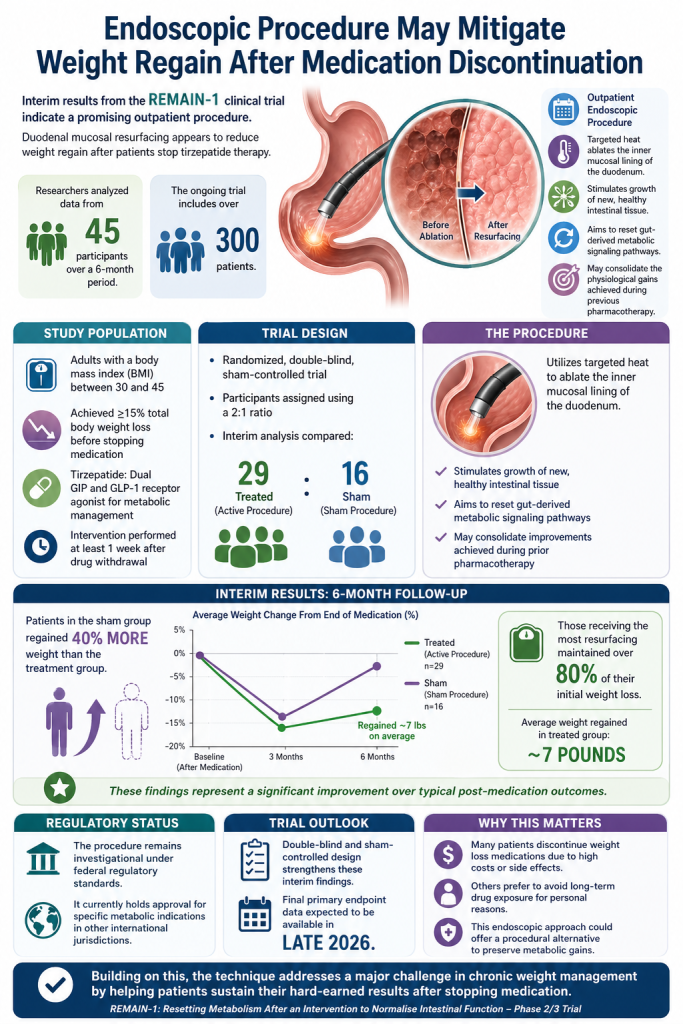
The procedure utilizes targeted heat to ablate the inner mucosal lining of the duodenum. This process stimulates the growth of new and healthy intestinal tissue. The method aims to reset gut-derived metabolic signaling pathways. Therefore, it may consolidate the physiological improvements achieved during previous pharmacotherapy.
Patients in the sham group regained forty percent more weight than the treatment group. Those receiving the most resurfacing maintained over eighty percent of their initial weight loss. These individuals regained approximately seven pounds on average during the follow-up. Accordingly, these findings represent a significant improvement over typical post-medication outcomes.
The procedure remains investigational under federal regulatory standards. It currently holds approval for specific metabolic indications in other international jurisdictions. The double-blind and sham-controlled design of the trial strengthens these interim findings. Thus, final primary endpoint data should be available in late 2026.
Many patients discontinue weight loss medications due to high costs or side effects. Others simply prefer to avoid long-term drug exposure for personal reasons. This endoscopic approach could offer a procedural alternative to preserve metabolic gains. Building on this, the technique addresses a major challenge in chronic weight management.