Using Pre-Tax Accounts to Pay for GLP-1 Medications

GLP-1 medications can make a huge difference for your health, but paying for them out of pocket can feel like taking on a second rent payment. It is not uncommon to see prices run into hundreds of pounds every single month. If you are struggling with the cost, one smart move is to use pre-tax health accounts. It is a simple way to make your medicine much more affordable without changing your treatment plan.
Normally, when you get paid, income tax and other deductions take a slice of your paycheck before it ever reaches your bank account. Pre-tax accounts, like a Flexible Spending Account (FSA) or Health Savings Account (HSA), let you set aside money for medical bills before those taxes are taken out. By spending income that hasn’t been taxed yet, you stretch your buying power and keep more of your hard-earned money.
Health authorities treat GLP-1 medications as legitimate medical expenses, but there are a few basic ground rules you need to follow to get approval. You must have a prescription for an established health condition, such as type 2 diabetes or clinical obesity. If you are taking the drug purely for general wellness or cosmetic weight loss, you cannot use tax-free money for it.
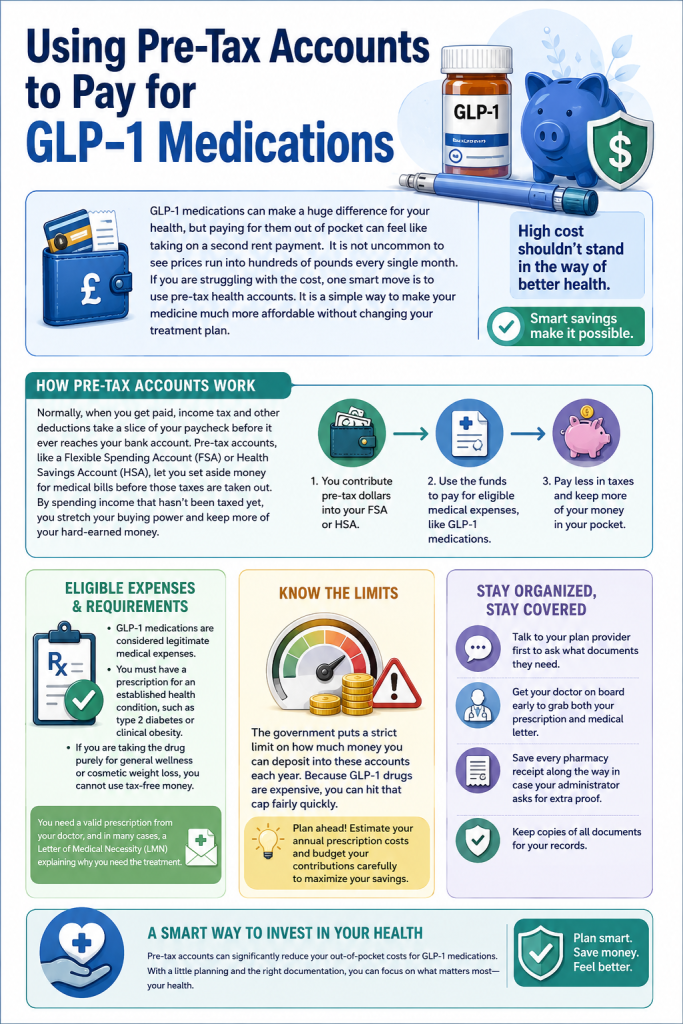
Keep in mind that administrators won’t reimburse you on your word alone. You will need a valid prescription from your doctor, and in many cases, a simple Letter of Medical Necessity explaining why you need the treatment.
There is also a catch to keep in mind: the government puts a strict limit on how much money you can deposit into these accounts each year. Because GLP-1 drugs are expensive, you can hit that cap fairly quickly. It pays to sit down at the start of the year, estimate how much your prescriptions will cost, and budget your contributions carefully so you maximize your savings.
To keep things moving smoothly and avoid paying out of pocket longer than you have to, make sure to talk to your plan provider first to ask what documents they need. Get your doctor on board early to grab both your prescription and medical letter, and save every pharmacy receipt along the way in case your administrator asks for extra proof.