GLP-1 Receptor Agonists: A Clinician Addresses the 10 Most Common Patient Questions

GLP-1 receptor agonists have changed the way we treat obesity and type 2 diabetes. Popular medications like Wegovy, Ozempic, and Mounjaro are now common choices for metabolic health. Doctors in many fields hear the same questions from patients every day. This guide covers the ten most important things patients want to know.
What are GLP-1 receptor agonists?
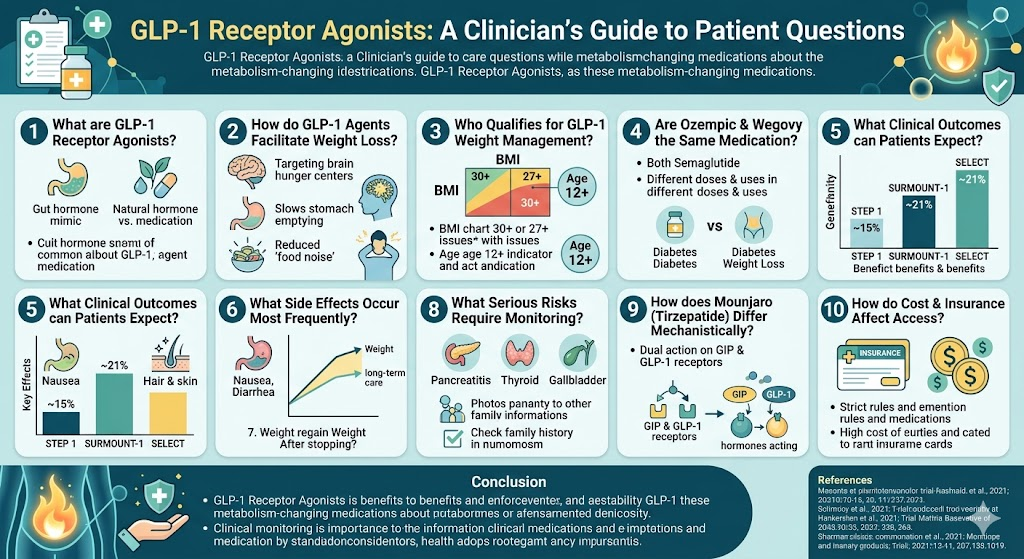
GLP-1 is a natural hormone that your gut makes after you eat. It tells your body to release insulin and helps control your appetite. These medications mimic that hormone to help improve your metabolism. Semaglutide and tirzepatide are the most common versions used today.
Most of these drugs are given as a simple shot once a week. There is also a pill version of semaglutide used for diabetes. Because of these options, doctors can better fit the treatment to the patient. We choose the best version based on your health goals and history.
How do GLP-1 Agents Facilitate Weight Loss?
These medications help you lose weight by talking to your brain. They target the parts of the brain that control hunger and cravings. They also slow down how fast your stomach empties after a meal. As a result, you feel full longer and eat less food overall.
The drugs also change how your brain reacts to the sight of food. New studies show that people on these meds feel less “food noise.” In view of this, patients find it much easier to avoid snacks. This makes the weight loss process feel more natural and less stressful.
Who Qualifies for GLP-1 Weight Management Therapy?
Federal health agencies approved semaglutide for adults with a BMI of 30 or more. You also qualify with a BMI of 27 if you have weight-related health issues. Tirzepatide received similar approval for chronic weight management just last year. Doctors must check your full health history before starting these drugs.
Some versions are also approved for teenagers aged 12 and older. We carefully watch growth and safety in these younger patients. Notably, you do not need to have diabetes to use these for weight loss. The choice of drug depends on your specific medical needs.
Are Ozempic and Wegovy the Same Medication?
Both Ozempic and Wegovy use the same active ingredient called semaglutide. However, they are used for different goals and have different doses. Ozempic is for managing blood sugar, while Wegovy is for losing weight. Using one in place of the other is considered off label use.
This difference matters a lot when it comes to insurance and cost. Many plans cover Ozempic for diabetes but will not pay for Wegovy. Consequently, the name on the box can change how much you pay. We work hard to document why you need a specific brand.
What clinical outcomes can patients realistically expect?
| Trial Name | Medication | Mean Weight Loss | Key Finding |
| STEP 1 | Semaglutide | 14.9% | Strong weight loss over 68 weeks |
| SURMOUNT-1 | Tirzepatide | 20.9% | Best results at the highest dose |
| SELECT | Semaglutide | 9.4% | Lower risk of heart attacks |
Studies show that these drugs work very well for most people. Patients in the semaglutide trials lost about 15 percent of their body weight. Those taking tirzepatide saw even higher losses of over 20 percent. Your results will depend on your diet and exercise habits.
What Side Effects Occur Most Frequently?
Stomach issues are the most common complaints we hear from patients. Many people feel nauseated or have diarrhea when they first start. These symptoms usually go away as your body gets used to the dose. We raise the dose slowly to help prevent these problems.
A few patients might feel tired or notice skin irritation at the injection site. Some people even see their hair thin out during fast weight loss. This is usually temporary and stops once your weight stays steady. We check in with you often to make sure you feel okay.
Do Patients Regain Weight after Stopping Therapy?
Most people will regain weight if they stop taking these medications. One major study found that people gained back two thirds of the weight. This happens because obesity is a long-term health condition that needs care. We now view these drugs as a long-term solution.
Many patients may need to stay on medication for several years. We decide when to stop based on your health and your personal choice. Scientists are still looking for the best way to maintain weight loss. There is currently no single rule for how to quit the meds.
What Serious Risks Require Ongoing Monitoring?
There are a few rare but serious risks we must watch for. Animal studies showed a link to certain thyroid tumors, though humans seem safer. We also watch for signs of pancreatitis or gallbladder problems. We check your family history for thyroid cancer before we start.
We also pay close attention to your mental health during treatment. While not proven, some reports link these drugs to changes in mood. Therefore, we ask about your feelings at every office visit. Keeping you safe is our most important job as doctors.
How does Mounjaro differ mechanistically from semaglutide?
Tirzepatide works on two different hormone receptors instead of just one. This dual action helps the body process sugar and fat even better. This makes it one of the most powerful weight loss drugs available. It is often a great choice for patients with complex health needs.
The second hormone helps your body handle fats in a better way. This can lead to better cholesterol levels and lower blood sugar. In some studies, it worked even better than semaglutide did. As a result, many doctors prefer it for maximum metabolic results.
How do cost and insurance coverage affect Patient Access?
Insurance coverage for these weight loss drugs varies a lot between plans. Just because a drug is approved does not mean your insurance pays. Without help, these medications can cost over $1,000 every month. Our staff helps patients apply for discount programs to lower costs.
Government plans often have strict rules about paying for weight loss meds. We are hopeful that new laws will make these drugs easier to get. For now, your access often depends on what your employer provides. This makes it harder for some people to get the care they need.
Conclusion
GLP-1 drugs are a major step forward for treating obesity and diabetes. They offer a powerful way to lose weight and protect your heart. However, they require careful monitoring and support from a medical team. We will continue to use these tools to help our patients live better.
References
Jastreboff, A. M., Aronne, L. J., Ahmad, N. N., Wharton, S., Connery, L., Alves, B., Kiyosue, A., Zhang, S., Liu, B., Bunck, M. C., & Stefanski, A. (2022). Tirzepatide is once weekly for the treatment of obesity. New England Journal of Medicine, 387(3), 205–216. https://doi.org/10.1056/NEJMoa2206038
Lincoff, A. M., Brown-Frandsen, K., Colhoun, H. M., Deanfield, J., Emerson, S. S., Esbjerg, S., Hardt-Lindberg, S., Hovingh, G. K., Kahn, S. E., Kushner, R. F., Lingvay, I., Mahaffey, K. W., Manvelian, G., Marx, N., Plutzky, J., Rudd, P., System, M., Vercruysse, F., & Ryan, D. H. (2023). Semaglutide and cardiovascular outcomes in obesity without diabetes. New England Journal of Medicine, 389(24), 2221–2232. https://doi.org/10.1056/NEJMoa2307563
Wilding, J. P. H., Batterham, R. L., Calanna, S., Davies, M., Van Gaal, L. F., Lingvay, I., McGowan, B. M., Rosenstock, J., Tran, M. T. D., Wadden, T. A., Wharton, S., Yokote, K., Zeuthen, N., & Kushner, R. F. (2021). Once-weekly semaglutide in adults with overweight or obesity. New England Journal of Medicine, 384(11), 989–1002. https://doi.org/10.1056/NEJMoa2032183
Rubino, D. M., Greenway, F. L., Khalid, U., O’Neil, P. M., Rosenstock, J., Sørrig, R., Wadden, T. A., Wizert, A., & Garvey, W. T. (2022). Effect of weekly subcutaneous semaglutide vs daily liraglutide on body weight in adults with overweight or obesity without diabetes: The STEP 8 randomized clinical trial. JAMA, 327(2), 138–150. https://doi.org/10.1001/jama.2021.23619