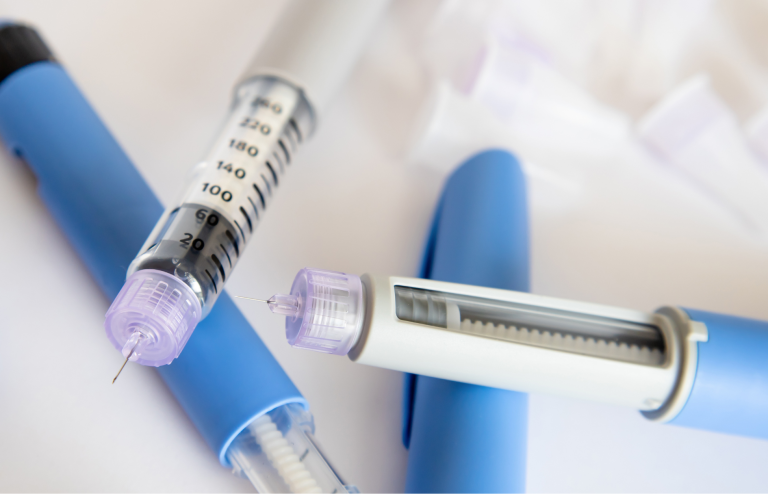
GLP-1 Weight Loss Fuels Emerging Market for Post-Treatment Body Restoration

GLP-1 drugs have helped millions of people lose weight fast. But there’s a side effect nobody really talks about: when you lose a lot of fat quickly, your face and body can lose their shape too. About one in eight adults has now used one of these drugs, so this isn’t a small problem, it’s becoming common.
These weight-loss drugs were never built to deal with sagging skin or lost facial volume. That’s simply not what they’re for. But because so many people are dealing with it now, doctors and skincare companies are paying attention. In fact, experts predict that money made from related cosmetic treatments could almost triple by 2030.
One biotech company thinks it has a possible answer. They’re working on something called CXU, a soft, gel-like collagen material that can be injected with a needle. It flows into place, takes the shape of the area it’s injected into, and firms up once it reaches body temperature.
This is different from regular dermal fillers you might already know about. Those are made for small touch-ups smoothing a wrinkle or adding a bit of volume to lips. They’re not built to replace larger amounts of lost tissue.
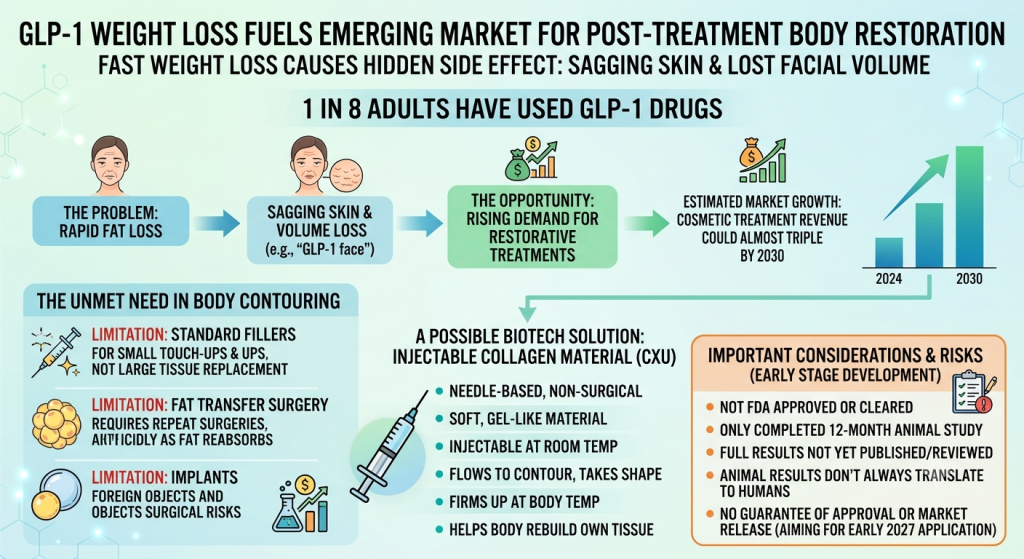
Right now, people who want to restore lost volume don’t have great options. Fat transfer surgery, for example, often doesn’t stick so the body reabsorbs a lot of the transplanted fat, so patients frequently need to repeat the surgery. Implants are more permanent, but they involve putting a foreign object into the body, which comes with its own risks. This is why a needle-based option that doesn’t involve surgery is getting so much interest.
The idea behind this new material is that it should help the body rebuild its own tissue naturally. That said, it’s still very early. The company has only finished a 12-month study on animals, and hasn’t published the full results yet those will come later, once other scientists review them.
That’s an important detail. Results from animal studies don’t always carry over to humans, and until findings go through independent review, they don’t mean much on their own. Right now, this product has not been approved or cleared by the FDA for any use. The company is aiming to submit its application in early 2027, using a process that requires proving the product works similarly to something already approved. Nothing can be sold or marketed to patients until that approval happens and there’s no guarantee of when, or if, that will happen.
Still, the interest from big companies suggests this is a real need, not just hype. Several major skincare and pharmaceutical companies have been researching facial volume loss, and their leaders have spoken openly about wanting to explore this area.
The bottom line for patients: even though there’s real demand and real research happening, this treatment is still unproven and not yet approved. If you’re considering something like this, it’s worth double-checking whether a treatment or device actually has FDA approval before trying it that difference matters for your safety.