Burger King Adjusts Its Menu Strategy as GLP-1 Drug Use Reshapes Fast Food Demand

Burger King’s leaders are getting ready for a big, long-term shift in how people eat and they think GLP-1 weight-loss drugs are behind it. The company expects these medications to shake up the fast food industry in a real way, so it’s already planning menu changes to keep up.
So far, sales numbers haven’t shown any real drop because of these drugs. But the medications work by copying hormones that control hunger and blood sugar, and studies show people taking them simply eat less. That’s putting pressure on restaurants to rethink their portion sizes and what’s actually in their food.
With that in mind, Burger King has started testing smaller meals and bowls with more protein. These are aimed at customers who still want choices but don’t want huge portions. The company isn’t rushing to roll out a ton of new items, though it wants to keep things simple in the kitchen and will only expand once it sees real demand for these products.
The numbers back up why they’re being careful. One national survey found that 11% of adults are currently taking a GLP-1 drug. Another study found that almost half of these users are eating out less often, and a separate report showed that 72% of them are eating fewer burgers specifically.
Government action could speed things up even more. A federal agency is testing a program that would make these drugs easier to get for more people. At the same time, drug companies are under pressure to lower prices. If the drugs become cheaper and easier to access, way more people could end up using them regularly.
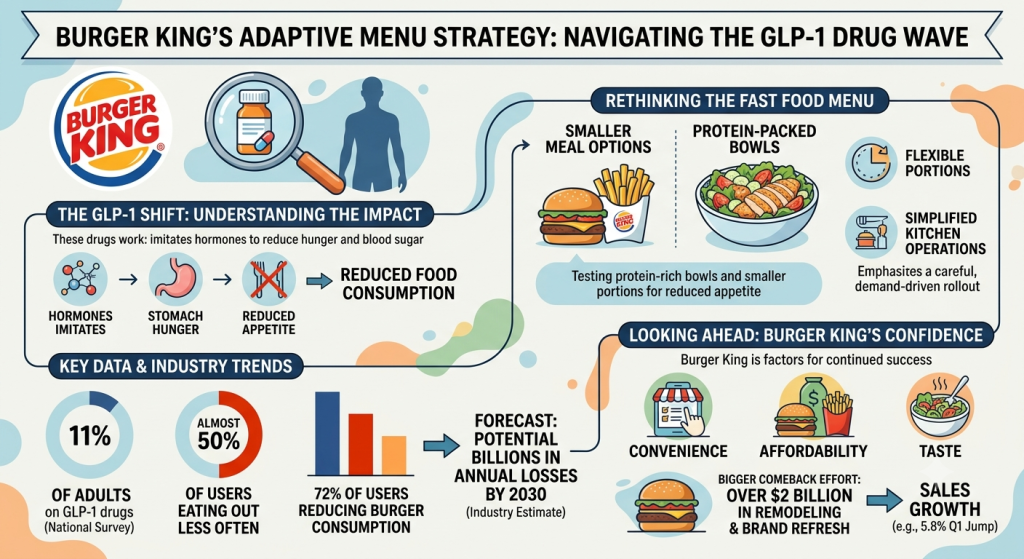
Analysts have tried to put a number on what this could mean for the industry some estimate it could wipe out billions of dollars in food sales every year by 2030. That’s pushed big chains to rethink their menus and supply chains for the long haul. Still, Burger King’s leadership isn’t worried. They believe fast food still has an edge because it’s convenient and affordable.
These menu changes are happening alongside a bigger comeback effort at the company. Burger King has poured more than $2 billion into remodeling restaurants and refreshing its brand and it seems to be paying off. Sales at existing locations jumped 5.8% in the first quarter, a big turnaround from last year’s 1.1% drop.
Because of results like that, Burger King’s executives don’t think these drugs are some kind of existential threat to fast food. They’re betting that convenience, taste, and value will keep bringing customers in, no matter how many people are on these medications. Either way, analysts say they’ll keep a close eye on how eating habits change as more people gain access to the drugs.