Skin Care On GLP-1: How To Protect And Firm Skin During And After Rapid Weight Loss
Glucagon-like peptide-1 receptor agonists have significantly changed how we manage obesity and type 2 diabetes. Medications like Ozempic, Wegovy, and Mounjaro lead to substantial and often quick weight loss. This rapid change impacts the skin, which relies on underlying fat and connective tissue for support. Clinicians and patients increasingly notice issues like skin looseness, changes in texture, and dehydration during weight loss.
Understanding the physiological reasons behind these changes helps with better counseling and proactive skin care. The loss of subcutaneous fat, changes in collagen, and hydration issues explain most of what happens. Evidence-based interventions can meaningfully lessen these effects if implemented early. This discussion reviews the key mechanisms and highlights interventions backed by current dermatologic and nutritional research.
How Rapid Weight Loss Affects Skin Structure
Subcutaneous Fat Loss and Structural Support
Subcutaneous fat provides a support layer beneath the skin. This layer keeps the skin tight and well-shaped. When fat volume decreases quickly, as often happens with GLP-1 receptor agonist therapy, the skin loses much of its internal support. Areas with more fat, like the abdomen, upper arms, and inner thighs, usually show visible looseness first.
The extent of skin looseness is linked to both the speed and total amount of weight lost. A slower rate of fat loss gives connective tissue more time to adjust. Rapid weight loss, on the other hand, can exceed the skin’s ability to remodel. This gap between fat loss and skin adaptation is the main reason for the skin changes seen after using GLP-1.
Collagen and Elastin Under Physiological Stress
Collagen and elastin fibers give skin its strength and elasticity. Significant weight loss can put stress on these fibers. Research shows that rapid fat loss can lower collagen density in the skin and disrupt the organization of elastin fibers. As a result, skin loses its ability to bounce back more quickly than it can rebuild these structural proteins.
This process leads to visible effects like fine lines, rough texture, and crepey skin. These changes often appear on the neck, underarms, and inner arms. Reduced elasticity means skin doesn’t return to its original shape after being stretched or compressed. Therefore, promoting collagen production becomes a key goal of any skin support strategy.
Barrier Hydration and Appetite Suppression
GLP-1 receptor agonists reduce appetite through various signaling pathways. This often leads to lower fluid and protein intake, which can affect the skin’s moisture barrier. Proper hydration and protein intake are crucial for maintaining skin health. When these intakes drop, the outer skin layer loses moisture and becomes more vulnerable to environmental stress.
Dehydrated skin can look thinner, duller, and show fine lines more easily. This issue worsens the structural changes caused by fat and collagen loss. Therefore, clinicians should assess hydration and protein intake during routine follow-ups with patients on GLP-1 therapy. Nutritional counseling is a low-cost, high-value intervention in this setting.
Clinical Presentation of GLP-1 Associated Skin Changes
Patients receiving GLP-1 receptor agonist treatment for obesity often notice several skin changes. Sagging skin can develop on the upper arms, abdomen, and inner thighs. A crepey texture may appear on the chest and knees. Some patients may experience facial volume loss, described informally as looking gaunt or hollow.
These changes are not the same for everyone and can vary based on skin quality, age, and total weight lost. Younger patients with better skin elasticity typically see less noticeable looseness. However, even those without prior weight fluctuations can experience significant changes when weight loss happens rapidly. Recognizing these patterns early allows clinicians to introduce preventive strategies before the changes become severe.
Evidence-based Approaches to Skin Support
Nutritional Strategies
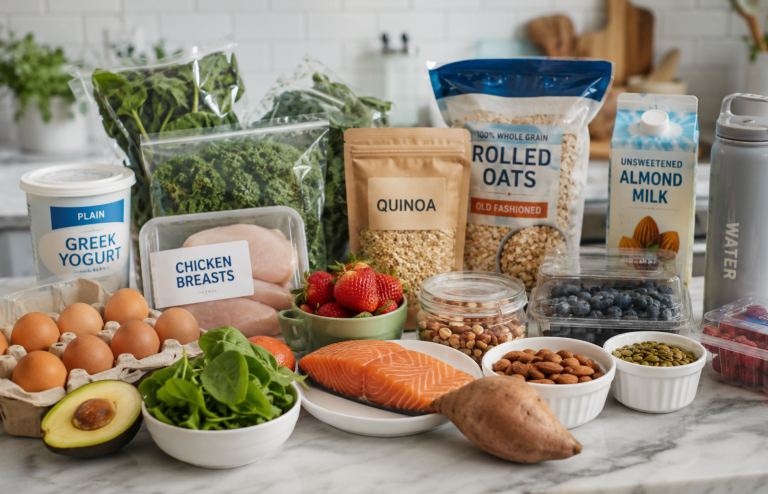
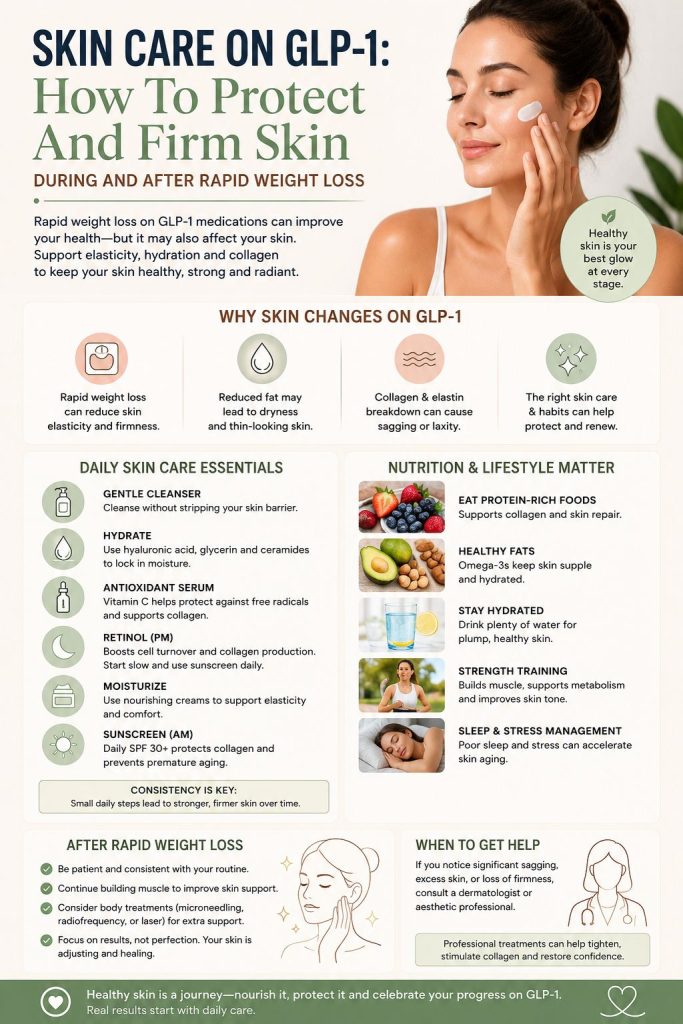
Eating enough protein helps provide the amino acids needed for collagen production. Patients who experience reduced appetite should intentionally track their protein intake instead of relying on hunger signals. Hydration also should be planned rather than left to thirst because GLP-1 medications can dull the thirst response along with appetite. These two nutritional strategies form the basis of any skin support plan during weight loss.
Micronutrients like vitamin C, zinc, and copper are important for collagen structure. Deficiencies in these nutrients can further hinder skin repair. A balanced diet that meets these micronutrient needs supports both overall health and skin resilience. Clinicians should evaluate nutrition for patients reporting significant skin changes during treatment.
Topical Interventions
Topical products containing retinoids, peptides, and antioxidants can help with collagen production and reduce oxidative stress. Retinoids boost cell activity and increase collagen production with long-term use. Peptide products may improve barrier function and hydration when used consistently. Applying sunscreen is vital too, since sun exposure speeds up collagen breakdown regardless of weight loss changes.
Consistent application method can also affect results. Products applied to clean, slightly damp skin tend to be absorbed better. Massaging during application can temporarily boost blood flow and lymphatic drainage. However, topical solutions alone cannot fully restore skin laxity caused by significant fat loss.
Physical Activity and Gradual Weight Loss
Resistance training builds muscle under the skin, providing support as fat volume decreases. More muscle mass gives an alternative support layer and improves blood flow. Regular exercise also helps deliver nutrients to the skin, aiding its repair. Clinicians should promote resistance training as a standard part of GLP-1 treatment plans.
The speed of weight loss itself can be adjusted in many cases. When appropriate, gradually increasing doses may give the skin more time to adapt. However, this must be balanced with the need for rapid weight loss in cases of type 2 diabetes or severe obesity. Joint decision-making between patient and prescriber should guide this balance.
Clinical Considerations and Limitations of Current Evidence
Current evidence on skin changes from GLP-1 receptor agonists is mostly based on observations. Major trials of these medications, like those studying semaglutide and tirzepatide, have mainly focused on metabolic and cardiovascular effects. Skin impacts are mostly documented through case reports and smaller studies. Larger, well-designed studies that specifically look at skin issues would improve clinical guidance significantly.
Given this evidence gap, clinicians should depend on established skin care principles when advising patients. The mechanisms behind collagen production, hydration, and structural support are well understood outside the context of GLP-1 therapy. Using these established ideas allows for reasonable, evidence-informed suggestions despite the lack of specific data. Ongoing research will likely clarify these recommendations as the use of GLP-1 receptor agonists grows.
Conclusion
Skin looseness and texture changes are common consequences of rapid weight loss linked to GLP-1 receptor agonist therapy. These changes stem from fat loss, stress on collagen and elastin, and reduced hydration. Nutritional support, targeted topical care, resistance training, and careful dose management can together lessen the severity of these effects. Clinicians should discuss skin health during routine counseling for patients starting or continuing GLP-1 treatment.
As more people use these medications for obesity and type 2 diabetes, dermatologic outcomes need to be closely monitored. Future studies that focus specifically on skin health during pharmacologic weight loss will help improve evidence-based recommendations. Until such data is available, following established dermatologic and nutritional principles provides the best guidance. A proactive, mechanism-oriented approach remains the most effective strategy for supporting skin health throughout weight loss.
References
Jastreboff, A. M., Aronne, L. J., Ahmad, N. N., Wharton, S., Connery, L., Alves, B., Kiyosue, A., Zhang, S., Liu, B., Bunck, M. C., & Stefanski, A. (2022). Tirzepatide once weekly for the treatment of obesity. New England Journal of Medicine, 387(3), 205–216. https://doi.org/10.1056/NEJMoa2206038
Wilding, J. P. H., Batterham, R. L., Calanna, S., Davies, M., Van Gaal, L. F., Lingvay, I., McGowan, B. M., Rosenstock, J., Tran, M. T. D., Wadden, T. A., Wharton, S., Yokote, K., Zeuthen, N., & Kushner, R. F. (2021). Once-weekly semaglutide in adults with overweight or obesity. New England Journal of Medicine, 384(11), 989–1002. https://doi.org/10.1056/NEJMoa2032183