GLP-1 Medications Drive Surge in Body Contouring

Plastic surgeons are seeing more patients looking for cosmetic procedures after significant weight loss. This trend comes after the popular use of GLP-1 receptor agonist medications for weight management. These therapies help control appetite and blood sugar, leading to notable fat loss. As a result, quick volume loss leads to specific aesthetic side effects that specialists are now treating regularly.
Facial fat loss often changes the look of the ears, giving them a deflated appearance. Clinicians stress that these weight loss medications do not harm tissue or affect hearing. Thus, any medical treatments are purely cosmetic, not therapeutic. Providers address this condition using dermal fillers, fat transfer, or surgical reduction.
In addition to facial changes, specialists have seen sharp increases in body contouring procedures among these patients. Many individuals are asking for abdominoplasties, breast lifts, and thighplasties to remove extra skin. Patients recover comfortably, as the weight loss from the medications happens more gradually than it would with surgery. This means many tolerate these follow-up procedures with fewer complications.
Rapid fat loss also causes breast tissue to lose volume in an uneven way. Supporting ligaments and skin often do not tighten as quickly as the fat decreases. Consequently, breasts can look deflated or sagging, even in younger patients. In response, surgeons use lifting techniques to restore natural shapes and firmness.
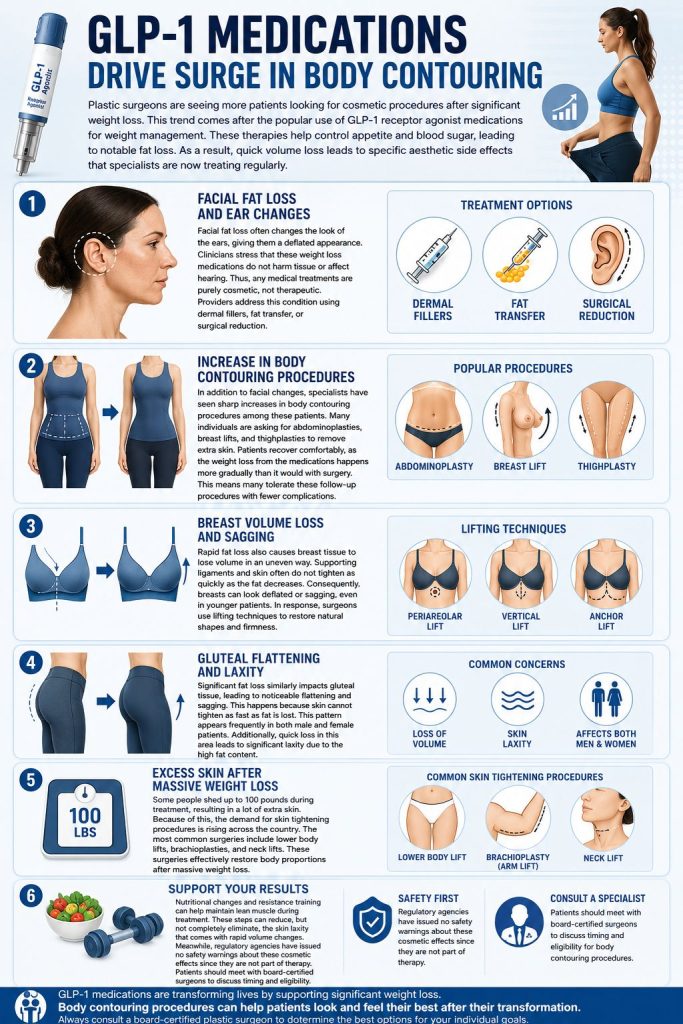
Significant fat loss similarly impacts gluteal tissue, leading to noticeable flattening and sagging. This happens because skin cannot tighten as fast as fat is lost. This pattern appears frequently in both male and female patients. Additionally, quick loss in this area leads to significant laxity due to the high fat content.
Some people shed up to 100 pounds during treatment, resulting in a lot of extra skin. Because of this, the demand for skin tightening procedures is rising across the country. The most common surgeries include lower body lifts, brachioplasties, and neck lifts. These surgeries effectively restore body proportions after massive weight loss.
Nutritional changes and resistance training can help maintain lean muscle during treatment. These steps can reduce, but not completely eliminate, the skin laxity that comes with rapid volume changes. Meanwhile, regulatory agencies have issued no safety warnings about these cosmetic effects since they are not part of therapy. Patients should meet with board-certified surgeons to discuss timing and eligibility.