Study: GLP-1 Drugs Save Adults $192K in Lifetime Medical Costs
A groundbreaking study from the National Bureau of Economic Research (NBER) reveals that lifetime use of GLP-1 obesity medications can dramatically cut healthcare costs. For middle-aged adults, the average lifetime medical savings sit at a staggering $192,735, driven primarily by the prevention of expensive, chronic health conditions. The study analyzed adults aged 25 and older with a BMI above 30, comparing lifelong medication users against those receiving no treatment.
The data highlighted a massive economic and social upside: adults without a college degree see higher relative savings than those with higher education. The Biology Factor: Because GLP-1 drugs chemically suppress appetite and alter food processing, they don’t require strict, time-consuming diet or exercise regimens.
The Lifestyle Factor: Individuals with less free time or limited access to fresh, healthy foods stand to gain the most from this passive medical intervention. Building on this, while adults in their 40s and 50s are currently the primary consumers of these drugs, the biggest financial winners are younger patients. Adults who start treatment between ages 25 and 30 experience the largest lifetime savings by stopping heart disease and type 2 diabetes before they ever start.
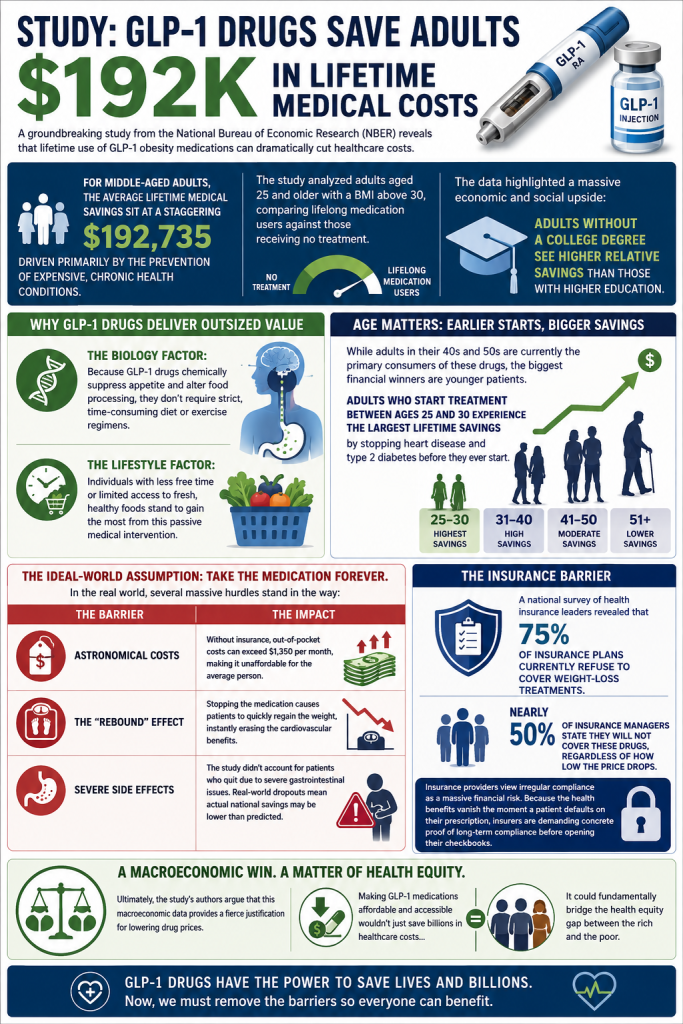
Despite these glowing financial projections, the study relies on a critical, ideal-world assumption: patients must take these medications forever. In the real world, several massive hurdles stand in the way:
| The Barrier | The Impact |
| Astronomical Costs | Without insurance, out-of-pocket costs can exceed $1,350 per month, making it unaffordable for the average person. |
| The “Rebound” Effect | Stopping the medication causes patients to quickly regain the weight, instantly erasing the cardiovascular benefits. |
| Severe Side Effects | The study didn’t account for patients who quit due to severe gastrointestinal issues. Real-world dropouts mean actual national savings may be lower than predicted. |
Furthermore, these financial benefits are currently locked behind a wall of corporate reluctance. A national survey of health insurance leaders revealed that 75% of insurance plans currently refuse to cover weight-loss treatments. Even more striking, nearly 50% of insurance managers state they will not cover these drugs, regardless of how low the price drops.
Insurance providers view irregular compliance as a massive financial risk. Because the health benefits vanish the moment a patient defaults on their prescription, insurers are demanding concrete proof of long-term compliance before opening their checkbooks.
Ultimately, the study’s authors argue that this macroeconomic data provides a fierce justification for lowering drug prices. Obesity disproportionately impacts lower-income families who face systemic barriers to healthy food and fitness resources. Making GLP-1 medications affordable and accessible wouldn’t just save billions in healthcare costs, it could fundamentally bridge the health equity gap between the rich and the poor.