The GLP-1 Era: Redefining Weight Loss & Health

Pharmacological strategies for treating obesity and diabetes have been transformed by GLP-1 receptor agonists. Initially, these agents were aimed at controlling glycemia in patients. They now hold a pivotal position in the field of weight management medicine. Clinical trials show reductions in body weight that were previously restricted to surgery.
Clinicians and health systems are reconsidering established metabolic disease frameworks. This shift extends beyond individual patient outcomes. National regulatory approvals expanded indications for several agents recently. Evidence now supports use across diverse patient populations.
Linking data suggests that weight loss is associated with a decreased risk of cardiovascular issues. Other benefits include enhancements in hepatic health and sleep apnea. GLP-1 pharmacotherapy constitutes more than just a small improvement. It indicates a structural transformation in obesity medicine.
Mechanisms Underlying GLP-1 Receptor Agonist Activity
During nutrient consumption, the incretin hormone GLP-1 is secreted by intestinal L-cells. This hormone promotes the secretion of insulin while inhibiting the release of glucagon. Additionally, it slows down the process of gastric emptying in order to regulate glucose levels. Additionally, GLP-1 receptors are present in hypothalamic areas of the brain.
These main receptors control the signals for appetite and satiety. Caloric intake is diminished through pharmacological agonism at these sites. This procedure adjusts the hunger signaling to aid patients. Specific structural modifications enable semaglutide to achieve sustained activation.
The modifications prolong the half-life of the active ingredient. As a result, patients only need subcutaneous administration once a week. This timetable preserves uniform pharmacodynamic effects throughout time. Tirzepatide provides dual receptor agonism for GLP-1 and GIP.
This dual mechanism results in additive effects on insulin sensitivity. Moreover, it raises energy expenditure beyond that of single-agonist medications. The agent provides distinctive metabolic benefits, building on this. As a result, modern drugs aim at various hormonal pathways at the same time.
Differentiating Agents by Mechanism and Indication
Semaglutide has been approved by the Food and Drug Administration for diabetes. Moreover, it lessens the risk of cardiovascular disease among certain groups of adults. There is another formulation with a higher dose that has been approved for chronic weight management. This pertains to patients suffering from obesity or associated comorbidities.
Tirzepatide was first authorized for the management of type 2 diabetes. Later trials backed up further recommendations for weight management. Every agent works within a specified regulatory framework. For this reason, clinicians need to ensure that their prescriptions correspond with the indications that have received approval.
Landmark Clinical Trial Evidence
The STEP 1 trial enrolled adults with obesity. Participants received once-weekly semaglutide at a 2.4 mg dose. This group achieved a 14.9 percent weight reduction. Meanwhile, the placebo group lost only 2.4 percent.
A higher percentage of participants attained significant weight thresholds. These findings incorporate loss markers of 10% and 15%. The SURMOUNT-1 trial assessed tirzepatide at three different levels. Those receiving the highest dosage had a 20.9 percent loss.
The analysis confirmed lasting effects and favorable safety profiles. Tirzepatide is thus placed among the most effective options based on these findings. Clinical evidence backs the use of these agents. In light of this, the data mark a significant achievement.
Cardiovascular and Metabolic Outcomes Beyond Weight Reduction
The SELECT trial evaluated semaglutide in adults with cardiovascular disease. This study excluded patients with type 2 diabetes. Semaglutide reduced major adverse cardiovascular events by 20 percent. Thus, benefits extend far beyond simple weight reduction.
Clinical utility includes the main outcomes of mortality and morbidity. This collection of evidence underpins the mitigation of cardiometabolic risk. These benefits seem to exist regardless of glycemic control alone. In addition to this, data indicate enhanced hepatic markers.
Weight loss is accompanied by reductions in blood pressure and triglycerides. These enhancements pertain to inflammatory biomarkers within trial populations. As a result, the metabolic profile deals with various interconnected processes. This thorough impact delineates the present therapeutic class.
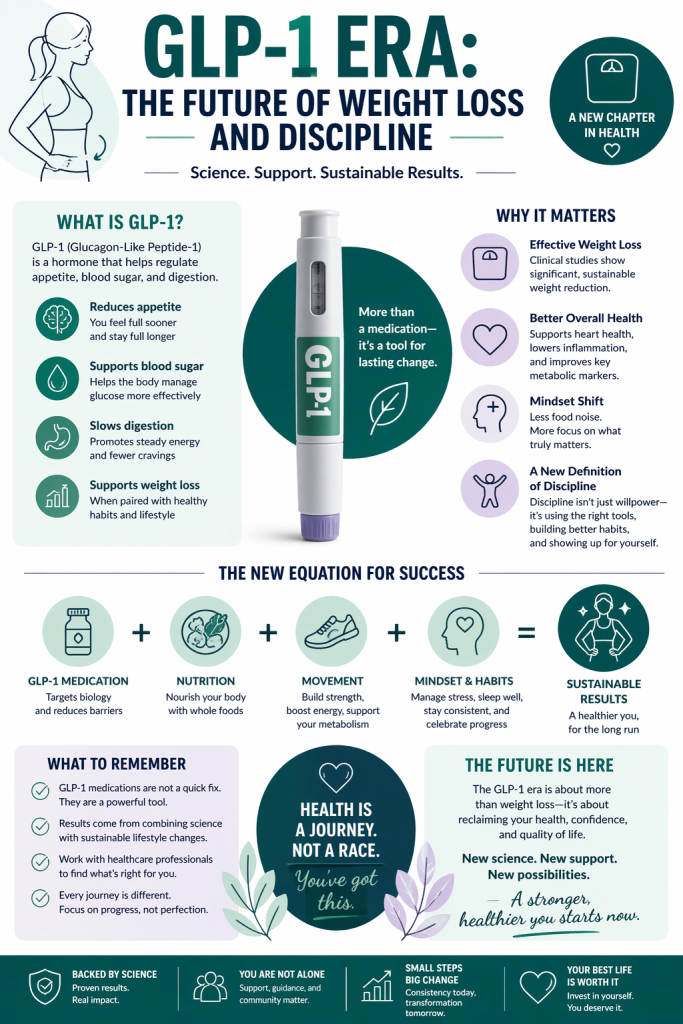
Reconsidering Obesity as a Biological Condition
Historical frameworks assigned behavioral deficits as the cause of excess weight. This framing underscored personal self-control and lifestyle discipline. GLP-1 pharmacotherapy confronts those outdated cultural assumptions. Excess adiposity is significantly influenced by neurohormonal dysregulation.
Federal health bodies now classify obesity as a disease. This complex condition involves clear biological determinants. Reframing adiposity as a neurobiological condition carries implications. It changes the primary goal of medical therapy.
Rather than enforcing adherence to behavior, clinicians focus on pathophysiology. This viewpoint is in accordance with established management of chronic diseases. Nonetheless, lifestyle intervention continues to be a fundamental element. It should be included in treatment plans alongside pharmacotherapy.
Access, Equity, and Systemic Considerations
The expense associated with receptor agonists constitutes an obstacle. Semaglutide has a list price of over $1,300 per month. Insurance coverage varies widely among different national payers. Consequently, access is linked to socioeconomic status.
This results in disparities that are inconsistent with burden. Those populations that have a high prevalence of disease encounter the greatest obstacles. Health systems face a twofold responsibility concerning efficacy. They must guarantee that all patients have equal access.
Patient assistance programs do not resolve systemic gaps. Cosmetic use by others places strain on supply. This demand impacts pharmacy capacity and medication availability. Professional societies have called for prioritizing clinical need.
Clinical Prescribing Considerations and Monitoring
The choice of patients necessitates the methodical assessment of medical history. Contraindications comprise certain types of thyroid carcinoma and endocrine syndromes. It is necessary for clinicians to assess renal function and tolerance as well. Prior to starting any therapy, they evaluate cardiovascular status.
A meticulous risk-benefit assessment is essential for patients suffering from pancreatitis. Negative effects often concern the gastrointestinal system. Included are nausea, vomiting, diarrhea, and constipation. During titration, such symptoms are most pronounced.
The overall burden of side effects is reduced by gradual titration protocols. This method enhances patient adherence to the regimen. Monitoring involves periodic evaluation of weight and glucose levels. It is also necessary for clinicians to check renal function on a regular basis.
When therapy is stopped, individuals experience considerable weight regain. This situation highlights the necessity of planning for the long term. Every patient should receive realistic counseling from clinicians. Continuous management is crucial for metabolic health.
Conclusion
GLP-1 receptor agonists are a proven medical advancement. Their application across various populations is backed by solid trial evidence. Semaglutide and tirzepatide show better outcomes for weight reduction. Considering this, it is necessary to integrate it into practice.
Considerable difficulties persist concerning long-term safety monitoring. Equitable access and clinical stewardship are crucial priorities. Obesity’s reclassification necessitates changes in education. It is also necessary for health policy and reimbursement frameworks to adapt.
The field is positioned to refine patient selection. New evidence allows for optimized dosing strategies. These advances extend benefits to many underserved populations. Future models will prioritize comprehensive metabolic care.