Gym Membership Trends Reflect Rising Use of GLP-1 Weight Loss Medications

Fitness centers report an increase in members using glucagon-like peptide-1 receptor agonists. These GLP-1 medications help control appetite and blood sugar by imitating hormones that occur naturally. Doctors prescribe them for obesity, weight management, and type 2 diabetes under medical supervision. Gym operators say that new members often mention their medication use as a main reason for exercising.
Gym staff notice that early weight loss boosts confidence and encourages people to stay active. This trend aligns with clinical recommendations that suggest exercise along with medication. Patients need to do strength training since these medicines can lower lean muscle mass. Fitness professionals recommend resistance training to help maintain muscle during weight loss.
Weight management doctors stress that regular, moderate exercise offers the best long-term benefits. Medical advice suggests that patients aim for 30 minutes of daily activity to raise their heart rate. They should start exercising slowly instead of jumping into intense routines right away. This careful approach lowers the risk of injuries while helping to make lasting changes in behavior.
Medical oversight is a key concern for doctors treating these patients. Some individuals get these medications without proper clinical supervision, which can lead to health risks. As a result, the Food and Drug Administration has issued warnings about unsupervised, compounded versions of these drugs. Proper supervision ensures that patients receive the right dose, have side effects monitored, and receive integrated nutritional advice.
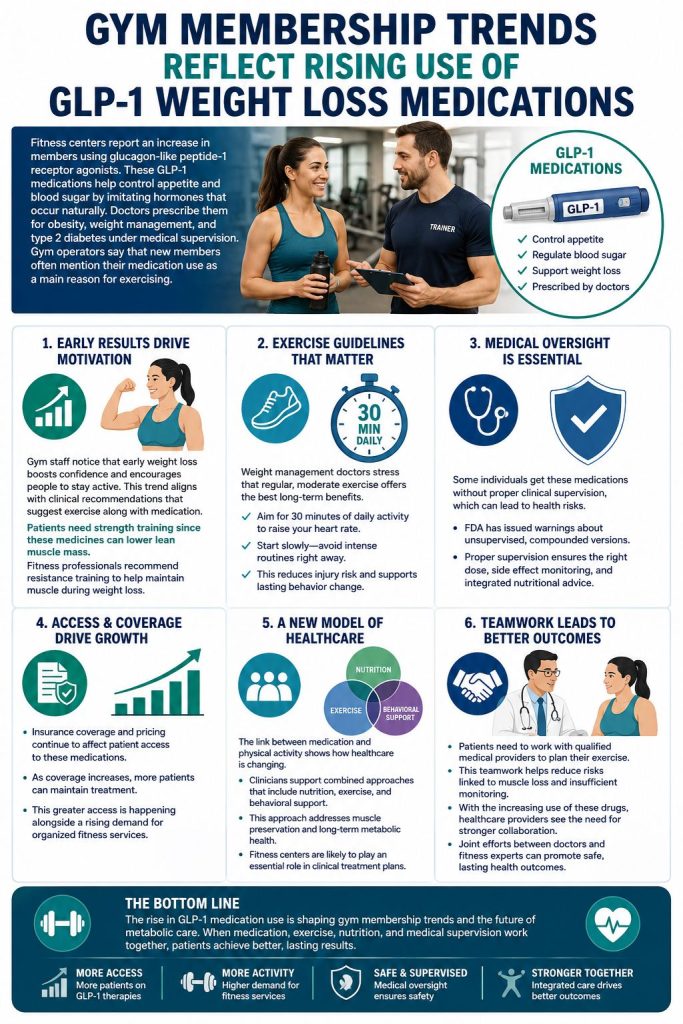
Insurance coverage and pricing continue to affect patient access to these medications. As coverage increases, more patients can maintain treatment. This greater access is happening alongside a rising demand for organized fitness services. Doctors expect more demand as these therapies become part of standard metabolic care.
The link between medication and physical activity shows how healthcare is changing. Clinicians are increasingly supporting combined methods that include nutrition, exercise, and behavioral support. This approach tackles important issues like muscle preservation and long-term metabolic health. Fitness centers are likely to play an essential role in clinical treatment plans.
Patients need to work with qualified medical providers to plan their exercise. This teamwork helps reduce risks linked to muscle loss and insufficient monitoring. With the increasing use of these drugs, healthcare providers see the need for stronger collaboration. Joint efforts between doctors and fitness experts can promote safe, lasting health outcomes.