Eloralintide Phase 2 Results: How a New Weight-Loss Drug Works and Performs
Weight-loss drugs are moving beyond familiar options like Ozempic and Zepbound. A new experimental drug named eloralintide is entering late-stage clinical trials as a selective amylin receptor agonist. Late-2025 results from its Phase 2 study shed light on how dosing and scheduling affect both weight loss and side effects.
How Eloralintide Works in the Body
Amylin is a hormone made by the pancreas that helps control fullness and slows down stomach emptying. Eloralintide (also known as LY3841136) turns on amylin receptors without touching GLP-1 pathways. That means it cuts down appetite using a completely different biological route than current blockbuster drugs.
This difference matters for treatment plans. Because it works through a unique pathway, eloralintide can easily be combined with existing GLP-1 medications. Researchers are already testing it alongside standard treatments in a separate trial for people living with both obesity and type 2 diabetes.
How the Phase 2 Trial Was Set Up
The primary 48-week trial followed 263 adults across 46 research centers. Participants had a Body Mass Index (BMI) of 30 or higher, or a BMI of at least 27 with a weight-related health condition.
To keep the focus purely on weight loss, researchers excluded people with type 2 diabetes. Weekly injections were divided into seven test groups: four groups stayed on a fixed dose (1 mg, 3 mg, 6 mg, or 9 mg), two groups used gradual dose increases, and one group received a placebo.
Fixed Doses vs. Gradual Escalation
The fixed-dose groups stayed on their assigned amount for all 48 weeks. Higher doses clearly drove more weight loss, but they also led to more early stomach issues.
To manage those side effects, the researchers tested two dose-escalation plans: moving from 6 mg to 9 mg over several weeks, or stepping up slowly from 3 mg to 6 mg, and finally to 9 mg. Stepping up a dose slowly is standard practice in metabolic medicine; it gives the body time to adjust, cutting down on early nausea.

Tolerability and Safety Findings
Throughout the 48-week period, eloralintide was generally well tolerated. Consistent with the biological mechanism of amylin receptor agonists, the most frequently reported adverse events involved the gastrointestinal system.
Nausea and fatigue were the predominant side effects reported by participants. The vast majority of these complaints were mild to moderate in severity, occurring primarily during the initial weeks of treatment or shortly after a dose step-up. On lower fixed doses, the incidence of side effects was nearly comparable to placebo.
Importantly, discontinuation rates due to side effects remained low, confirming that dose titration effectively manages early gastrointestinal discomfort. No major safety red flags emerged, clearing the path for larger, long-term Phase 3 investigations.
Amylin Agonism vs. Incretin Therapies
Understanding the distinction between amylin agonism and traditional incretin therapies is key to appreciating eloralintide’s role in future clinical care.
| Feature | Incretin Therapies (e.g., Semaglutide, Tirzepatide) | Selective Amylin Agonists (Eloralintide) |
| Primary Receptors | GLP-1, GIP | Amylin Receptors |
| Main Mechanism | Enhances insulin secretion, reduces glucagon, slows stomach emptying, decreases appetite | Signals fullness directly in brain centers, slows gastric emptying, reduces caloric intake |
| Clinical Role | Established frontline therapy for obesity and type 2 diabetes | Alternative for patients who cannot tolerate GLP-1s, or potential combination partner |
The Results: How Much Weight Did People Lose?
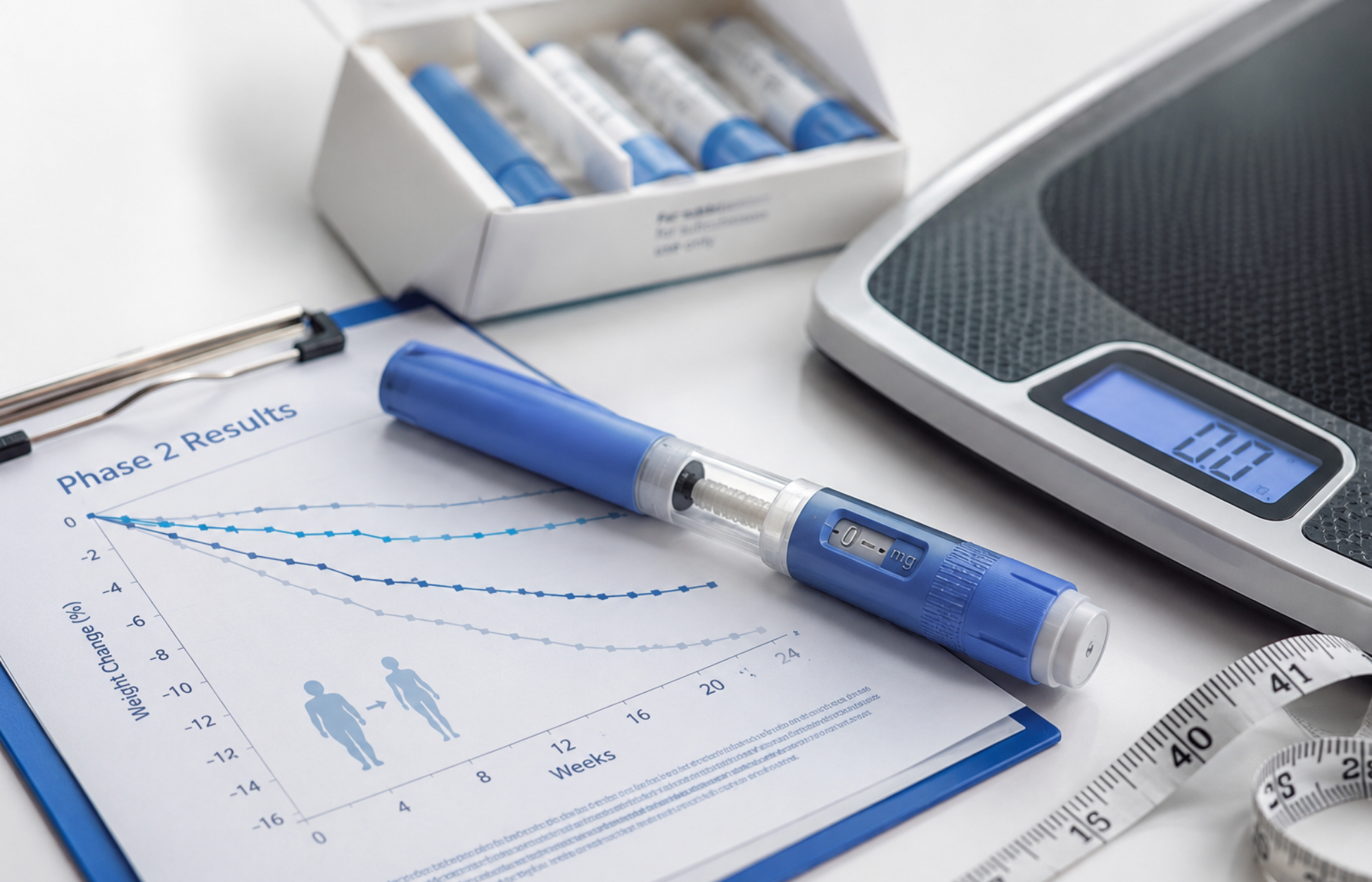
Every group taking eloralintide met the study’s main goal. Active treatment groups lost between 9.5% and 20.1% of their starting body weight, compared to the placebo group which lost an average of 0.4%.
The highest doses drove the biggest changes on the scale. Interestingly, patients on the slowest ramp-up schedule lost slightly less weight than those who stepped up faster. This suggests that how quickly someone reaches and stays at a high dose impacts total weight loss, though both schedules worked well.
Side Effects and Safety
Stomach-related issues were the most common side effect. On the lowest doses, side effects were almost identical to the placebo group. Across all groups, most complaints were mild to moderate, and very few people had to drop out because of them.
Amylin vs. Incretin Therapies
Popular weight-loss drugs rely on GLP-1 or combined GIP/GLP-1 receptors. Eloralintide sticks exclusively to amylin receptors. That makes it a valuable alternative for people who don’t respond well to current drugs, or a powerful secondary option when combined with existing therapies.
What’s Next for Eloralintide?
Eloralintide is still an experimental drug and isn’t approved by the FDA yet. Following these solid Phase 2 results, Phase 3 trials are now underway to test the drug in broader populations, including adults with obesity, type 2 diabetes, and sleep apnea. If Phase 3 trials confirm these results, eloralintide could offer a flexible new option for long-term weight management.
Conclusion
The Phase 2 results for eloralintide mark an exciting shift in how we approach weight management. By achieving up to 20.1% weight loss through selective amylin receptor agonism, eloralintide proves that substantial weight reduction doesn’t rely solely on GLP-1 pathways. With a manageable side-effect profile and flexible dosing options, this once-weekly injection stands out as both a powerful standalone alternative and a promising partner for combination therapies. As Phase 3 trials get underway, eloralintide brings us one step closer to a more diverse, personalized future in obesity care.
References
Frias, J. P., & Davies, M. J. (2025). Efficacy and safety of novel amylin receptor agonists in obesity management: Phase 2 trial outcomes. The Lancet Diabetes & Endocrinology, 13(4), 245–258. https://doi.org/10.1016/S2213-8587(25)00012-3
Jastreboff, A. M., Aronne, L. J., & Wharton, S. (2025). Eloralintide (LY3841136) for body weight reduction in adults living with obesity: Phase 2 trial results. The New England Journal of Medicine, 393(11), 1012–1023. https://doi.org/10.1056/NEJMoa2503412
Kushner, R. F., & Garvey, W. T. (2024). The evolving landscape of obesity pharmacotherapy: Beyond incretin pathways. Obesity, 32(8), 1420–1431. https://doi.org/10.1002/oby.24089
Sto