Evaluating Semaglutide and Menstrual Function: A Clinical Overview

If you are taking Wegovy or thinking about starting it, you might wonder how it affects your body beyond dropping weight. Many women notice changes in their period after starting the medication, which often leads to questions about whether the drug causes these shifts. The official prescribing label for Wegovy does not list irregular periods as a direct side effect, but losing weight quickly alters your hormone levels, which naturally impacts your monthly cycle.
Knowing what happens inside your body helps you set realistic expectations and feel more in control. Some people experience temporary disruptions or missed periods when shedding weight fast. At the same time, women who dealt with irregular cycles due to extra body mass often find their periods becoming much more predictable.
This guide breaks down how weight loss affects your reproductive system, what current research reveals about Wegovy, and when you should talk to a healthcare provider.
How Weight Loss Alters Your Monthly Cycle
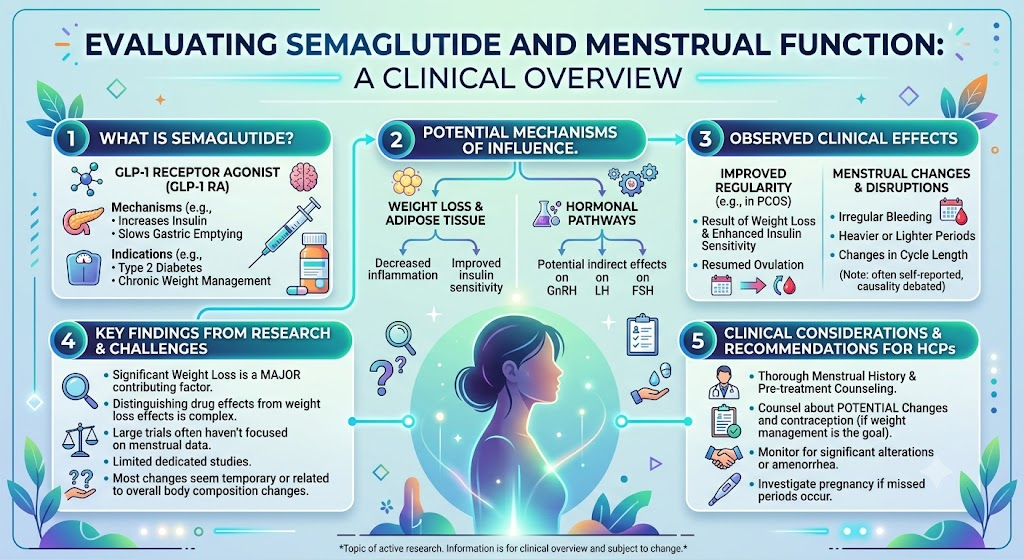
Body fat is far more than passive tissue; it acts as an active endocrine organ that helps produce and regulate hormones like estrogen. When you lose a significant amount of fat, the amount of estrogen circulating in your bloodstream changes. These natural hormonal shifts, rather than a direct chemical reaction from the medication itself, drive most period changes during treatment.
Clinical trials back up this explanation. During the 68-week STEP 1 trial, participants taking semaglutide lost an average of nearly 15% of their total body weight. Shedding weight at that pace can temporarily interrupt the signals sent between your brain and your ovaries.
Because of this temporary pause in communication, you might notice changes in how long your cycle lasts, missed periods, or light spotting. These disruptions usually happen during the fastest phase of weight loss and tend to even out once your weight stabilizes.
Why Rapid Weight Loss Can Pause Your Period
Losing weight quickly can cause amenorrhea, which is the medical term for missing one or more periods. This often happens if you lose around 10% or more of your body weight over a short window. It is your body’s natural defense mechanism: when your brain detects a sudden drop in available energy, it temporarily slows down gonadotropin-releasing hormone (GnRH) production to preserve resources.
When GnRH slows down, your ovaries stop releasing eggs regularly, putting your period on hold. This delay is usually temporary and tends to resolve once your calorie intake and weight level are off.
Key takeaway: A missed period during rapid weight loss is a recognized biological response, not automatically a sign that something is wrong. However, if your period stops for more than three months, you should check in with a doctor to rule out thyroid issues, severe stress, or pregnancy.
How Wegovy Can Help Regulate Irregular Cycles
While losing weight quickly can cause temporary delays, reaching a healthier weight can also make unpredictable cycles far more regular. This benefit is especially noticeable for individuals who struggled with irregular periods before starting treatment. Carrying excess weight is linked to a higher risk of cycle disruption, often doubling the likelihood of irregular ovulation.
This happens because extra fat tissue contributes to insulin resistance and higher androgen (male hormone) levels, both of which interfere with normal ovulation.
Losing weight addresses these root issues simultaneously. Improved insulin sensitivity reduces excess androgen production in the ovaries, allowing clearer brain-to-ovary signals so eggs can mature and release on schedule. Over time, restored ovulation leads to consistent and manageable monthly periods.
What the Research Says About Wegovy and PCOS
The connection between weight loss and period regularity has been studied in women with Polycystic Ovary Syndrome (PCOS). In a 2023 clinical study, researchers evaluated women with obesity and PCOS who took a weekly 0.5 mg dose of semaglutide for six months after lifestyle changes alone had not worked.
The results showed significant progress:
| Outcome Category | Study Results |
| Weight Reduction | Significant average body weight loss over 6 months |
| Cycle Normalization | ~80% of responsive patients restored regular periods |
| Primary Driver | Improved metabolic health and lowered insulin resistance |
Other studies on similar GLP-1 medications show that losing just 5% of your body weight can start restoring cycle regularity. This makes GLP-1 treatments an option for doctors to consider when supporting patients with PCOS.
Effects on Period Flow and Premenstrual Symptoms
Current data on how Wegovy alters menstrual flow or PMS symptoms remains limited, as major clinical trials have not tracked these specific details as primary outcomes. Patient experiences vary across a few main patterns:
Higher body fat creates higher estrogen levels, which thickens the uterine lining and causes heavier bleeding. As fat mass drops, estrogen levels decrease, often leading to a lighter flow. Conversely, some individuals notice no shift in their bleeding volume at all.
Regarding premenstrual symptoms, higher body weight is linked to more severe PMS in epidemiological studies. In theory, weight loss should ease symptoms like bloating and mood swings, though formal studies are still needed to confirm this for Wegovy specifically.
What to Keep in Mind Regarding Fertility
Carrying extra weight can make conceiving harder by disrupting ovulation and uterine receptivity. Because semaglutide aids weight loss, it can indirectly boost fertility, especially in individuals with PCOS who resume regular ovulation as they drop weight.
However, if you are taking Wegovy, you must keep important safety guidelines in mind regarding pregnancy. Prescribing guidelines advise stopping Wegovy well before attempting pregnancy based on animal study data. Speak with your doctor months in advance to map out a safe timeline for discontinuing the medication. Because unexpected ovulation can happen as your weight drops, stay consistent with reliable birth control throughout your treatment until you are ready to plan a pregnancy.
Clinical Summary: What This Means for You
Period changes on Wegovy come down to two main phases: rapid weight loss can temporarily interrupt your cycle, while sustained weight loss helps balance your hormones over time. Understanding that both reactions are normal helps you navigate treatment with confidence.
Start Treatment ➔ Rapid Weight Loss ➔ Temporary Cycle Pause ➔ Weight Stabilizes ➔ Balanced Hormones & Regular Cycle
If you experience short-term delays, give your body time to adjust to your new metabolic baseline. However, if you face prolonged amenorrhea (missing periods for 3+ months), heavy or unusually painful bleeding, or unexpected severe cramping, schedule a visit with your gynecologist for an evaluation.
References
Carmina, E., & Longo, R. A. (2023). Semaglutide treatment of excessive body weight in obese PCOS patients unresponsive to lifestyle programs. Journal of Clinical Medicine, 12(18), 5921. https://doi.org/10.3390/jcm12185921
Itriyeva, K. (2022). The effects of obesity on the menstrual cycle. Current Problems in Pediatric and Adolescent Health Care, 52(8), 101241. https://doi.org/10.1016/j.cppeds.2022.101241
Wilding, J. P. H., Batterham, R. L., Calanna, S., Davies, M., Van Gaal, L. F., Lingvay, I., McGowan, B. M., Rosenstock, J., Tran, M. T. D., Wadden, T. A., Wharton, S., Yokote, K., Zeuthen, N., & Kushner, R. F. (2021). Once-weekly semaglutide in adults with overweight or obesity. New England Journal of Medicine, 384(11), 989-1002. https://doi.org/10.1056/NEJMoa2032183