Consensus Guidelines for Using Incretin Drugs Around Pregnancy

Researchers have published the first comprehensive guide for using incretin-based medications (like GLP-1s) throughout a person’s reproductive life. Published in the journal Obesity Reviews, this review aims to help doctors standardise care. It covers key stages including birth control, planning a pregnancy, pregnancy itself, breastfeeding, and postpartum care.
Incretin-based drugs copy natural gut hormones to help control appetite and blood sugar. While mainly prescribed for type 2 diabetes and chronic weight management, their rapid rise in popularity has raised urgent safety questions for women of childbearing age. To address this, medical experts gathered the available evidence to create practical rules for everyday medical practice.
The team reviewed 34 separate studies, including randomized clinical trials. Encouragingly, the data showed no increased risk of major birth defects when the drugs were used in early pregnancy. However, big questions remain about long-term health for both mothers and children in fact, we still lack clear answers for nearly half of the key reproductive health topics.
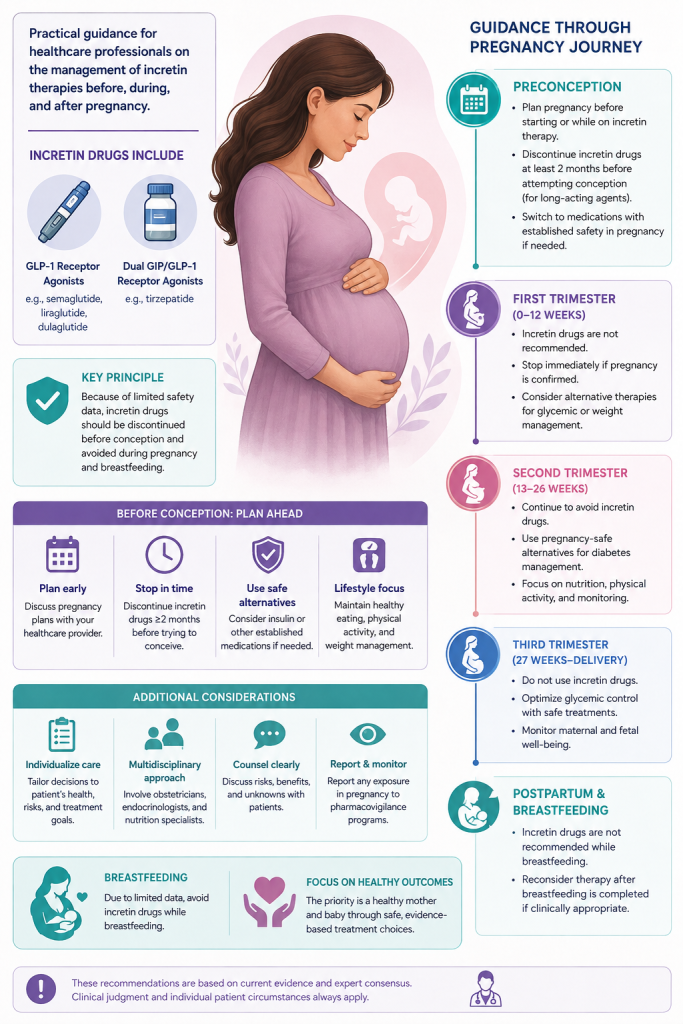
The guide notes clear fertility benefits for women with obesity or conditions like Polycystic Ovary Syndrome (PCOS). Treating weight and metabolism before pregnancy can noticeably improve reproductive health.
However, because safety data isn’t complete, these medications are not recommended during pregnancy or breastfeeding. Because of this, doctors need to offer clear birth control counseling to patients taking these drugs.
Current rules reflect these safety concerns; for instance, the US FDA has not approved incretin drugs for use during pregnancy. Doctors must carefully balance the clear metabolic benefits of these drugs against the unknown risks, making shared decision-making essential when planning a pregnancy.
Experts see these new guidelines as a strong starting point. The goal is to improve healthcare for women while building long-term tracking systems to monitor outcomes over time. As more real-world data comes in, these recommendations will continue to evolve, giving doctors and patients a reliable roadmap for making informed choices.