9 Reasons Your GLP-1 Medication Is Not Working Well
GLP-1 medications like Ozempic and Wegovy have changed how doctors treat weight loss and diabetes. These helpful drugs usually bring great results for many people. However, some users do not see the big changes they expect. Understanding why this happens can help you fix the problem and get better results.
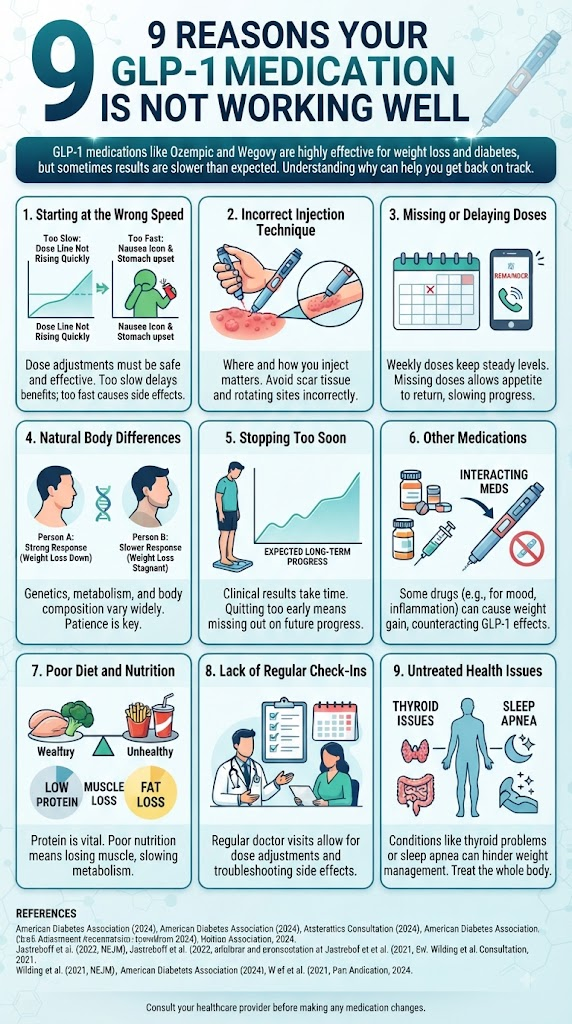
1. Starting at the Wrong Speed
Doctors usually increase your dose slowly to help your stomach get used to the medicine. If your doctor increases the dose too slowly, your body takes longer to get the full benefit. Consequently, your weight loss might feel very slow.
On the other hand, increasing the dose too fast can cause severe stomach upset. Nausea and vomiting often happen when people rush their dose increases. Therefore, your doctor must find a pace that works safely for your body.
2. Incorrect Injection Technique
Where and how you inject the medicine matters a lot for how your body absorbs it. Injecting into scar tissue or the same spot every time can block proper absorption. To be precise, poor technique stops the medicine from working as well as it should.
Always follow the instructions that come with your medication pen. Furthermore, ask your doctor to check your injection method during your next visit. Proper technique ensures your body gets the full dose every week.
3. Missing or Delaying Doses
These medications usually require a weekly injection to keep steady levels in your body. Missing a dose or waiting too long causes your medicine levels to drop. As a result, your appetite might return and slow down your progress.
Always take your shot on your scheduled day. In light of this, setting phone reminders can help you stay on track. Skipping doses too often ruins your overall progress.
4. Natural Body Differences
Everyone’s body reacts differently to the same dose of medicine. Your genes and metabolism play a big role in how well the drug controls your appetite. Thus, two people taking the exact same amount can get very different results.
Moreover, some bodies take much longer to show clear signs of progress. Doctors often look at your results over several months instead of just a few weeks. Patience is key while your body adjusts to the treatment.
5. Stopping Too Soon
These medications take time to show their best results in clinical studies. Many people stop taking the drug too early because they expect fast weight loss. Nevertheless, quitting early means you miss out on months of future progress.
Always talk to your doctor before making any big changes to your routine. Along with this, try to focus on long-term health rather than quick numbers on the scale. Staying consistent leads to much better outcomes.
6. Other Medications
Certain prescription drugs can work against your weight loss goals. Some medicines for mood disorders or inflammation are known to cause weight gain. When you take these drugs together, your GLP-1 shot might not work as well.
Always share a complete list of your current medications with your doctor. Building on this, your doctor might suggest safer alternatives that do not cause weight gain. Managing all your prescriptions together helps your main treatment succeed.
7. Poor Diet and Nutrition
Even though these drugs lower your appetite, healthy food choices still matter. Eating very little protein can cause you to lose muscle instead of fat. Consequently, your body burns fewer calories and slows down your weight loss.
Working with a nutritionist can help you eat the right foods during treatment. Furthermore, adding strength exercises protects your muscles while you lose weight. Good food choices give your body the fuel it needs.
8. Lack of Regular Check-Ins
Seeing your doctor regularly helps catch problems early and keeps you on the right path. Without frequent check-ins, you might stay on a low dose longer than necessary. Meanwhile, minor side effects might make you want to quit altogether.
Schedule regular visits to talk about your progress and any issues you face. Your doctor can adjust your plan whenever your weight loss slows down. Consistent support makes a huge difference in your success.
9. Untreated Health Issues
Other hidden health problems can stop you from losing weight. Conditions like thyroid issues or sleep apnea make weight management much harder. Therefore, treating these extra health problems helps your main medication work better.
Ask your doctor to check for other conditions if you are stuck. Treating the whole body leads to much better results over time. A complete healthcare plan brings the best success
References
American Diabetes Association. (2024). Standards of care in diabetes, 2024. Diabetes Care, 47(Supplement_1), S1-S321. https://doi.org/10.2337/dc24-SINT
Jastreboff, A. M., Aronne, L. J., Ahmad, N. N., Wharton, S., Connery, L., Alves, B., Kiyosue, A., Zhang, S., Liu, B., Bunck, M. C., & Stefanski, A. (2022). Tirzepatide once weekly for the treatment of obesity. New England Journal of Medicine, 387(3), 205-216. https://doi.org/10.1056/NEJMoa2206038
Wilding, J. P. H., Batterham, R. L., Calanna, S., Davies, M., Van Gaal, L. F., Lingvay, I., McGowan, B. M., Rosenstock, J., Tran, M. T. D., Wadden, T. A., Wharton, S., Yokote, K., Zeuthen, N., & Kushner, R. F. (2021). Once-weekly semaglutide in adults with overweight or obesity. New England Journal of Medicine, 384(11), 989-1002. https://doi.org/10.1056/NEJMoa2032183