US Prescription Drug Spending Approaches $1 Trillion, Fueled by GLP-1 Market Surge
Spending on prescription drugs just hit $915 billion. Compared to the previous year, this number shows a rise of about thirteen percent. These results were released in a recent publication by the American Society of Health-System Pharmacists. As a result, the group anticipates that overall spending will shortly exceed $1 trillion.
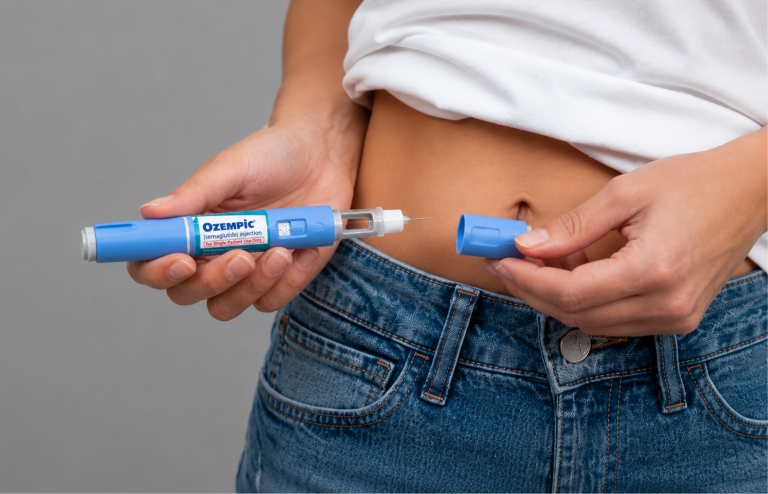
In the past year, tirzepatide generated around sixty-three billion dollars in wholesale transactions. This drug is the best-selling medication in the country. With yearly sales of about $59 billion, Semaglutide came in second. In contrast, apixaban sold for about $29 billion.
A nationwide database that tracks wholesaler purchases is used in the analysis. Medication is distributed throughout the whole care continuum by these wholesalers. As a result, rather than reflecting specific patterns, the numbers represent widespread systemic demand. According to the report, direct price hikes account for less than 1% of overall growth.
Price reductions have played a strategic role in expanding access. Manufacturers reduced the direct consumer price for several weight management products. Furthermore, these companies launched oral GLP-1 formulations to expand patient options. These new formulations offer alternatives for individuals avoiding injectable therapies.
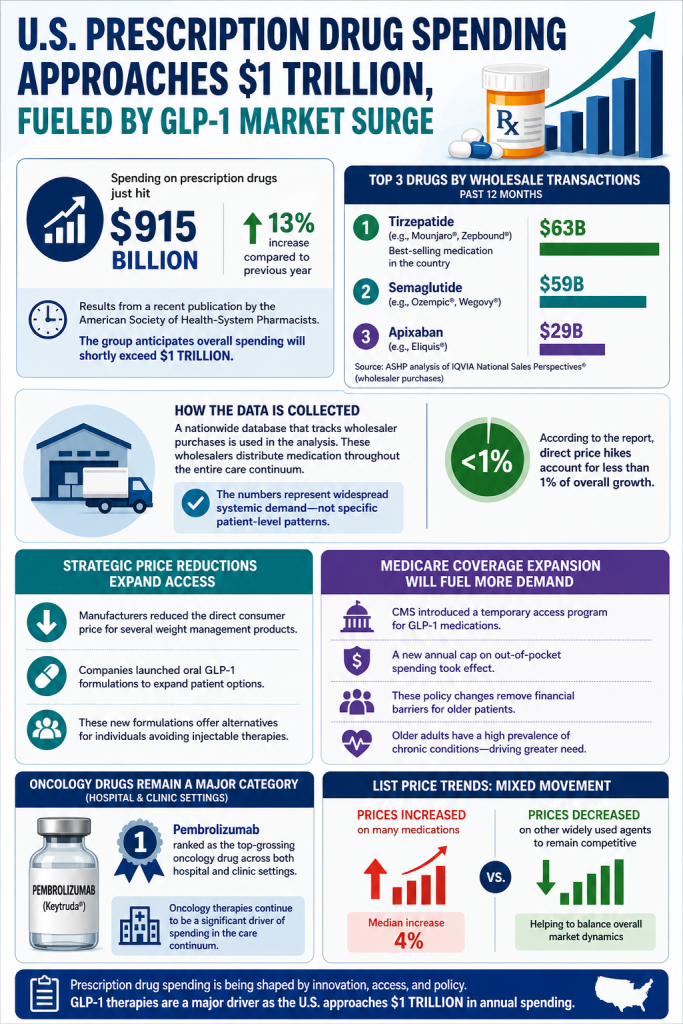
Medicare coverage expansion will likely amplify demand further. The Centers for Medicare and Medicaid Services introduced a temporary access program. Additionally, a new annual cap on out-of-pocket spending took effect. These policy changes remove financial barriers for older patients with high prevalence of chronic conditions.
Oncology pharmaceuticals represent another major category in hospital and clinic settings. Pembrolizumab ranked as the top-grossing oncology drug across both settings. Meanwhile, manufacturers raised list prices on many other medications by a median of four percent. In contrast, other widely used agents reduced list prices to remain competitive.