GLP-1 Medications Linked to Misuse in Eating Disorders

A new study in JAMA Psychiatry highlights a concerning trend with GLP-1 receptor agonists. Researchers found that 32 percent of patients with eating disorders used these weight loss injections. This rate is more than double what is seen in the general population. Additionally, over 10 percent of these individuals actively misused the medication.
The researchers defined misuse to include several different behaviors. Patients reported taking incorrect doses and using the medication for longer than recommended. Some also tampered with injection devices or shared their medications with others who were not authorized. Each behavior poses unique safety risks for the patients involved.
The Food and Drug Administration approves these medications mainly for type 2 diabetes. Regulators also allow their use for chronic weight management and reducing cardiovascular risk. Recent expansions have added approvals for chronic kidney disease and obstructive sleep apnea. However, these drugs are not approved for patients with eating disorders.
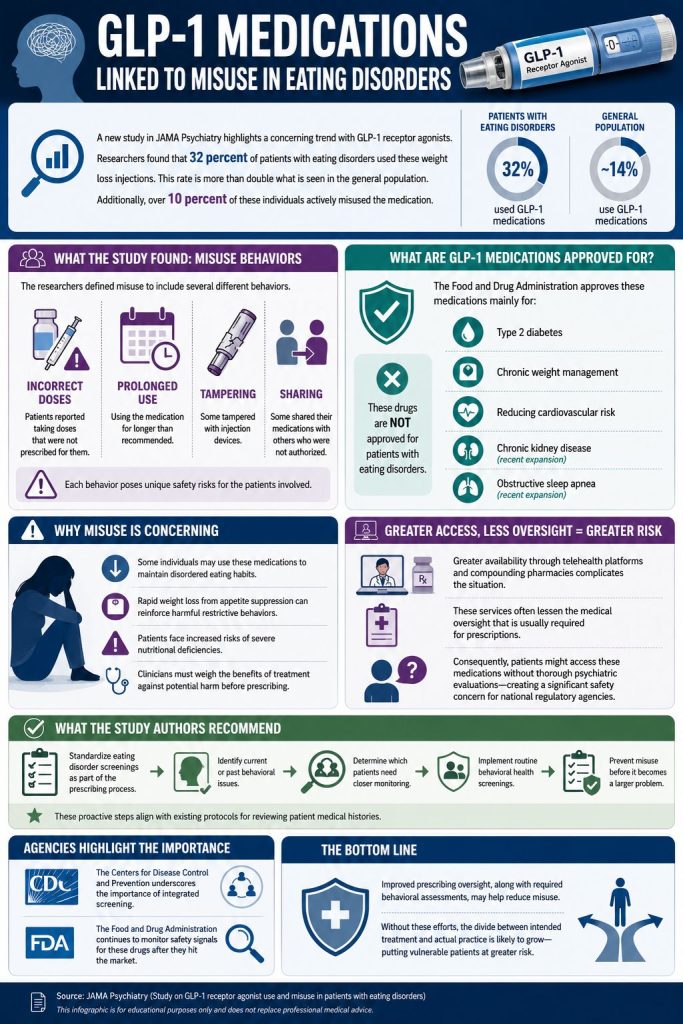
The study authors suggest that some individuals may use these medications to maintain disordered eating habits. Rapid weight loss from appetite suppression can reinforce harmful restrictive behaviors. As a result, patients face increased risks of severe nutritional deficiencies. Clinicians need to consider the benefits of treatment against potential harm before starting a patient on these medications.
Greater availability through telehealth platforms and compounding pharmacies complicates the situation. These services often lessen the medical oversight that is usually required for prescriptions. Consequently, patients might access these medications without thorough psychiatric evaluations. This gap in oversight is a significant safety concern for national regulatory agencies.
Given these issues, the study authors recommend standardizing eating disorder screenings as part of the prescribing process. Identifying current or past behavioral issues allows clinicians to decide which patients need closer monitoring. Implementing routine behavioral health screenings could help prevent misuse before it becomes a larger problem. These proactive steps align with existing protocols for reviewing patient medical histories.
The Centers for Disease Control and Prevention underscores the importance of integrated screening. The Food and Drug Administration also continues to monitor safety signals for these drugs after they hit the market. Improved prescribing oversight, along with required behavioral assessments, may help reduce misuse. Without these efforts, the divide between intended treatment and actual practice is likely to grow.