Stopping GLP-1 Drugs May Raise Mental Health Risks in Type 2 Diabetes Patients

New research shows that people who stop taking GLP-1 receptor agonist drugs may face a higher risk of mental health problems like depression and anxiety (Zhang et al., 2026). The study tracked patients over time, comparing those on GLP-1 drugs with those using other treatments. It adds important new information to what doctors already know about these medicines.
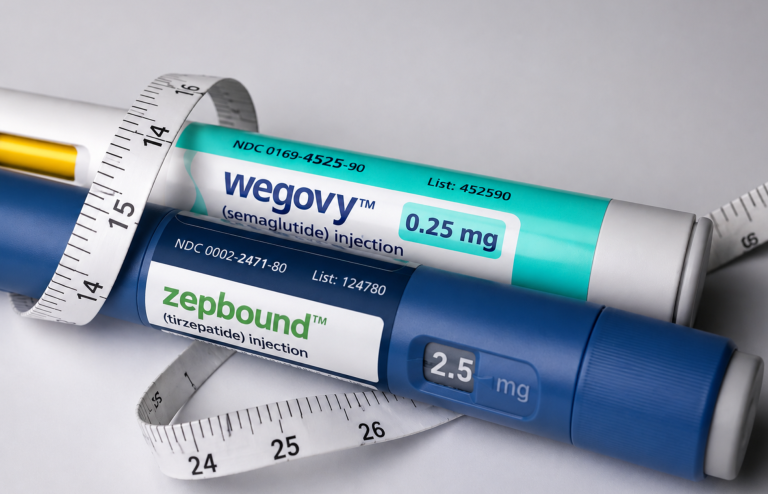
GLP-1 drugs are commonly used to treat type 2 diabetes and help with weight loss. They work by copying a natural hormone in the body that helps release insulin and slows down digestion. Because these drugs can sometimes affect mood or mental health, the FDA requires drug makers to monitor them closely. This is why doctors keep a close eye on patients while they’re using these medications.
The good news is that while patients were actively taking the drug, the study found no extra risk of mental health issues. This matches earlier findings from a large review of past studies (Pierret et al., 2025). In fact, people taking GLP-1 drugs had a lower risk of psychiatric problems compared to those on other treatments during this time. So, taking the medicine itself doesn’t seem to harm mental health, it may even help.
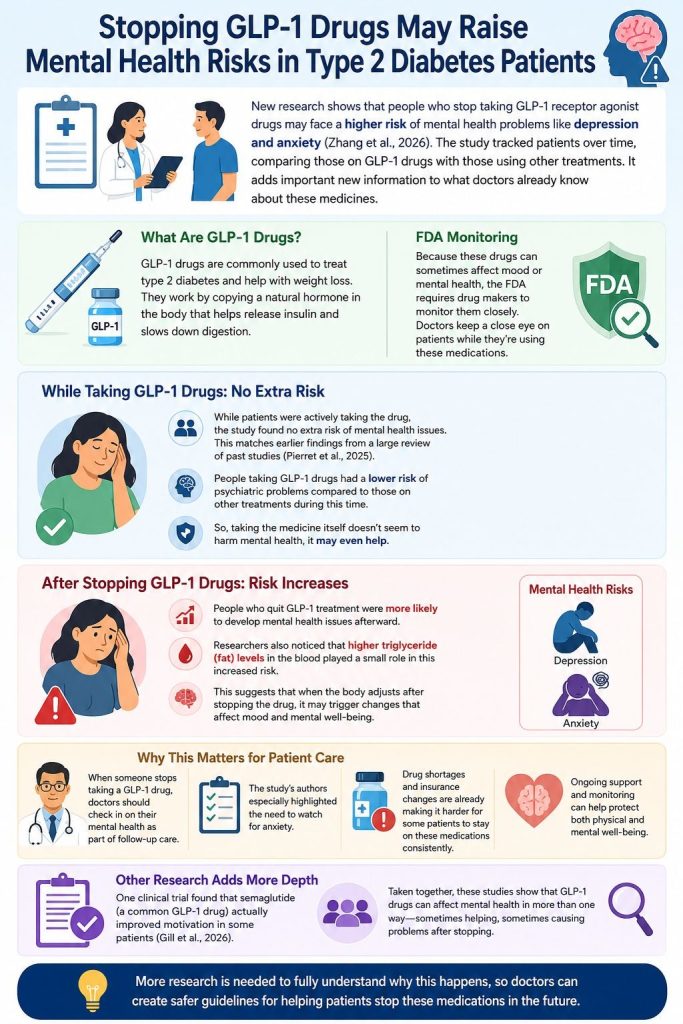
But the picture changes once patients stop taking the drug. The study found that people who quit GLP-1 treatment were more likely to develop mental health issues afterward. Researchers also noticed that higher triglyceride (fat) levels in the blood played a small role in this increased risk. This suggests that when the body adjusts after stopping the drug, it may trigger changes that affect mood and mental well-being.
These results matter for how doctors care for patients. Experts suggest that when someone stops taking a GLP-1 drug, doctors should check in on their mental health as part of follow-up care. The study’s authors especially highlighted the need to watch for anxiety. Meanwhile, drug shortages and insurance changes are already making it harder for some patients to stay on these medications consistently.
Other research adds more depth to this story. One clinical trial found that semaglutide (a common GLP-1 drug) actually improved motivation in some patients (Gill et al., 2026). Taken together, these studies show that GLP-1 drugs can affect mental health in more than one way, sometimes helping, sometimes causing problems after stopping. More research is needed to fully understand why this happens, so doctors can create safer guidelines for helping patients stop these medications in the future.