Type 2 Diabetes Medications Show Divergent Optic Nerve Safety Profiles

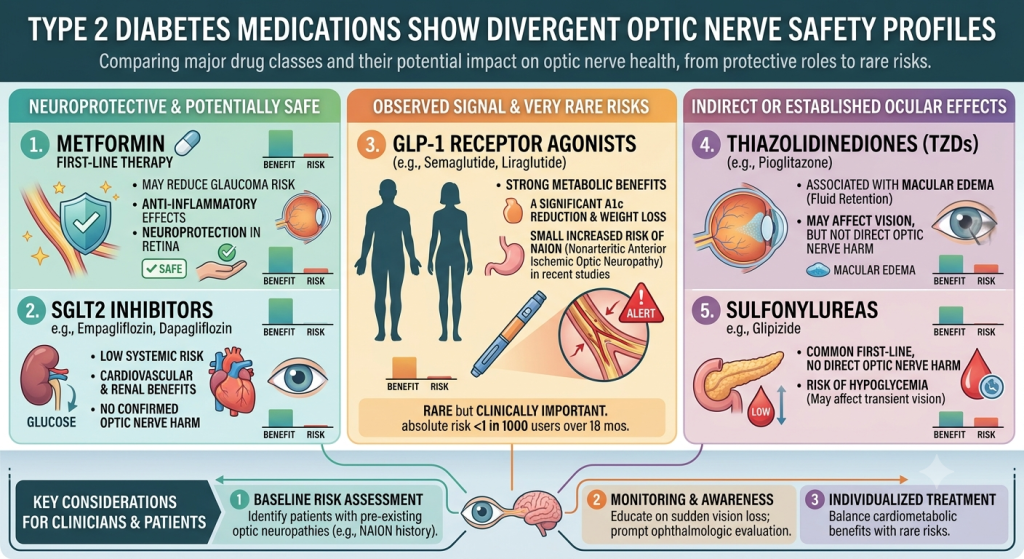
Researchers have found a slightly higher risk of ischemic optic neuropathy in adults with type 2 diabetes. This risk is especially noted in patients starting glucagon-like peptide-1 receptor agonists. As a result, investigators compared these patients with those beginning other common diabetes medications. This study analyzed a large commercial database with records from over 369,000 participants.
Ischemic optic neuropathy happens when a sudden drop in blood flow harms the optic nerve. This serious condition can lead to painless and often permanent vision loss. It is one of the main causes of vision impairment in adults. Researchers suggest that rapid changes in glucose levels or fluctuations in intraocular pressure might cause this damage.
The absolute risk of optic nerve damage was very low across all drug classes studied. Because of this, the authors of the study advised caution when interpreting the comparisons. Notably, the increased safety signal was mainly seen in men aged 50 or older. This group already has a higher risk for eye problems.
Several design limitations, however, affect these broad clinical conclusions. The study group was older and mostly male, making it difficult to generalize the findings to the wider population. Additionally, observational studies using claims databases often face risks from remaining confounding factors.
These findings add to a growing body of clinical research. For instance, a different study found a higher odds ratio for vision complications linked to these agents. Another large insurance database study similarly compared medication groups to evaluate safety. In light of these results, researchers stress the need for uniform tracking of outcomes.
The practical implications for healthcare providers are limited due to the low absolute risk. The Food and Drug Administration has not issued any specific black box warnings. Clinicians should still be watchful for sudden visual changes in their patients. Ultimately, providers should discuss these minimal risks along with the clear benefits for heart and metabolic health.