Novo Nordisk’s New Wegovy Trial Could Mean Smaller Pills, Fewer Side Effects
Novo Nordisk just started a trial that could change how doctors prescribe. The question is simple. Can a smaller dose still deliver real weight loss?
The trial began on August 12. It will follow 450 adults over the coming months. Researchers want to see if lower doses of semaglutide, the drug behind Wegovy, still work well without causing as much nausea or stomach discomfort. That’s important, since these side effects are often why people stop taking the medication in the first place.
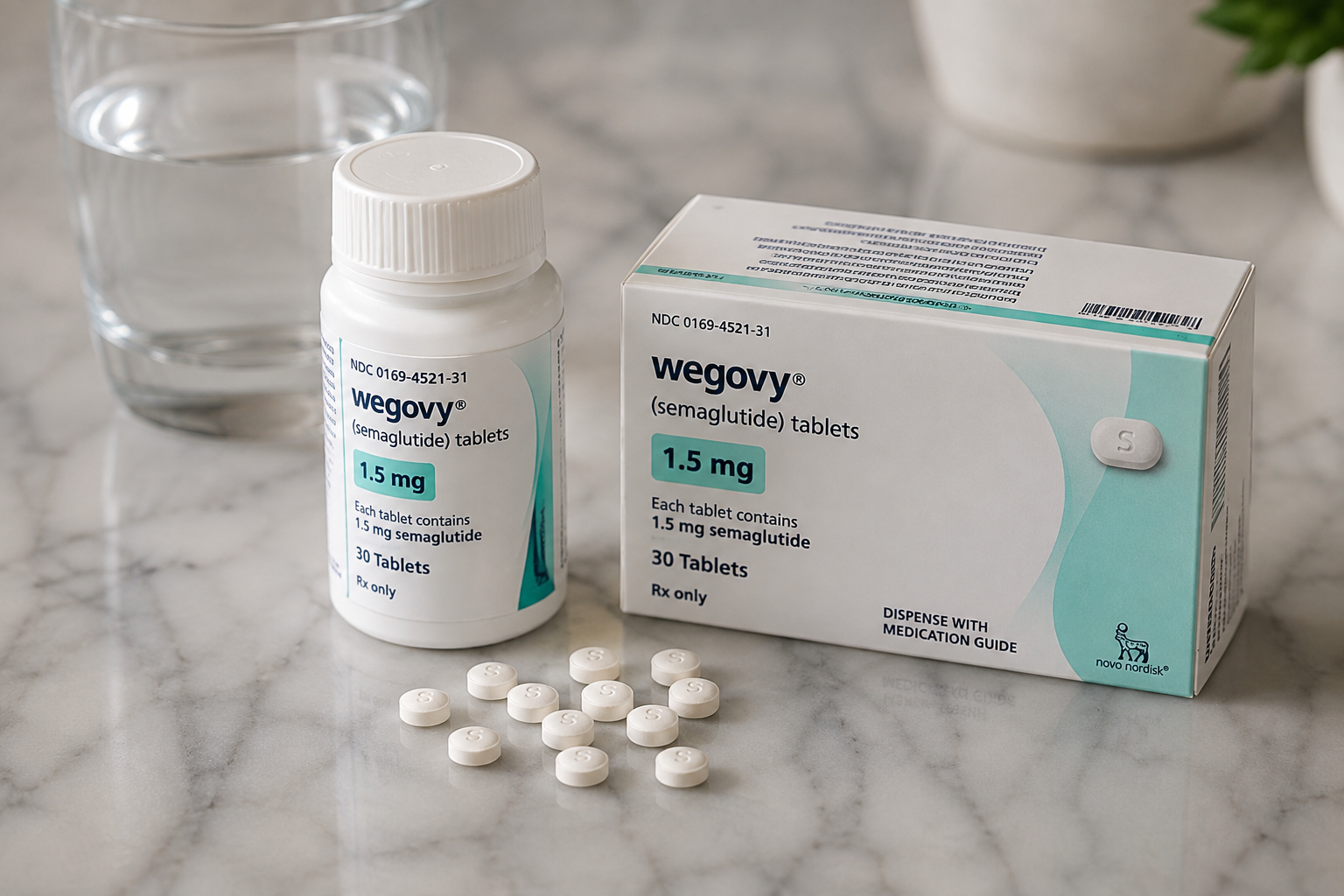
Wegovy pills currently come in four strengths: 1.5 milligrams, 4 milligrams, 9 milligrams, and 25 milligrams. Most doctors consider 25 milligrams the standard maintenance dose. This trial takes a different approach, though. It tests two smaller, unnamed doses against a placebo.
Not everyone can join. Participants need a body mass index of 27 or higher, which puts them in the overweight or obese range. People with type 2 diabetes won’t qualify. Neither will anyone who’s had big recent weight changes or who’s already taking other GLP-1 drugs like Ozempic or Mounjaro.
What are researchers actually watching for? Mainly, weight loss after 60 weeks. But they’re also tracking safety closely, following participants through week 67 to catch any side effects or early dropouts. Beyond that, the team will check waist measurements, blood pressure, blood sugar, and cholesterol levels along the way.
This study won’t wrap up quickly. Novo Nordisk expects results to come in over the next couple of years, with the trial running through 2028.
Past data gives some useful context here. In an earlier trial, patients who stayed on the 25 milligram dose lost about 16.6% of their body weight after 64 weeks. Those taking a placebo lost only 2.7%. That gap is why the higher dose became the default option for so many patients.
Even so, a lower dose that performs nearly as well could open up new possibilities. Doctors could offer more flexible treatment plans, especially for patients who find the higher doses hard to tolerate.
Money matters here too. Self-paying patients already tend to choose the lower-dose pills, mostly because they cost about half as much as the stronger versions. Interestingly, more than two-thirds of current Wegovy pill users already stick to the two lowest doses. That tells you something. Patients are already making decisions based on price, even without formal recommendations pushing them that way.
Demand for Wegovy hasn’t slowed down either. Since launching in January, the pill has racked up over five million prescriptions. That’s fast growth, and it’s helped Novo Nordisk hold onto a strong spot in a crowded market.
Still, the competition is fierce. Eli Lilly has been steadily gaining ground, and analysts expect the obesity drug market to surpass $100 billion annually by 2030. Neither company plans to lose that race easily. Wegovy pills alone brought in roughly $499.80 million for Novo Nordisk last quarter.
A better-tolerated, lower dose could give the company a real advantage. It wouldn’t mean starting from zero, either. Since the FDA already approved Wegovy, this study is more about refining what’s already available. That usually means faster results and lower development costs compared to building a brand-new drug.
There’s a public health side to this too. Some patients already lower their own doses on their own, often to cut costs or ease side effects. Regulators generally discourage that, mainly because it happens without any medical supervision.
If this trial goes well, doctors could finally have a tested, approved lower-dose option to offer patients. That beats leaving people to experiment on their own without guidance.