Physicians Prescribe GLP-1 Medications Off-Label to Young Children

Physicians are prescribing GLP-1 receptor agonists to children under twelve, despite the lack of specific federal approval. The Food and Drug Administration (FDA) only approves these weight loss medications for patients aged twelve and older. As a result, clinicians who prescribe these drugs to younger children do so under off-label rules. This legal practice currently lacks specific safety data for this younger group.
Clinicians point to rising health risks among severely obese children to support the need for early treatment. Doctors are seeing high blood pressure, elevated blood sugar, and liver problems in patients as young as four. Given these issues, some practitioners believe that behavioral treatments alone cannot address urgent metabolic risks. Therefore, they prescribe medications to help protect young patients from immediate harm.
GLP-1 receptor agonists mimic a natural hormone that signals fullness and slows down stomach emptying. This mechanism reduces appetite and lowers overall calorie intake, leading to significant weight loss. Other drugs in this class work in similar ways, though the specific molecular targets differ slightly across various products.
The American Academy of Pediatrics recommends intensive behavioral and lifestyle treatment for obese children aged six and older. Current guidelines allow for medication as an additional option, but only starting at age twelve. Consequently, the organization does not support the use of these medications in children younger than that. This cautious approach reflects serious concerns about the lack of safety evidence.
The leaders behind the Academy guidelines emphasize that there is not enough evidence to justify prescribing these medications to young children. This viewpoint highlights a wider concern among pediatric specialists about long-term physical effects. Critical developmental stages need careful monitoring. Specifically, researchers have not studied bone growth, brain development, and nutritional status well enough in this context.
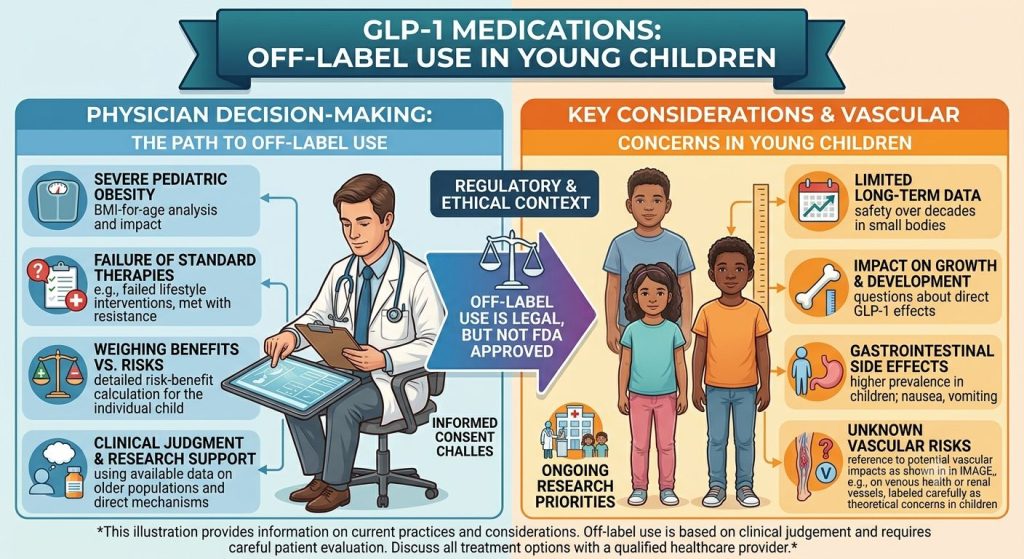
Unlike adults, young children are constantly developing their skeletal and nervous systems. These sensitive processes could interact unpredictably with strong appetite-suppressing drugs. Nevertheless, drug manufacturers are working on more research to explore these uncertainties. One major manufacturer is conducting clinical trials to test safety and effectiveness in children as young as six.
This research effort aims to provide the evidence that regulators need for expanding labels. Until these data are available, prescribing remains a decision made by individual doctors. As a result, treatment methods differ widely among pediatric practices. This lack of consistency raises significant fairness and safety concerns.
Off-label prescribing is not illegal under current federal law. However, this practice shifts much of the risk assessment responsibility onto individual doctors and families. The FDA does not control how clinicians use approved medications. Therefore, safety monitoring relies heavily on physician judgement and post-market oversight.
Pediatric obesity is increasingly linked to early-onset heart disease and metabolic issues. This troubling trend creates urgency among practitioners looking for immediate solutions. At the same time, the lack of long-term outcome data makes it difficult to create evidence-based standards. Ongoing pediatric trials are likely to influence future guidelines and possible regulatory changes.