GLP-1 Drugs Reshape Consumer Markets as Appetite Suppression Drives Structural Demand Shifts

GLP-1 receptor agonists now impact markets far beyond their original medical uses. About 30 million people take these medications to manage their health. This widespread use changes consumer behavior in noticeable ways. Demand for fast food has dropped by an estimated 27 to 30 percent among these users.
Analysts link this decline directly to the appetite-suppressing effects of these drugs. They mimic natural incretin hormones, which slow down gastric emptying. This action lowers overall caloric intake and leads to lasting behavior changes. Therefore, the current level of use causes a lasting decrease in market demand.
Investors and health economists see this change in diet as a permanent feature of the market. Several publicly traded companies are already benefiting from these new consumption patterns. For instance, Amazon has expanded its pharmacy infrastructure and last-mile delivery services. This expansion positions the online retailer to meet the rising demand for prescription fulfillment.
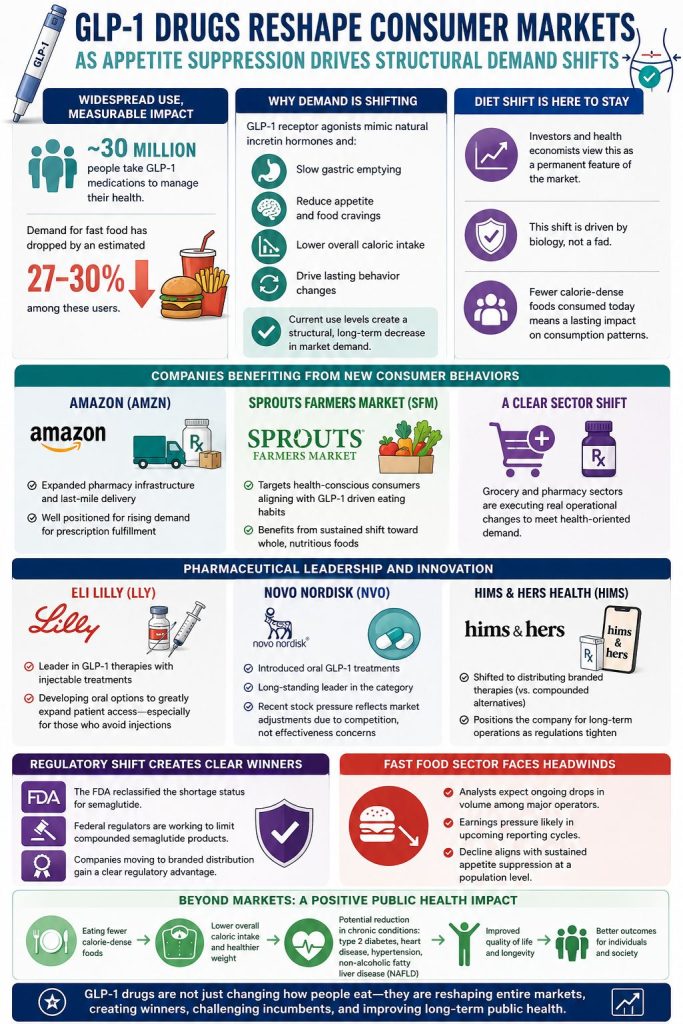
At the same time, Sprouts Farmers Market targets health-conscious consumers. These people adopt specific eating habits that fit well with the effects of GLP-1 therapy. Both companies show a wider shift in focus toward health-oriented business practices. As a result, the grocery and pharmacy sectors are making clear operational changes.
In the pharmaceutical industry, Eli Lilly leads the competition. The company actively markets injectable treatments to patients. Researchers are also developing oral options to greatly increase patient access. This approach targets individuals who usually avoid injections.
Novo Nordisk has also introduced oral treatments. The company is a long-standing leader in this type of drug. However, Novo Nordisk’s stock performance has recently faced unique challenges. This is due to market adjustments related to competition, not concerns about effectiveness.
Hims and Hers Health represents another type of market player. The company has shifted to distributing branded therapies instead of alternative options. This change is important for long-term operations because federal regulators are working to limit compounded semaglutide products.
The Food and Drug Administration started this policy after reclassifying the shortage status. As a result, companies moving to branded distribution gain a clearer regulatory advantage. The fast food sector will likely struggle with earnings during upcoming reporting cycles. Analysts expect ongoing drops in volume among major operators.
This decline aligns with ongoing appetite suppression at a population level. Data shows that this shift is a lasting change, not a temporary one. The public health impacts go beyond corporate market results. In the end, eating fewer calorie-dense foods may lead to decreases in chronic health issues.