Hashimoto’s Disease and GLP-1 Medications: What You Need to Know

Hashimoto’s thyroiditis is the most common autoimmune thyroid condition, and it affects millions of people. In this disease, the immune system mistakenly attacks and destroys healthy thyroid tissue. This attack leads to an underactive thyroid and slows down the body’s metabolism. Today, doctors frequently treat patients who have both thyroid issues and weight problems. This overlap happens because GLP-1 weight loss medications have become incredibly popular. Therefore, understanding how these drugs affect thyroid patients is now a medical necessity.
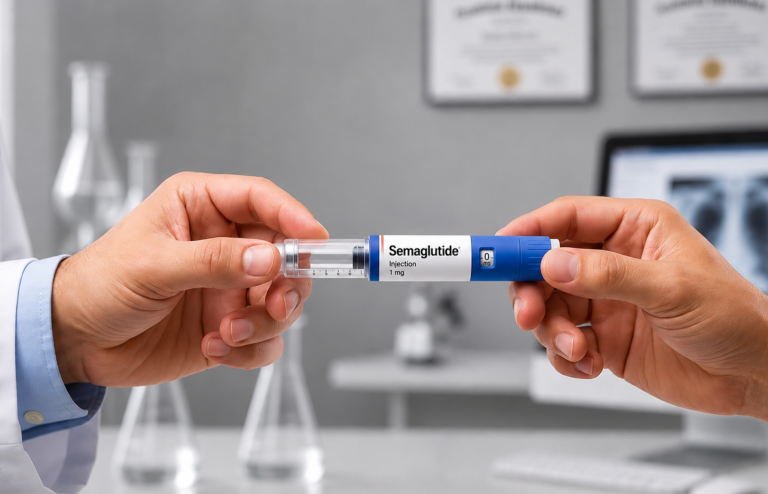
GLP-1 medications help patients lose significant amounts of weight and lower their blood sugar levels. They work by mimicking natural hormones that control appetite, digestion speed, and insulin release. Because they work so well, they have completely changed how doctors treat chronic weight issues. This is especially true for patients who already suffer from other hormonal disorders. For this reason, we need to take a closer look at how these drugs affect people with Hashimoto’s.
Metabolic Burden in Hashimoto’s Thyroiditis
An underactive thyroid caused by Hashimoto’s creates very real metabolic problems. When the thyroid produces fewer hormones, the body burns fewer calories at rest. This drop in energy expenditure makes it very easy to gain weight and store excess body fat. Consequently, patients with untreated thyroid issues often struggle with high cholesterol and weight gain. These exact metabolic struggles are the very problems that GLP-1 medications are designed to fix.
Insulin resistance also occurs frequently in Hashimoto’s patients, even when their thyroid hormone levels look normal. The underlying thyroid autoimmunity seems to disrupt how the body processes sugar. Furthermore, the constant, low-grade inflammation caused by an autoimmune disease makes these metabolic issues even worse. This heavy inflammatory burden is why GLP-1 drugs might help thyroid patients in unexpected ways.
Body weight and thyroid health are deeply connected to each other. Excess body fat behaves like an active hormonal organ that pumps out inflammatory proteins. Because of this reality, carrying extra weight can actually make the immune system attack the thyroid even harder. Losing weight through any method can therefore calm down the immune system. This means weight loss offers unique immune benefits for this specific group of patients.
GLP-1 Receptor Agonists: Mechanisms Relevant to Thyroid Autoimmunity
GLP-1 receptors sit on cells throughout the entire body, including the pancreas, brain, and heart. Interestingly, scientists have also discovered these receptors inside thyroid tissue. Early animal studies showed that GLP-1 drugs bind to specific thyroid cells in rodents. This binding caused abnormal cell growth and triggered medullary thyroid cancer in rats. These alarming animal findings are the primary reason for current safety warnings.
| GLP-1 Medication Effect | How It Changes Hashimoto’s Biology | What This Means for Your Medical Care |
| Slower Digestion | Changes how the stomach absorbs thyroid pills | Requires doctors to check TSH levels more often |
| Appetite Reduction | Lowers inflammation by reducing body fat tissue | May help reduce overall thyroid antibodies |
| Better Insulin Use | Fixes underlying problems with blood sugar | Helps reverse slow metabolism from thyroid disease |
| Thyroid Cell Binding | Triggers abnormal cell growth in rodents | Requires careful screening for rare thyroid cancers |
The Food and Drug Administration places a prominent warning on GLP-1 drugs regarding thyroid cancer risks. This warning applies to anyone with a personal or family history of medullary thyroid carcinoma. Fortunately, Hashimoto’s is a completely different type of disease that affects follicular thyroid cells. It does not raise your risk for this specific, rare type of cancer. Nevertheless, doctors must carefully review your complete medical history before starting these medications.
Human data have not shown that GLP-1 medications make autoimmune thyroid diseases any worse. In fact, some early evidence shows that weight loss from these drugs might lower thyroid antibodies. This improvement likely happens because losing fat reduces general inflammation in the body. However, researchers still need to conduct long-term human studies to prove this benefit conclusively.
Levothyroxine Absorption and Pharmacokinetic Considerations
GLP-1 medications slow down how fast food leaves your stomach. This slower digestion is great for preventing sudden spikes in blood sugar after meals. However, a slower stomach also changes how your body absorbs other oral medications. Levothyroxine, the standard daily pill for Hashimoto’s patients, is highly sensitive to these types of digestive changes.
Levothyroxine requires a very strict routine to absorb properly into your system. Patients must take it on an empty stomach with a full glass of water. Because GLP-1 drugs delay stomach emptying, they can easily disrupt this fragile absorption process. As a result, your doctor should order more frequent blood tests when you start taking weight loss medication.
Changes in your thyroid levels right after starting a GLP-1 drug might just be an absorption issue. Clinicians should not immediately assume that your underlying autoimmune disease is getting worse. To get a clearer picture, doctors should look at both TSH and free T4 levels together. Your thyroid medication dose may need temporary adjustments until your digestion stabilizes on the new drug.
Weight Loss Outcomes and Thyroid Function in Clinical Practice
Losing weight reliably improves overall health for people struggling with obesity. For a Hashimoto’s patient, shedding pounds can cool down systemic inflammation and improve thyroid numbers. Unfortunately, clinical trials focused specifically on GLP-1 use in Hashimoto’s patients are still quite small. Therefore, doctors must use general medical data to guide their treatment choices for now.
Your actual requirement for thyroid medication can change dramatically after you lose weight. As your body mass shrinks and your metabolism shifts, your old levothyroxine dose might become too strong. This medication shift happens with any major weight loss, whether from dieting or medication. Continuous blood monitoring remains the safest way to catch these changes and protect your health.
Patients with both Hashimoto’s and obesity usually see great improvements in their insulin levels on these drugs. These health benefits go far beyond simple weight loss on a scale. To be precise, the anti-inflammatory nature of GLP-1 drugs might provide extra protection for thyroid tissue. While these ideas are exciting, the direct evidence in human thyroid patients is still in the early stages.
Patient Selection and Monitoring Framework
Doctors must perform a complete medical evaluation before prescribing a GLP-1 drug to a Hashimoto’s patient. This checkup ensures your current thyroid levels are stable and properly controlled with medication. It must also include a deep dive into your family history regarding rare thyroid cancers. Patients with highly unstable thyroid numbers should wait to start weight loss drugs until their hormone levels normalize.
Once treatment begins, standard protocol involves checking thyroid levels every three months for the first year. Furthermore, patients must stay incredibly consistent with how they take their morning thyroid medication. It is also important to know that thyroid symptoms like fatigue can mimic weight loss side effects. A clear tracking system helps your doctor figure out the exact cause of your symptoms.
Conclusion
Using GLP-1 medications when you have Hashimoto’s disease requires a careful, personalized medical plan. This situation demands smart patient screening, awareness of digestion changes, and routine blood work. Current evidence shows that these weight loss drugs offer massive health benefits for thyroid patients. Meanwhile, managing how your body absorbs your daily thyroid pill remains the most urgent practical concern.
As medical research advances, doctors are moving away from old, unnecessary fears about these drugs. Having an autoimmune thyroid condition does not mean you cannot safely use GLP-1 medications. These drugs still offer incredible heart and metabolic benefits for people who qualify for them. Future human studies will eventually answer our remaining questions about long-term thyroid health and antibody levels.
References
Biondi, B., Cappola, A. R., & Cooper, D. S. (2019). Hypothyroidism in adults. JAMA, 322(2), 153–160. https://doi.org/10.1001/jama.2019.9052
Drucker, D. J. (2022). GLP-1 physiology informs the pharmacotherapy of obesity. Molecular Metabolism, 57, 101351. https://doi.org/10.1016/j.molmet.2021.101351
Knudsen, L. B., & Lau, J. (2019). The discovery and development of liraglutide and semaglutide. Frontiers in Endocrinology, 10, 155. https://doi.org/10.3389/fendo.2019.00155
Pearce, E. N., Farwell, A. P., & Braverman, L. E. (2003). Thyroiditis. New England Journal of Medicine, 348(26), 2646–2655. https://doi.org/10.1056/NEJMra021194