Daily Oral Orforglipron Maintains Weight Loss After Injectable Discontinuation

Orforglipron is an oral medication that has progressed obesity pharmacotherapy according to new findings from clinical trials. Researchers assessed whether a daily tablet may help individuals maintain their weight loss after they stopped receiving injectable therapies. The results have important ramifications for managing obesity over the long run and patient compliance.
The clinical trial enrolled 376 participants who had previously achieved weight reduction on injectable medications and then stopped. After a year, researchers discovered that those on orforglipron maintained more than 70% of their previous weight loss. Only 38 to 50% of the weight loss was preserved by the placebo group. This difference suggests that the oral drug has a statistically significant preservation effect.
Orforglipron works by imitating the naturally occurring incretin hormone glucagon-like peptide-1. By activating certain receptors, the tiny chemical reduces hunger and increases satiety. Interestingly, this technique targets the same molecular pathway as injectable drugs currently on the market. Orforglipron doesn’t require an injection, unlike those conventional treatments, which could significantly increase long-term patient compliance.
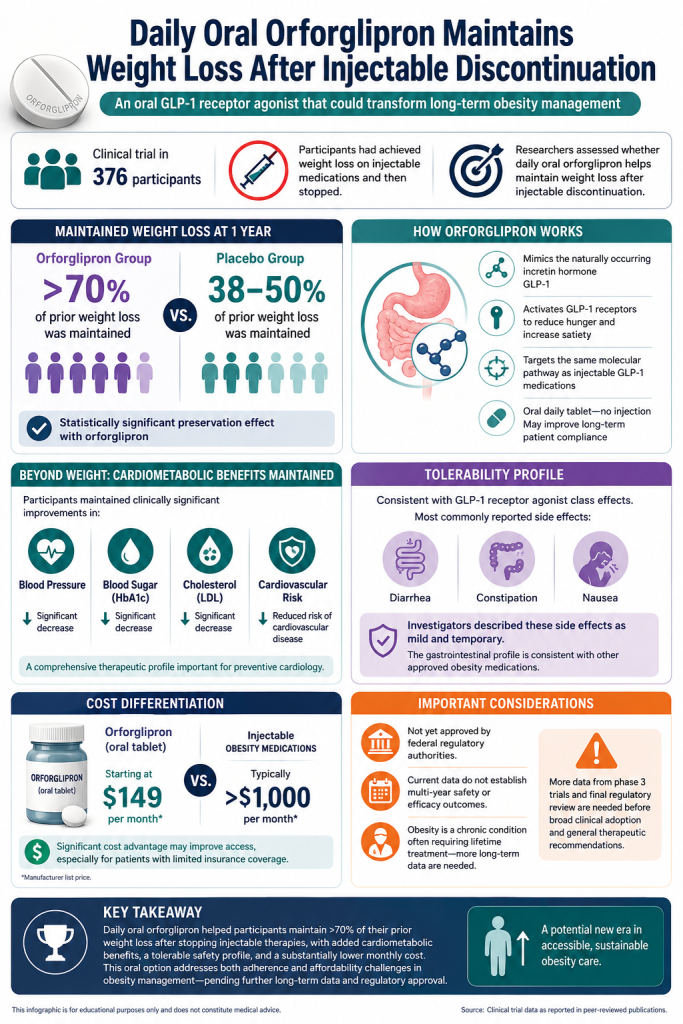
The trial recorded clinically significant secondary health effects in addition to weight retention. Significant drops in blood pressure, blood sugar, and cholesterol were maintained by the participants. The risk of cardiovascular disease is directly impacted by these cardiometabolic indicators. Because of this, the more comprehensive therapeutic profile is still very important for preventive cardiology.
Orforglipron’s tolerability profile matched the established class effects of receptor agonists. The most commonly reported side effects were diarrhea, constipation, and nausea. During the study, the investigators described these problems as minor and temporary. Additionally, the gastrointestinal profile seen with other approved obesity medicines is consistent with these occurrences.
One of the most important aspects of this new medication profile is cost differentiation. The lowest dose is priced at about $149 per month by the manufacturer. This baseline contrasts with numerous injectable solutions that cost more than $1,000 each month. For patients with severe insurance limitations, this premium disparity may thereby increase access.
Federal regulatory approval for the drug’s public distribution has not yet been granted. Along with this, the current dataset does not establish multi-year safety or efficacy outcomes. Scholars warn that managing obesity often necessitates lifetime treatment. Therefore, before providing general therapeutic suggestions, professionals will need more comprehensive data.
Weight gain after stopping medication has historically been a problem in the management of obesity. The dual obstacles of patient adherence and financial availability are simultaneously addressed by this oral formulation. However, the findings of next phase 3 trials and the final regulatory evaluation will determine full clinical adoption.