Regulatory Clearance Granted for Initial Human GLP-1 Gene Therapy Trial

Health authorities authorized the first-in-human clinical trial of a GLP-1 gene therapy. This decision marks a significant shift in the therapeutic approach to obesity and Type 2 diabetes. Specifically, regulators approved the study of an investigational candidate known as RJVA-001. This authorization represents a meaningful regulatory milestone within the evolving landscape of metabolic disease treatment.
Current GLP-1 receptor agonists must be administered systemically over an extended period of time at a high dose. As a result, many patients are unable to sustain this demanding course of treatment over time. Long-term clinical outcomes are significantly limited by this noncompliance. By using a radically different approach, the exploratory candidate seeks to close this therapeutic gap.
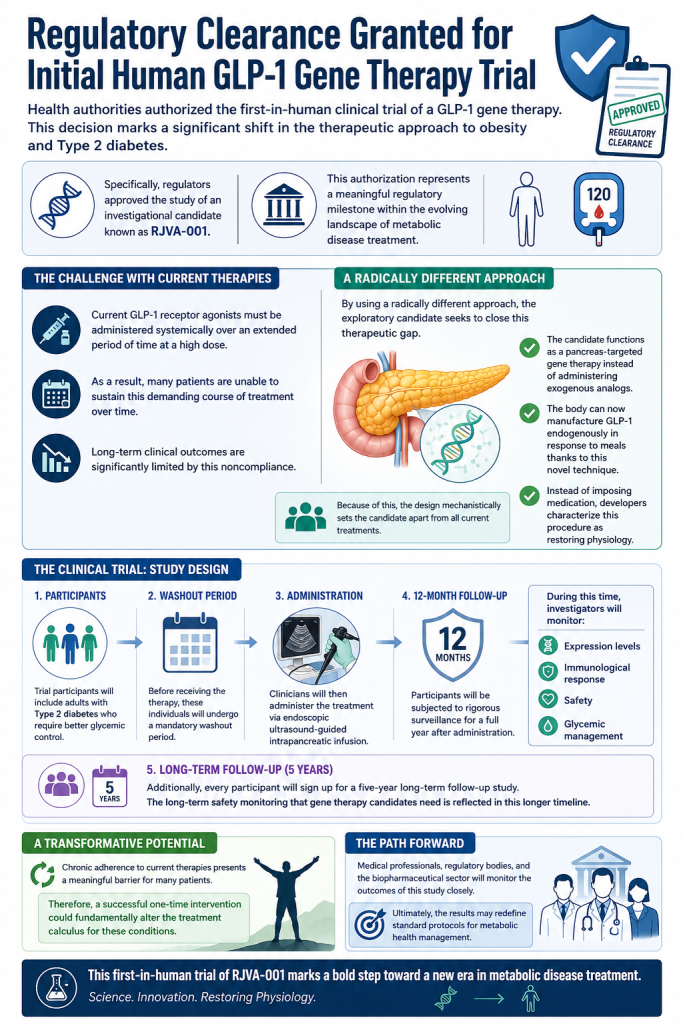
The candidate functions as a pancreas-targeted gene therapy instead of administering exogenous analogs. The body can now manufacture GLP-1 endogenously in response to meals thanks to this novel technique. Instead of imposing medication, developers characterize this procedure as restoring physiology. Because of this, the design mechanistically sets the candidate apart from all current treatments.
Trial participants will include adults with Type 2 diabetes who require better glycemic control. Before receiving the therapy, these individuals will undergo a mandatory washout period. Clinicians will then administer the treatment via endoscopic ultrasound-guided intrapancreatic infusion. This highly targeted delivery route localizes gene expression directly to pancreatic tissue.
Participants will be subjected to rigorous surveillance for a full year after administration. During this time, investigators will monitor expression levels, immunological response, safety, and glycemic management. Additionally, every participant will sign up for a five-year long-term follow-up study. The long-term safety monitoring that gene therapy candidates need is reflected in this longer timeline.
Chronic adherence to current therapies presents a meaningful barrier for many patients. Therefore, a successful one-time intervention could fundamentally alter the treatment calculus for these conditions. Medical professionals, regulatory bodies, and the biopharmaceutical sector will monitor the outcomes of this study closely. Ultimately, the results may redefine standard protocols for metabolic health management.