How GLP-1 Weight Loss Drugs Are Changing Consumer Shopping Habits

The growing use of glucagon-like peptide-1 receptor agonists for weight management leads to measurable effects. Behavioral data show that users change their purchasing habits across several consumer sectors. This shift impacts grocery retail, food manufacturing, apparel, and health categories. Industry analysts view this change as a fast disruption in consumer behavior.
A national study finds that household use of these medications has recently exceeded 20 percent. This is a significant rise from 9 percent the previous year. The growth is fueled by more direct-to-consumer channels and better affordability. Additionally, the recent approval of an oral version will likely boost market growth further.
The speed of this behavior change resembles the historical adoption rate of smartphones. Data confirm that these shifts in consumer behavior last over time instead of fading as the novelty wears off. Moreover, the blending of health-focused behavior and shopping creates new opportunities for businesses. Analysts consider this adoption a lasting market force rather than a temporary trend.
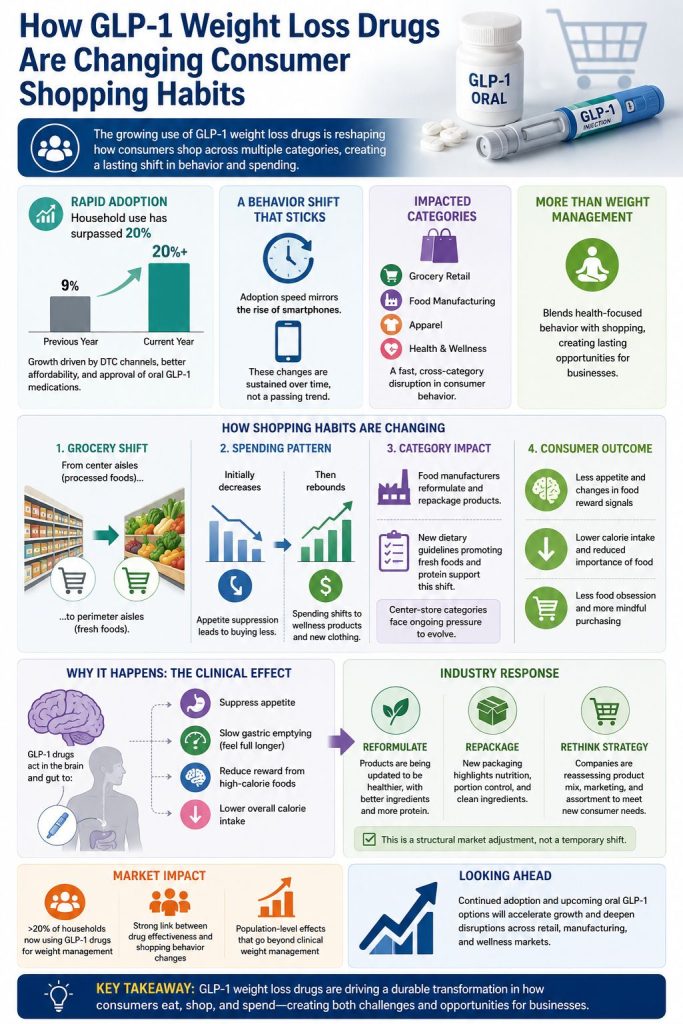
Grocery purchasing habits among medication users show a clear and consistent shift. Consumers move from buying processed food in the center aisles to fresh items on the perimeter. Initially, grocery spending goes down because appetite suppression reduces the amount people buy. However, total spending eventually rebounds as users shift their spending toward wellness products and new clothing.
Food manufacturers react to this change by reformulating and repackaging their products. Updates to national dietary guidelines that promote fresh foods and protein support this shift in consumer preferences. As a result, companies in center-store categories experience ongoing pressure to change. Experts see this reconfiguration as a structural adjustment rather than a temporary shift.
The clinical process involves appetite suppression and changes in food-related reward signals. These effects lower both calorie intake and the psychological importance of food. Consequently, users feel less obsessed with food and buy less impulsively. This specific action of the medication drives the changes in consumer behavior.
The extent of market penetration now deserves serious attention from industry stakeholders. The link between how effective the pharmaceuticals are and changes in shopping behavior has major effects at the population level. These broad outcomes go beyond just clinical weight management. Analysts expect that ongoing growth will intensify market disruptions in the coming years.