How Convenience Stores are Adapting to GLP-1 Users’ Evolving Food Preferences

Weight-loss medications have changed how people buy their food. Drugs like Wegovy and Ozempic stop people from feeling hungry. They copy specific gut hormones to reduce appetite. Patients then choose smaller portions and healthier food options.
Shop owners must spot this shift to stay ahead. Medical progress constantly drives these new dietary needs. Shoppers care more about health than eating sugary snacks. Public health campaigns also support these medical steps.
More people use these treatments every single day. Recent studies show usage nearly doubled very quickly. Experts think around two million people take these medications now. Analysts say these households will dominate grocery sales by 2030.
The financial impact is very clear right now. Families spend much less on groceries after starting treatment. People buy far fewer crisps and sweet treats. If patients stop taking the medication, their food spending rises again.
Shoppers change their grocery budgets completely during this time. Patients spend their saved money on better quality food. This change causes big problems for standard supermarkets. Supply chains must fix their plans to match these new habits.
Channel Dynamics Shift Towards Convenience Retail
Convenience stores win big from these recent changes. Industry leaders confirm that smaller shops gain more customer spending. This shift happens because of how convenience retail works. The smaller shop format fits these new buying habits perfectly.
Huge supermarkets often overwhelm these health-conscious shoppers. Massive food displays push people away who want small meals. Convenience shops offer a neat and manageable shopping trip. Shoppers walk around these smaller stores with great ease.
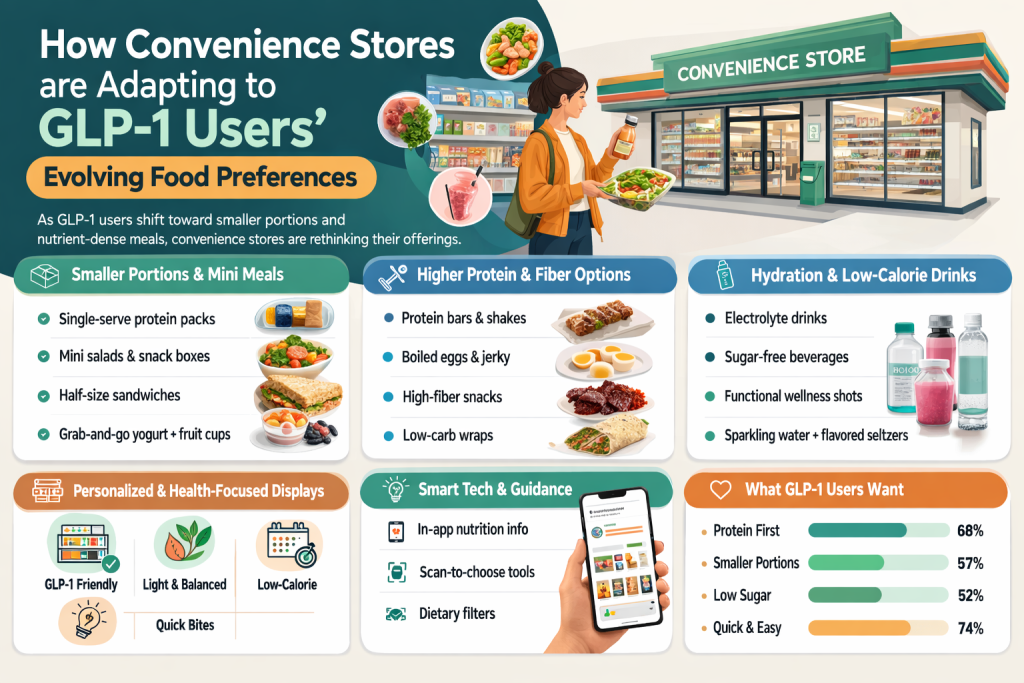
These buyers actively look for single-portion products today. People on these medications want items offering just one serving. They avoid large boxes they simply cannot finish. The impulse-focused layout suits their daily needs perfectly.
Buying in bulk offers no real value for them. Worries about food waste guide their daily shopping choices. Smaller packaging keeps food fresh for immediate eating. These smaller formats also stop people worrying about portion control.
Convenience stores do more than just sell quick snacks. Customers spend more money here for easy meal options. They need ready-to-eat food that suits smaller appetites. This fact makes convenience food counters a perfect solution.
Busy workers really value this quick way to get food. Lack of time makes easy and healthy meals essential. Shop owners provide instant food without complex cooking steps. This quick service removes the stress of traditional meal planning.
Category Realignment Driven by Nutrient Density
Not all food types lose sales after medication starts. Data shows a clear split between different snack types. Salty snack sales drop heavily after six months of treatment. Meat snack sales jump by 31 percent in the same period.
Shop managers watch these shifting tastes to plan their stock. Standard crisps and biscuits face constant pressure right now. Different protein foods see amazing sales growth everywhere. Buyers actively swap empty calories for helpful nutrition.
Clinical diet advice drives this major change. Doctors tell patients to eat more protein in smaller meals. Shoppers then pick protein-rich items like meat snacks and yogurt. Studies show people will happily pay more for animal proteins.
Medical experts focus on keeping muscle during weight loss. Patients track their daily food intake very carefully. Food makers react by adding good ingredients to old products. New product development speeds up to meet this need.
Recent reports state most buyers eat more protein now. The convenience sector holds a clear advantage here. Single-serve formats deliver these modern protein products perfectly. Convenience shops stock these specific items in great numbers.
Shoppers check food labels before they buy anything. Clear information about ingredients builds strong brand loyalty. Higher prices work well for excellent, healthy food. Brands spend lots of money on clear packaging messages.
Beverages Transition to Zero Sugar Alternatives
The drinks section shows very similar changes in buying habits. Data records a big move within low-calorie fizzy drinks. Buyers leave traditional diet drinks for zero sugar choices. Families also spend much more on protein shakes now.
Health-conscious buyers question artificial sweeteners much more today. People want helpful drinks offering real physical benefits. Water products with added vitamins take a large market share. Shop owners give these drinks more fridge space accordingly.
Retail Responses to Accelerating Patient Adoption
Retailers have changed their products very quickly. Big grocery chains now sell special ranges for these patients. One supermarket created meals with exact healthy food balances. Another shop launched tiny meals made just for these buyers.
Special marketing campaigns show off these new product lines. Supermarkets work with diet experts to prove product quality. Packaging clearly shows portion sizes and calorie counts. These steps make special diets normal for the general public.
These grocery updates show a total change in consumer habits. Data proves heavy restaurant meals lost their popularity quickly. Healthy protein meals grew very popular over the last year. Millions of adults want to start NHS weight-loss treatments soon.
Restaurants also change their standard menus to survive. Diners ask for custom meals to fit their smaller appetites. Smart chefs focus on great taste rather than huge portions. Smaller plates now act as the main dining choice.
Strategic Implications for Convenience Retail Operators
The facts give clear steps for shop owners today. Experts suggest building special protein areas near the door. Shops must put high-protein signs clearly on all packaging. This clear labelling creates a noticeable increase in snack sales.
Hot food counters offer another great chance for businesses. Owners can easily use the demand for high-protein meals. They must change portion sizes and show protein details clearly. Small protein items appeal much more than standard huge meals.
Digital screens highlight the best healthy choices for customers easily. Staff training guarantees clear details about dietary product benefits. Smart employees build strong trust with health-focused shoppers daily. Great customer service supports these brand-new shopping habits.
Managing Healthy and Indulgent Consumer Demand
Current facts do not show patients stopping all treats. The research points toward small and careful treat eating. Sweet items stay popular if they come in single portions. Shop owners do not need to drop chocolate snacks completely.
Occasional treats help people mentally during strict diet changes. Premium chocolate squares fix cravings without ruining health goals. Quality bakeries make tiny versions of their best desserts. Buyers happily pay higher prices for brilliant small treats.
Conclusion
The total evidence proves these medications change food shopping. These changes help shops selling single portions and quick meals. Drug usage grows steadily following MHRA and NHS approvals. Smart shop owners remain ready to win this growing market.
Health groups watch these changing food habits very closely. The MHRA checks patient safety rules all the time. General health gets better as good shopping habits grow. Preventative health plans match these new consumer trends perfectly.
The money opportunity is real and needs quick action. Shops must change their product mix right now to win. Better protein signs will catch this growing group easily. Smart display plans will keep shops profitable for years.
Quick-thinking shops gain clear advantages over their slow rivals. Waiting to change risks losing a very rich customer group. Smart businesses make sure they stay relevant for the future. Adapting early represents the best way to survive.
References
Circana. (2025). GLP-1 medication users to represent 35% of U.S. food and beverage sales by 2030. Circana LLC. https://www.circana.com/post/glp-1-medication-users-to-represent-35-percent-of-u-s-food-and-beverage-sales-by-2030
Hristakeva, S., Liaukonyte, J., & Feler, L. (2024). The no-hunger games: How GLP-1 medication adoption is changing consumer food purchases. Journal of Marketing Research. https://doi.org/10.2139/ssrn.5073929
Numerator. (2025). Numerator GLP-1 Hub reveals purchase trends from 30,000 consumers. Numerator. https://www.numerator.com/press/numerator-glp-1-hub-reveals-purchase-trends-from-30k-consumers/