How to Exercise on GLP-1 Medications: A Clinical Guide

Glucagon-like peptide-1 receptor agonists have changed the way we treat obesity and type 2 diabetes. Medications like semaglutide and tirzepatide help people feel full and slow down stomach emptying, leading to significant weight loss. As a result, doctors are seeing more patients who lose weight quickly with medication alone. However, new evidence shows that exercise is still a crucial part of effective weight management during treatment.
Mechanisms of Lean Mass Loss During Pharmacologic Weight Reduction
Rapid weight loss from these medications does not only reduce fat. Many people also lose muscle mass and bone mineral content along with fat. This is important because muscle mass helps maintain the resting metabolic rate. Losing muscle can make it harder to manage weight in the long run.
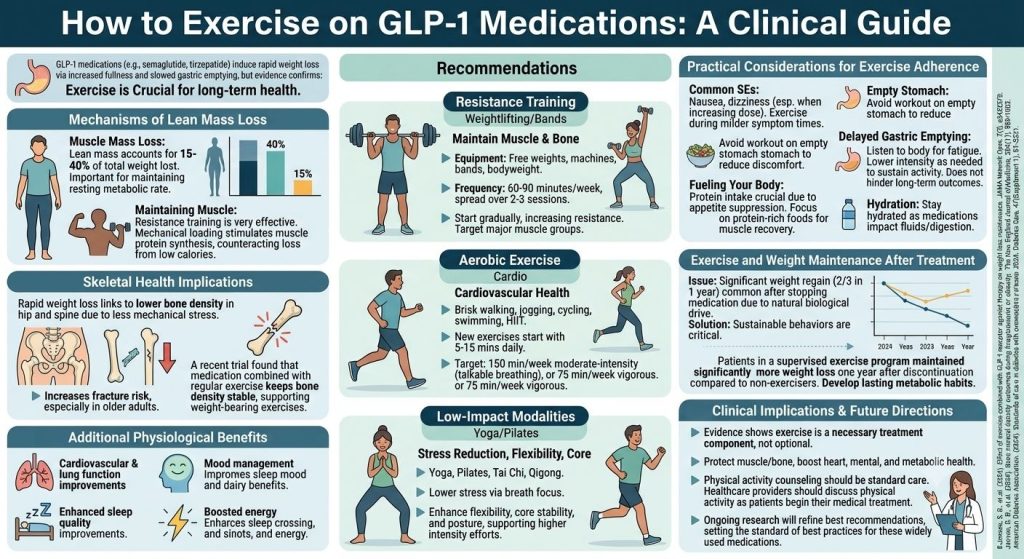
Clinical studies show that lean mass makes up fifteen to forty percent of the total weight lost. This varies based on factors like starting body composition, dietary protein intake, and physical activity levels. Notably, resistance training is very effective in maintaining lean tissue during periods of reduced calorie intake. Mechanical loading stimulates muscle protein synthesis, which helps counteract the loss of muscle that comes with fast weight loss.
Skeletal Health Implications of Rapid Weight Reduction
Bone mineral density is another concern during quick weight loss from medications. Losing weight rapidly is linked to lower bone density in the hip and spine. This is likely due to less mechanical stress on the bones as body mass decreases. Lower bone density increases the risk of fractures, especially in older adults.
A recent study looked at bone health during weight loss in a randomized clinical trial. Participants who did not take part in structured exercise had noticeable declines in bone density at the hip and spine. In contrast, those who combined medication with regular exercise lost more weight while keeping their bone density stable. These results support adding weight-bearing exercises to standard treatment plans.
Additional Physiological Benefits of Structured Exercise
In addition to protecting muscles and bones, exercise provides benefits that medication alone cannot offer. Regular aerobic activity improves cardiovascular and lung function, regardless of weight loss. Exercise also helps manage mood through established pathways in the body. Plus, physical activity enhances sleep quality and boosts energy during weight management.
Thus, doctors should view exercise as a necessary part of treatment rather than an optional addition. Healthcare providers should discuss physical activity as patients begin their medical treatment. This proactive approach combines medication and lifestyle strategies toward a common goal.
Resistance Training Recommendations
Resistance training is the best way to maintain muscle and bone during treatment. This type of exercise involves working muscles against some kind of resistance. Equipment can include resistance bands, free weights, weight machines, or bodyweight exercises. Structured programs do not need special facilities. Many effective routines are free and easily accessible.
Experts recommend sixty to ninety minutes of resistance training each week. Patients can spread this out over two to three sessions based on their comfort level. Increasing resistance or repetitions gradually is key to making progress. Therefore, patients should focus on major muscle groups to ensure balanced development.
Aerobic Exercise Recommendations
Aerobic exercise, commonly called cardio, raises heart rate and breathing for extended periods. Activities include brisk walking, jogging, cycling, swimming, and high-intensity interval training. Those new to structured exercise should start slowly, perhaps with five to fifteen minutes of walking each day. Gradually increasing intensity can lower the risk of injuries and aid long-term commitment.
Current guidelines suggest one hundred fifty minutes of moderate-intensity aerobic exercise each week. Alternatively, seventy-five minutes of vigorous-intensity activity can provide similar cardiovascular benefits. Moderate intensity means breathing harder but still being able to talk, making it a practical target for patients tracking their effort levels.
Low-Impact Exercise Modalities
Some exercise options offer significant benefits while being gentle on the joints and cardiovascular system. These include yoga, pilates, tai chi, and qigong, among other low-impact practices. While these activities may not build muscle strength as quickly, they provide unique physiological advantages. Specifically, breath-focused practices can lower stress responses and help with emotional balance.
In addition, low-impact exercises enhance flexibility, posture, and core stability. These benefits may make it easier for patients to stick with more intense workouts by reducing discomfort. Hence, healthcare providers might recommend low-impact activities to complement resistance and aerobic training.
Practical Considerations for Exercise Adherence
Gastrointestinal side effects are common with receptor agonist therapy, especially when increasing doses. Symptoms like nausea and dizziness can make exercising difficult during the early stages of treatment. Scheduling workouts when symptoms are milder can help improve tolerance. It’s also wise to avoid exercising on an empty stomach to reduce discomfort.
Getting enough protein is especially important due to the appetite-suppressing effects of these medications. Cutting calories can lead to not getting enough protein needed for muscle recovery. As a result, patients should focus on protein-rich foods to support their training. Staying hydrated is also crucial because these medications can affect how the body manages fluids and digestion.
Delayed stomach emptying, a key effect of these drugs, can influence how energetic patients feel. Those who feel unusually tired should lower the intensity of their workouts as needed. This adjustment can help sustain physical activity throughout treatment. Moreover, doctors should assure patients that moderating intensity will not hinder their overall treatment outcomes.
Exercise and Weight Maintenance After Treatment Discontinuation
Gaining weight back after stopping medication is a major clinical issue. Research shows that many patients regain about two-thirds of the weight they lost within a year. This pattern highlights the body’s natural tendency to regain weight after the effects of appetite suppression end. Therefore, sustainable behavior changes are critical during and after treatment.
A recent study looked at the results for patients in a supervised exercise program. Those who exercised regularly maintained their weight much better a year after stopping treatment. These results suggest that exercise habits formed during medication treatment have lasting benefits for metabolism. Therefore, exercise guidance should continue even after treatment ends.
Clinical Implications and Future Directions
Overall, the evidence shows that exercise greatly improves the results of medication treatments. Structured resistance and aerobic training help prevent losses in lean mass and bone density during weight loss. Exercise also boosts heart, mental, and metabolic health, regardless of medication effects. Based on this, physical activity counseling should be part of standard treatment practices.
Future research needs to identify the best exercise recommendations for different medications and patient groups. However, the current evidence provides a solid foundation for healthcare providers to routinely recommend structured exercise. As these medications become more widely used, integrating exercise into treatment plans will set the standard for best practices.
References
Jensen, S. B., Sørensen, V., Sandsdal, R. M., Jespersen, N. Z., Juhl, C. R., Lundgren, J. R., Bogh, A. F., Christensen, K. B., Torekov, S. S., & Blond, M. B. (2024). Effect of exercise combined with GLP-1 receptor agonist therapy on weight loss maintenance: A randomized clinical trial. JAMA Network Open, 7(7), e2422370. https://doi.org/10.1001/jamanetworkopen.2024.22370
Jensen, S. B., Blond, M. B., Sandsdal, R. M., Olsen, L. K., Juhl, C. R., Lundgren, J. R., Janus, C., Stallknecht, B. M., Holst, J. J., Madsbad, S., & Torekov, S. S. (2024). Bone mineral density outcomes during liraglutide treatment combined with exercise. Bone, 178, 116944. https://doi.org/10.1016/j.bone.2023.116944
Wilding, J. P. H., Batterham, R. L., Calanna, S., Davies, M., Van Gaal, L. F., Lingvay, I., McGowan, B. M., Rosenstock, J., Tran, M. T. D., Wadden, T. A., Wharton, S., Yokote, K., Zeuthen, N., & Kushner, R. F. (2021). Once-weekly semaglutide in adults with overweight or obesity. The New England Journal of Medicine, 384(11), 989-1002. https://doi.org/10.1056/NEJMoa2032183
American Diabetes Association. (2024). Standards of care in diabetes 2024. Diabetes Care, 47(Supplement 1), S1-S321. https://doi.org/10.2337/dc24-SINT