Supreme Court Declines Pharmaceutical Challenges to Medicare Drug Price Negotiation Program
Several challenges to the national drug price negotiation program from the pharmaceutical sector were rejected by the Supreme Court. This ruling upholds decisions made by lower courts and permits the program to run continuously. The initiative, which was created by recent federal legislation, gives the government the authority to directly negotiate rates with producers of expensive pharmaceuticals.
The negotiating program, according to pharmaceutical firms, violates constitutional prohibitions against the uncompensated expropriation of private property. This argument was consistently rejected by lower courts in previous court cases. Judges concluded that manufacturers’ involvement in the scheme is still voluntary and does not amount to a government taking.
Industry lawyers retorted that the scheme is merely nominally voluntary. Drug sales to government beneficiaries are subject to significant excise taxes for manufacturers who choose not to participate. According to AstraZeneca, withdrawal creates extremely coercive conditions by essentially foreclosing about half of the prescription medicine market. However, courts determined that this economic description was not enough to activate constitutional safeguards.
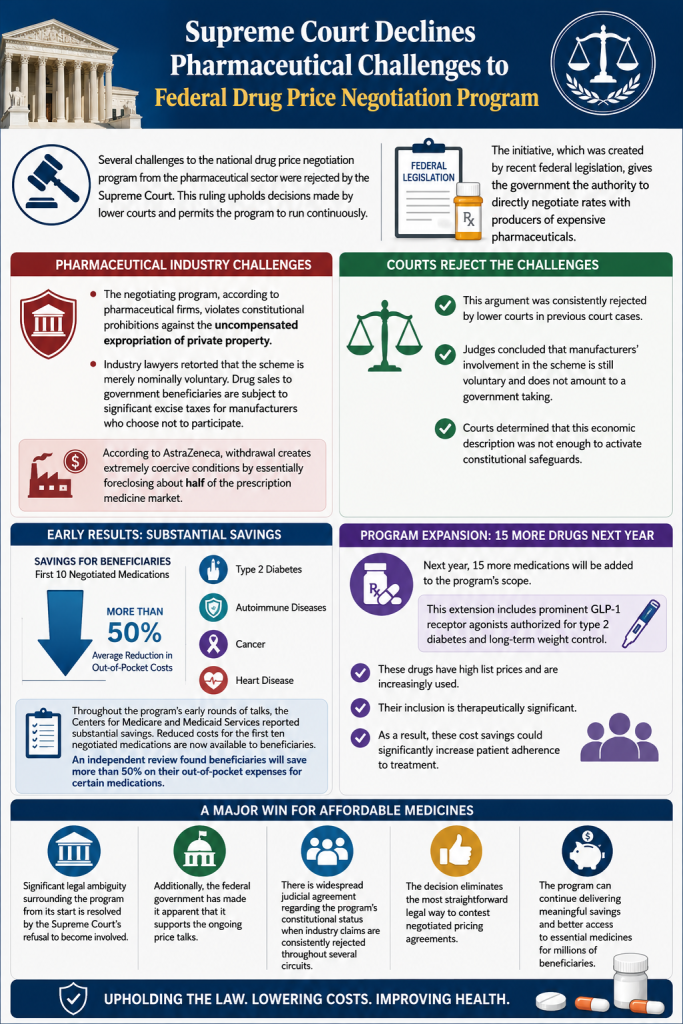
Throughout the program’s early rounds of talks, the Centers for Medicare and Medicaid Services reported substantial savings. Reduced costs for the first ten negotiated medications are now available to beneficiaries. Notably, these drugs treat type 2 diabetes, autoimmune diseases, cancer, and heart disease. Beneficiaries will save more than 50% on their out-of-pocket expenses for certain medications, according to an independent review.
Next year, 15 more medications will be added to the program’s scope. Prominent GLP-1 receptor agonists authorized for type 2 diabetes and long-term weight control are included in this extension. Given their increasing use and high list prices, the inclusion of these particular drugs is therapeutically significant. As a result, these cost savings could significantly increase patient adherence to treatment.
Significant legal ambiguity surrounding the program from its start is resolved by the Supreme Court’s refusal to become involved. Additionally, the federal government has made it apparent that it supports the ongoing price talks. There is widespread judicial agreement regarding the program’s constitutional status when industry claims are consistently rejected throughout several circuits. As a result, the decision eliminates the most straightforward legal way to contest negotiated pricing agreements.