GLP-1 for Weight Loss: Costs, Insurance, and How to Get a Prescription

New medications called GLP-1 receptor agonists are changing how we treat weight management. These drugs show strong results in helping people lose weight during medical trials. Federal health officials have approved several of these options for long-term use. Consequently, doctors now spend more time helping patients navigate costs and insurance rules.
Understanding GLP-1 Receptor Agonists
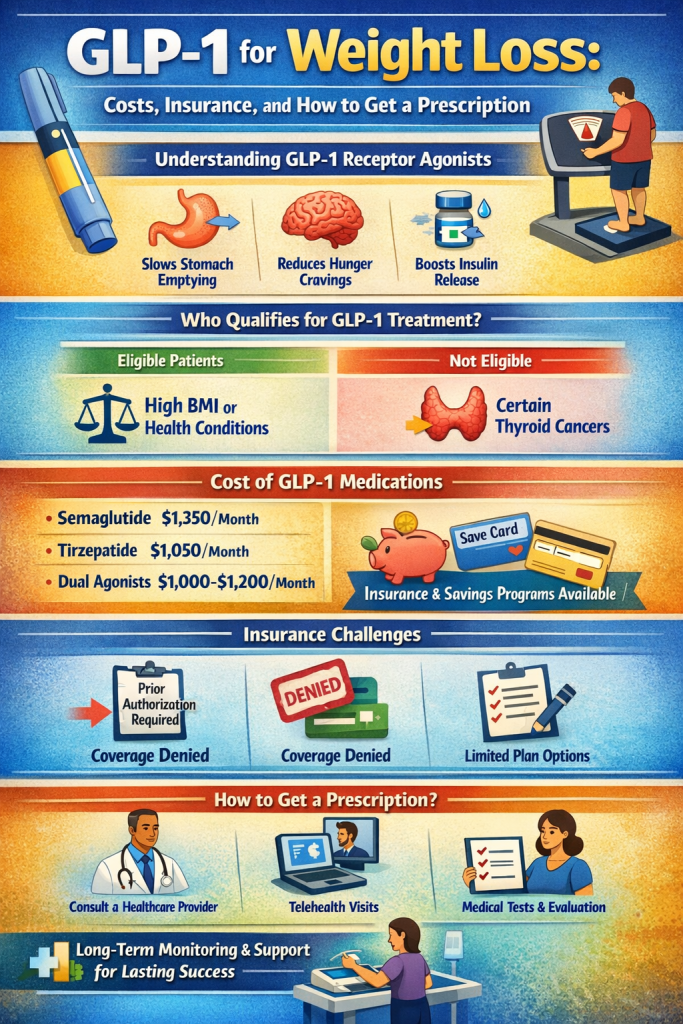
These medications work by acting like natural hormones found in the gut. They tell the body to release insulin and slow down how fast the stomach empties. Furthermore, the drugs signal the brain to lower hunger and cravings. The combination of these effects leads to lasting weight loss for most users.
One common version was first approved for diabetes before getting a new name for weight loss. Another newer option targets two different hunger signals at once to improve results. Notably, each brand has its own specific rules for who should use it. Doctors must carefully check these details before writing a prescription for a patient.
Clinical Eligibility and Prescribing Criteria
Official guidelines state that adults with a high body mass index qualify for treatment. People with slightly lower weight may also qualify if they have health issues like high blood pressure. These conditions include heart disease and sleep problems that affect daily life. Moreover, health officials recently approved some of these shots for teenagers over twelve.
Clinicians conduct a full check of a patient’s medical history and heart health. A history of certain rare thyroid cancers means a person cannot use these drugs. Accordingly, clinicians screen every patient for these risks during the first visit. They also check for other medications to avoid any dangerous drug interactions.
Off-label use in Clinical Practice
Sometimes a doctor might prescribe these drugs for someone who does not meet the standard weight rules. This choice depends on the doctor’s professional opinion and the patient’s unique needs. Nevertheless, using the drug this way makes getting insurance to pay much harder. Clinicians must write detailed notes to explain why the medicine is necessary.
Cost of GLP-1 Medications for Weight Loss
These shots are currently some of the most expensive treatments for weight issues. Without insurance, a single month of medicine can cost over one thousand dollars. Such high prices make it very hard for many people to stay on the drug. Therefore, many patients look for special programs to help lower the price.
| Medication Type | Typical Monthly List Price | Primary Manufacturer |
| Semaglutide (Obesity) | $1,350 | Novo Nordisk |
| Tirzepatide (Obesity) | $1,050 | Eli Lilly |
| Dual Agonists | $1,000 – $1,200 | Various |
Drug makers often provide savings cards for people with private insurance plans. These cards can bring the monthly cost down to as little as twenty-five dollars. However, people on federal health plans usually cannot use these specific discounts. This leaves many older patients or those with low incomes facing the full price.
Some companies choose to include weight loss drugs in their employee health plans. These employers decide which medicines they will cover based on their own budgets. In response to this, more businesses are adding weight loss benefits to keep workers healthy. They realize that treating weight now can prevent expensive heart problems later.
Compounded and Generic Alternatives
There are currently no official generic versions of these weight loss drugs available. When there is a shortage, some special pharmacies make their own versions of the medicine. These custom mixes do not go through the same strict testing as brand name drugs. Hence, doctors usually suggest using them only when the regular version is gone.
Insurance Coverage Challenges
Insurance coverage for weight loss shots is still very inconsistent across different plans. Many companies demand extra paperwork and proof that the patient tried dieting first. As a result, patients often face long waits or total denials from their providers. Decisions are often based on money rather than what the doctor recommends.
Standard federal drug plans have rules that prevent covering weight loss pills or shots. New laws are being discussed that would finally allow these programs to pay for treatment. Meanwhile, many patients still have to pay the entire cost themselves. Doctors must explain these financial gaps to patients before they start the journey.
Coverage through local assistance programs varies a lot depending on where a person lives. Some plans will pay for the drug for diabetes but not for weight loss. Building on this, doctors often have to prove a patient has multiple health issues. Clear notes from the doctor are the best way to get a claim approved.
Navigating Prior Authorization
Insurance companies usually require a lot of proof before they agree to pay. They want to see recent weight measurements and a history of past health problems. In view of this, being prepared with all your medical records helps the process. If a plan says no, the doctor can still fight the decision.
How to Obtain a GLP-1 Prescription
You must see a licensed medical professional to get a prescription for these drugs. The doctor will check your weight, heart health, and any other medical conditions. Furthermore, they will order blood tests to check your sugar and organ function. It helps if you bring a list of all your current medicines.
Family doctors and hormone specialists are the most common providers for these prescriptions. Many of these experts offer long-term programs to help you stay on track. Moreover, working with a team that includes a dietitian leads to better results. This team approach helps manage both the medicine and your daily habits.
Telehealth Prescribing Platforms
Online health platforms have made it much easier to talk to a doctor about weight. These companies use video calls to connect patients with licensed medical providers. Accordingly, people who live far from a specialist can still get modern care. Doctors must follow strict rules when treating patients through a computer screen.
National boards and local agencies set the safety standards for all online medical visits. Doctors must use the same safety checks as they would in a regular office. Thus, the quality of care should be the same whether in person or online. Patients should always check that their online doctor is properly licensed.
Adherence and Long Term Monitoring
Staying on the medicine for a long time is one of the biggest challenges. Most people tend to gain the weight back if they stop taking the shots. Consequently, doctors view this treatment as a long-term fix rather than a quick diet. Setting realistic goals helps patients stay motivated over many months or years.
Doctors will check your blood and side effects regularly while you are on the drug. Slowly increasing the dose helps the body get used to the medicine. Moreover, regular check-ups help find and fix any problems with nausea or other issues. Good follow up care is the secret to keeping the weight off for good.
Conclusion
These new weight loss drugs have changed how we think about health and obesity. They work very well, but high costs still stop many people from using them. Doctors play a vital role in helping patients find ways to afford the treatment. Accordingly, a good plan requires both medical knowledge and help with insurance.
The rules for how insurance pays for these drugs are changing every year. New efforts are being made to make the medicine cheaper for everyone who needs it. In light of this, it is important to stay updated on new health laws. Talking to your doctor is the best first step toward a healthier future.
References
Drucker, D. J. (2018). Mechanisms of action and therapeutic application of glucagon-like peptide-1. Cell Metabolism, 27(4), 740–756. https://doi.org/10.1016/j.cmet.2018.03.001
Jastreboff, A. M., Aronne, L. J., Ahmad, N. N., Wharton, S., Connery, L., Alves, B., Kiyosue, A., Zhang, S., Liu, B., Bunck, M. C., & Stefanski, A. (2022). Tirzepatide once weekly for the treatment of obesity. New England Journal of Medicine, 387(3), 205–216. https://doi.org/10.1056/NEJMoa2206038
Wilding, J. P. H., Batterham, R. L., Calanna, S., Davies, M., Van Gaal, L. F., Lingvay, I., McGowan, B. M., Rosenstock, J., Tran, M. T. D., Wadden, T. A., Wharton, S., Yokote, K., Zeuthen, N., & Kushner, R. F. (2021). Once-weekly semaglutide in adults with overweight or obesity. New England Journal of Medicine, 384(11), 989–1002. https://doi.org/10.1056/NEJMoa2032183