Retatrutide Shows Sustained Weight Loss Benefits in Phase 3 TRIUMPH-1 Trial

The investigational triple hormone receptor agonist retatrutide targets GIP, GLP-1, and glucagon pathways. In the Phase 3 TRIUMPH-1 trial, the drug showed significant weight loss across all tested doses. Researchers shared these findings at the American Diabetes Association Scientific Sessions. The trial involved 2,339 adults with obesity or overweight, all of whom had at least one weight-related health issue and no diabetes diagnosis.
Participants were randomly assigned to receive either 4, 9, or 12 mg of retatrutide or a placebo over 80 weeks. All groups receiving the drug started at 2 mg per day. Clinicians then increased the doses every four weeks until they reached the assigned target. This double-blind design helped isolate the drug’s effects from the placebo response and reduced bias.
By the end of 80 weeks, all three doses of retatrutide met both the primary and key secondary endpoints. Participants taking 4, 9, or 12 mg lost an average of 70.3, 64.4, and 47.2 pounds, respectively. In contrast, the placebo group lost an average of 9.7 pounds. This indicates that appetite suppression and metabolic effects improve meaningfully with higher doses.
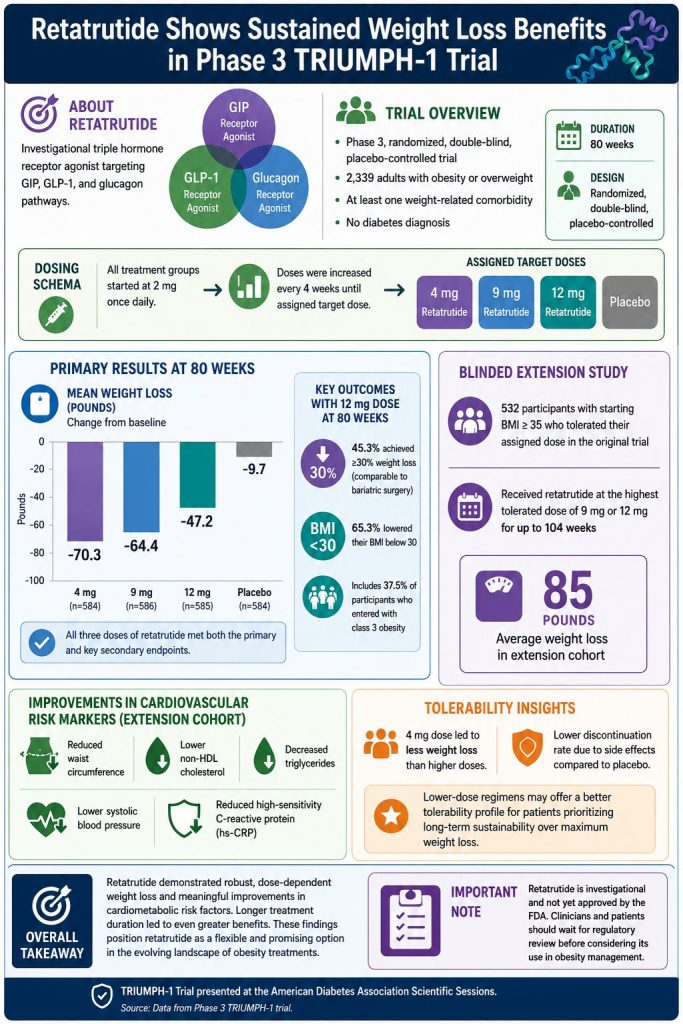
In the group taking 12 mg, 45.3 percent achieved at least 30 percent weight loss. This level of weight loss is comparable to what is typically seen after bariatric surgery. Additionally, 65.3 percent of this group lowered their BMI below 30, crossing the clinical threshold for obesity. This also included 37.5 percent of participants who entered the trial with class 3 obesity.
A blinded extension study followed 532 participants with a starting BMI of at least 35. These individuals had tolerated their assigned dose during the original trial. As a result, they received retatrutide at the highest tolerated dose of either 9 or 12 mg for up to 104 weeks. Average weight loss in this extended group reached 85 pounds, suggesting that longer treatment durations can lead to better outcomes.
Beyond weight loss, participants in the extension cohort also showed improvements in cardiovascular risk markers. These markers included reduced waist circumference, lower non-HDL cholesterol, and decreased triglycerides. They also experienced lower systolic blood pressure and reduced levels of high-sensitivity C-reactive protein. These findings suggest that the drug offers metabolic benefits beyond just weight loss.
Researchers also observed tolerability patterns that are important for clinical decision-making. Participants taking the 4 mg dose lost less weight than those on higher doses. However, this group had a lower discontinuation rate due to side effects compared to the placebo group. Therefore, lower-dose regimens may provide a better tolerability profile for patients who prioritize long-term sustainability over maximum weight loss.
Overall, these results position retatrutide as a flexible option in the growing field of obesity treatments. Since the drug is still under investigation, it has not yet been approved by the Food and Drug Administration. Clinicians and patients should wait for regulatory review before considering retatrutide in obesity management strategies. The data emphasize the therapeutic promise of this triple-agonist approach.