Rapid Weight Loss From GLP-1 Injections Fuels Surge in Facial Fat Grafting Demand

Demand for facial fat grafting procedures that uses a person’s own body fat to restore lost facial volume is surging. Cosmetic specialists report a major increase in requests for this treatment, driven largely by the popularity of GLP-1 weight loss injections.
While these medications help people drop pounds quickly, rapid weight reduction often causes noticeable structural changes to the face. GLP-1 medications work by curbing appetite and slowing digestion, but they cannot choose where your body burns fat. As you drop weight, you naturally lose fat everywhere, including the face, where fat pads act as a natural frame. Because the weight comes off so fast, the skin often does not have enough time to bounce back. This leads to hollowed temples, sunken eyes, pronounced cheekbones with loose skin, and a loss of jawline definition.
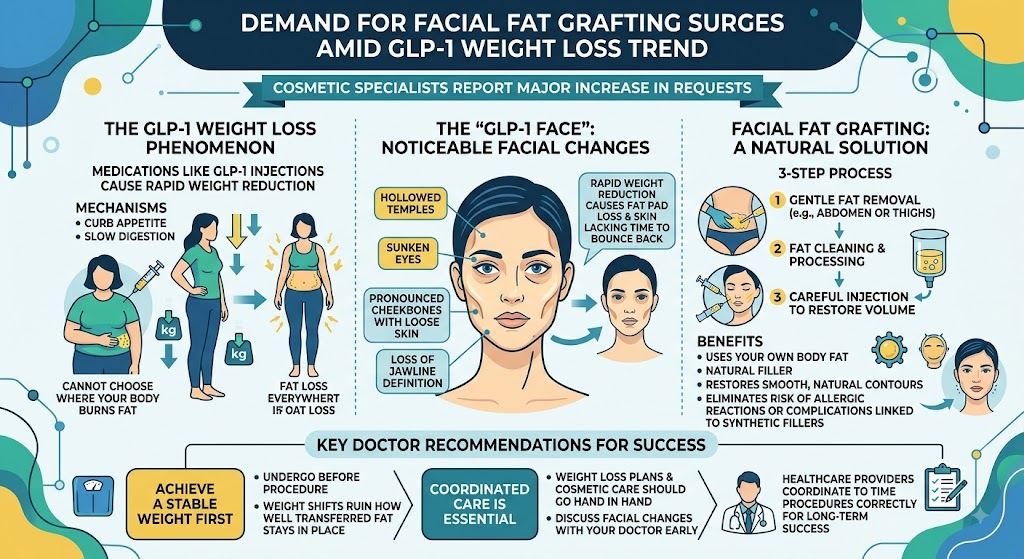
Facial fat grafting addresses this issue by using your own body fat as a natural filler. A surgeon gently removes fat from another part of the body, such as the abdomen or thighs, cleans and processes it, and then carefully injects it back into sunken areas of the face to restore smooth, natural contours. Because the procedure uses your own tissue, it eliminates the risk of allergic reactions or complications linked to synthetic dermal fillers.
Doctors strongly recommend that you reach a stable weight before undergoing a fat grafting procedure, as continuing weight shifts can ruin how well the transferred fat stays in place over time. As these prescriptions continue to rise, experts emphasize that weight loss plans and cosmetic care should go hand in hand. If you are starting a weight loss medication, discuss potential facial changes with your doctor early on so you know what to expect, and ensure your healthcare providers coordinate to time any procedures correctly for long-term success.