Potential Benefits of GLP-1 Receptor Agonists in Type 1 Diabetes Management

Pharmaceutical companies originally developed glucagon-like peptide-1 receptor agonists and sodium-glucose co-transporter inhibitors to treat type 2 diabetes. Several of these therapeutic agents now carry additional regulatory approvals for cardiovascular disease, chronic kidney disease, and obesity. Currently, the Food and Drug Administration has not approved any GLP-1 receptor agonist for glycemic control in type 1 diabetes. Nevertheless, a recent consensus report examined growing clinical interest in these adjunctive therapies to improve metabolic outcomes.
GLP-1 receptor agonists activate specific pathways to control blood glucose and reduce total body weight. These medications effectively suppress glucagon release, stimulate insulin secretion, slow gastric emptying, and increase satiety. Clinicians typically administer these treatments via subcutaneous injection, though oral formulations exist. In light of this, these therapies frequently lower blood glucose and reduce long-term cardiovascular risks.
Prominent examples of modern therapies include semaglutide, dulaglutide, liraglutide, and tirzepatide. Early clinical trials in the 2000s tested these drugs as additional treatments alongside standard insulin therapy. Some studies showed modest improvements in hemoglobin A1c, total insulin dose, and body weight. However, the higher occurrence of hypoglycemia stopped these earlier options from being widely adopted.
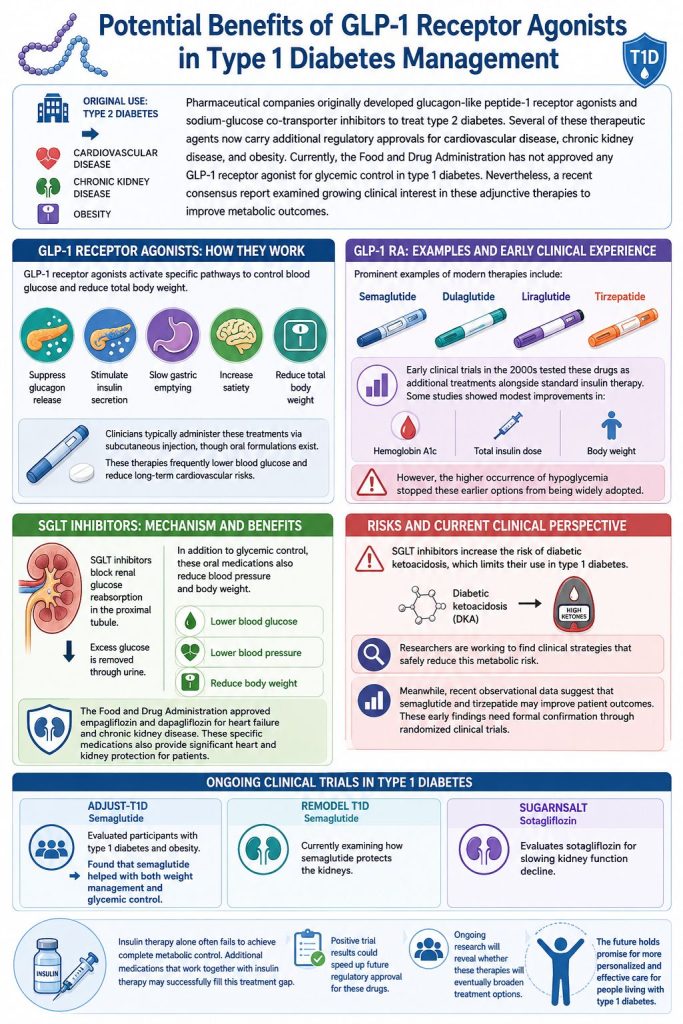
SGLT inhibitors lower blood glucose by blocking renal glucose reabsorption, which removes excess sugar through urine. In addition to glycemic control, these oral medications also reduce blood pressure and body weight. Notably, the Food and Drug Administration approved empagliflozin and dapagliflozin for heart failure and chronic kidney disease. These specific medications also provide significant heart and kidney protection for patients.
SGLT inhibitors increase the risk of diabetic ketoacidosis, which limits their use in type 1 diabetes. Researchers are working to find clinical strategies that safely reduce this metabolic risk. Meanwhile, recent observational data suggest that semaglutide and tirzepatide may improve patient outcomes. These early findings need formal confirmation through randomized clinical trials.
The ADJUST-T1D clinical trial evaluated participants with type 1 diabetes and obesity. This study found that semaglutide helped with both weight management and glycemic control. The REMODEL T1D trial is currently examining how semaglutide protects the kidneys. Additionally, the SUGARNSALT trial evaluates sotagliflozin for slowing kidney function decline.
Insulin therapy alone often fails to achieve complete metabolic control. Additional medications that work together with insulin therapy may successfully fill this treatment gap. Positive trial results could speed up future regulatory approval for these drugs. Ongoing research will reveal whether these therapies will eventually broaden treatment options.