GLP-1 Receptor Agonists Associated With Lower Breast Cancer Incidence

A substantial correlation between the usage of GLP-1 receptor agonists and lower risks of breast cancer detection was found in a large observational research. Over 110,000 women between the ages of 45 and 80 had their data analyzed. Interestingly, women who took GLP-1 drugs had a 30% lower chance of being diagnosed with breast cancer. However, researchers warn that causal interpretation is limited by the observational methodology.
GLP-1 receptor agonists influence more than only glycemic regulation. These drugs affect cellular growth pathways, lower systemic inflammation, and modify insulin signaling. As a result, scientists are now assessing these medications in settings that are not within their initial therapeutic purview. They are attractive candidates for cancer prevention research due to their wide mechanistic reach.
GLP-1 drugs impact multiple sites linked to the development of cancer, according to radiology professor Elizabeth McDonald. The study contributes significantly to an expanding body of information, she underlined. Additionally, similar inverse relationships between GLP-1 use and cancer risk have been seen in a number of separate investigations. The argument for focused prospective trials is strengthened by this converging findings.
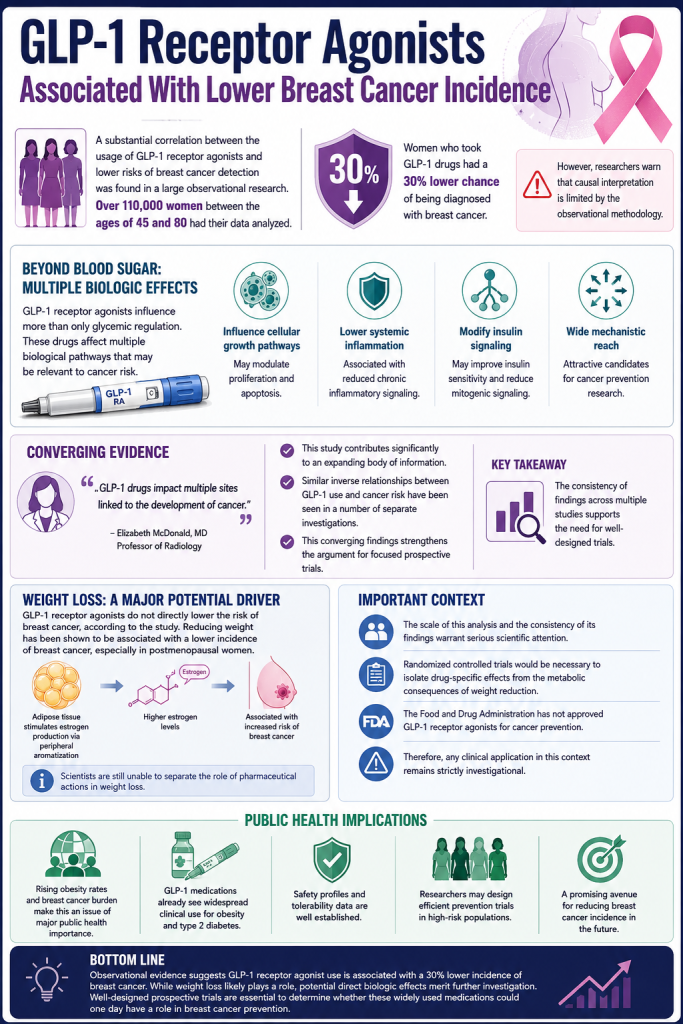
GLP-1 receptor agonists do not directly lower the risk of breast cancer, according to the study. Reducing weight has been shown to be associated with a lower incidence of breast cancer, especially in postmenopausal women. Through peripheral aromatization, adipose tissue stimulates the production of estrogen, and higher estrogen levels are associated with an increased risk of breast cancer. As a result, scientists are still unable to separate the role of pharmaceutical actions in weight loss.
Nevertheless, the scale of this analysis and the consistency of its findings warrant serious scientific attention. Randomized controlled trials would be necessary to isolate drug-specific effects from the metabolic consequences of weight reduction. The Food and Drug Administration has not approved GLP-1 receptor agonists for cancer prevention. Therefore, any clinical application in this context remains strictly investigational.
From a public health perspective, the findings carry substantial implications given rising obesity rates and breast cancer burden. GLP-1 medications already see widespread clinical use for obesity and type 2 diabetes. Thus, safety profiles and tolerability data are well established. Building on this foundation, researchers may design efficient prevention trials in high-risk populations.