GLP-1 Use Among Americans Reaches New Peak

Recent polling data indicates that patient utilization of GLP-1 medications has reached its highest historical level. Eleven percent of adults now report the active use of a GLP-1 drug for weight reduction. Notably, this metric represents a sharp increase from the 3 percent baseline documented two years ago. To be precise, a comprehensive health index survey evaluated 5,065 adult participants to capture these shifting clinical trends.
The study further highlights that 15 percent of adults have utilized a GLP-1 product at some point. Along with this, public recognition regarding these specific medical options has expanded dramatically during this same interval. Ninety-one percent of adult consumers now explicitly recognize GLP-1 drug options by their specific brand names. Consequently, public familiarity with the entire therapeutic class has reached an unprecedented peak.
This rapid marketplace expansion follows key regulatory milestones from the Food and Drug Administration. The federal agency approved prominent formulations in 2021 and 2023 to expand available treatment channels. Medical professionals attribute the ongoing surge in patient adoption directly to these formal clearances. Therefore, regulatory authorization effectively accelerated general public awareness and access.
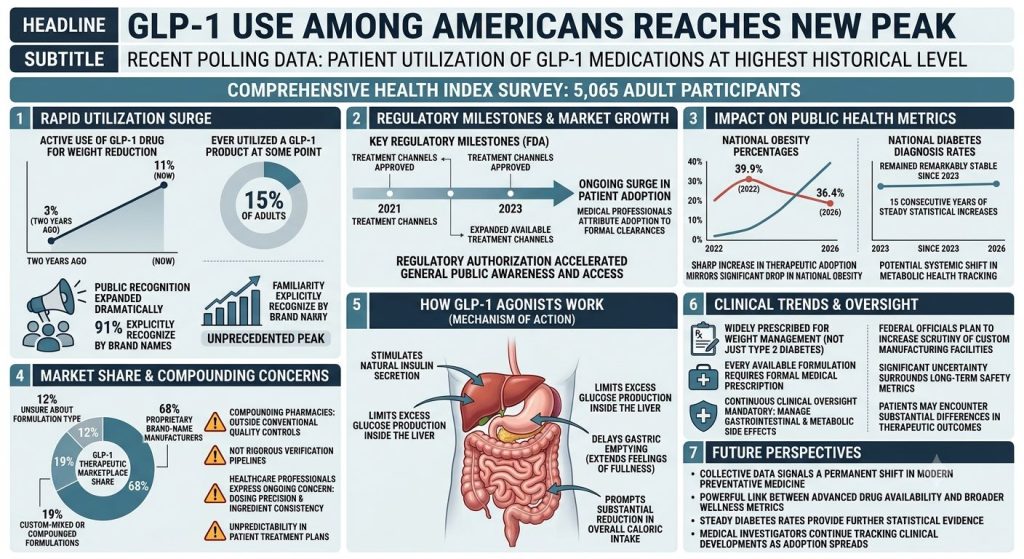
The sharp increase in therapeutic adoption directly mirrors a significant drop in national obesity percentages. Adult obesity previously climbed to a record peak of 39.9 percent in 2022. However, national public health metrics show that this number decreased to 36.4 percent in 2026. This downward trajectory closely parallels the growing availability of medical interventions during this identical timeframe.
Meanwhile, national diabetes diagnosis rates have remained remarkably stable since 2023. This recent stabilization marks a distinct departure from fifteen consecutive years of steady statistical increases. In light of this, the plateau highlights a potential systemic shift in metabolic health tracking. Public health researchers continue to monitor these parallel clinical transformations very closely.
Proprietary brand-name manufacturers continue to command the largest share of the therapeutic marketplace. These established products account for 68 percent of current consumer utilization. Conversely, custom-mixed or compounded formulations have captured 19 percent of the patient market. Along with this, approximately 12 percent of consumers remain unsure about their specific formulation type.
Unlike standardized brand-name options, compounding pharmacies manufacture custom mixtures outside of conventional quality controls. These alternative products do not undergo the rigorous verification pipelines required for standard regulatory approval. Given this, healthcare professionals express ongoing concern regarding dosing precision and ingredient consistency. Variation in manufacturing standards ultimately introduces unpredictability into patient treatment plans.
GLP-1 receptor agonists function by stimulating natural insulin secretion within the human body. These agents also limit excess glucose production inside the liver to regulate blood sugar levels. Moreover, the underlying chemical mechanism delays gastric emptying to extend feelings of fullness. This physiological delay successfully prompts a substantial reduction in overall caloric intake.
Although scientists originally designed these treatments for Type 2 diabetes, clinicians now write prescriptions widely for weight management. Patients without a diabetes diagnosis increasingly seek these interventions to manage chronic weight challenges. Thus, every available formulation strictly requires a formal medical prescription. Continuous clinical oversight remains mandatory to manage potential gastrointestinal and metabolic side effects.
The expanding market footprint of compounded formulations generates pressing questions for federal health officials. Because alternative suppliers bypass standard regulatory reviews, significant uncertainty surrounds long-term safety metrics. Patients using these non-standard options may encounter substantial differences in their therapeutic outcomes. Accordingly, government agencies plan to increase their scrutiny of these custom manufacturing facilities.
In view of this, the collective data signals a permanent shift in modern preventative medicine. The simultaneous drop in obesity underscores a powerful link between advanced drug availability and broader wellness metrics. Steady diabetes rates provide further statistical evidence of this structural transformation. Medical investigators will continue tracking these clinical developments as adoption spreads across the population.