Medicare Rolls Out New Pilot to Cut Costs for GLP-1 Drugs
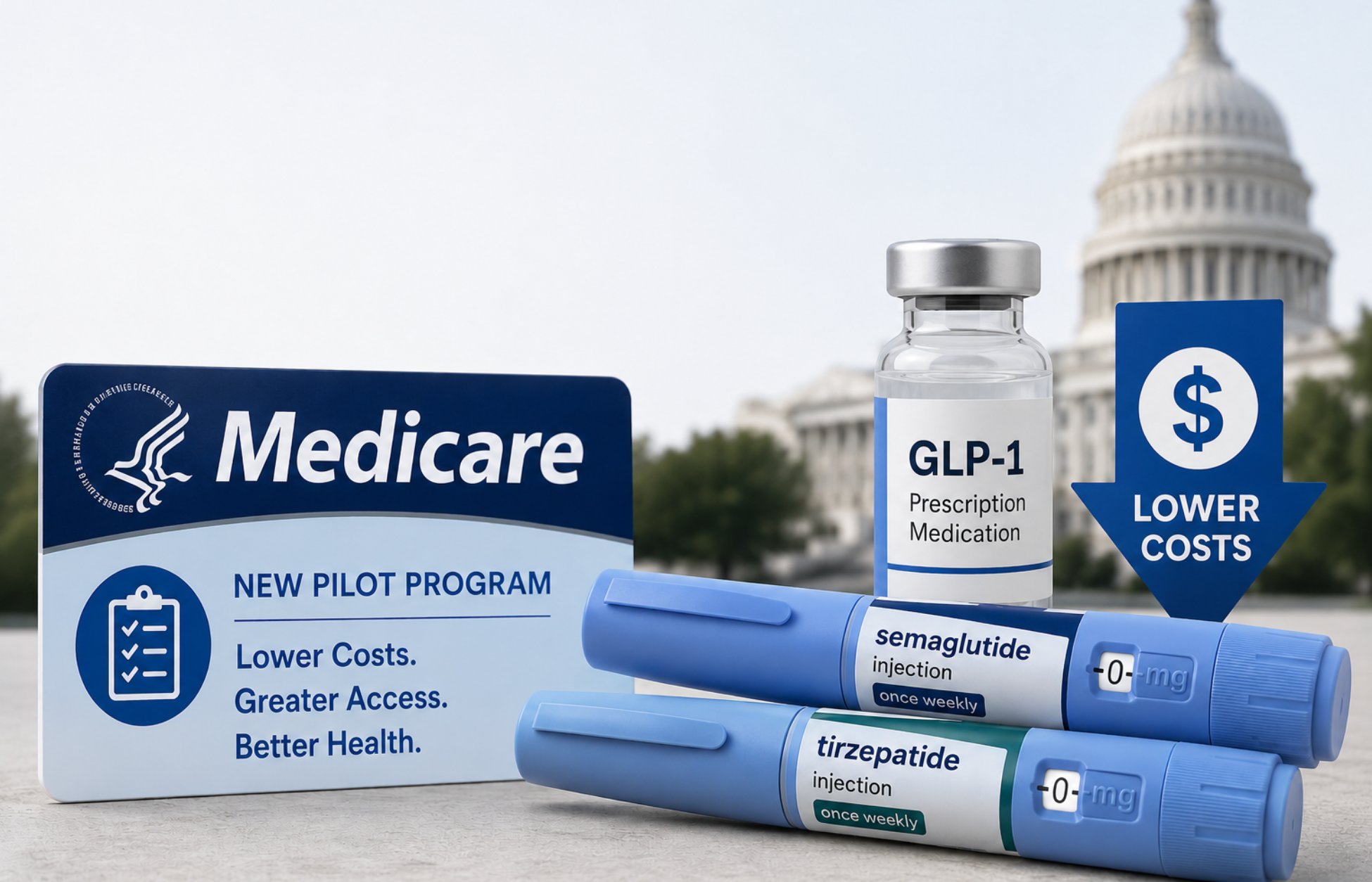
Starting July 1, 2026, millions of older Americans will be able to access popular GLP-1 weight-loss medications for just $50 a month. The Centers for Medicare & Medicaid Services (CMS) is launching an 18-month demonstration pilot called the Medicare GLP-1 Bridge program. By law, Medicare Part D cannot cover drugs prescribed for weight loss. This pilot avoids that restriction by operating outside the standard Part D framework as a separate federal demonstration.
Eligible patients will pay a flat $50 monthly copay at their local pharmacy from July 1, 2026, to December 31, 2027. Since it operates outside standard Medicare Part D, this $50 copay does not count toward a patient’s deductible or the $2,100 annual out-of-pocket prescription cap.
CMS negotiated directly with drug manufacturers to control costs for specific weight-loss formulas. Covered medications include Wegovy® (once-weekly injections and daily pills by Novo Nordisk), Zepbound® (KwikPen injection by Eli Lilly), and Foundayo™ (once-daily pill by Eli Lilly). Medications prescribed only for Type 2 diabetes or severe cardiovascular risks, like Ozempic or Mounjaro, will still be processed through standard Medicare Part D plans.
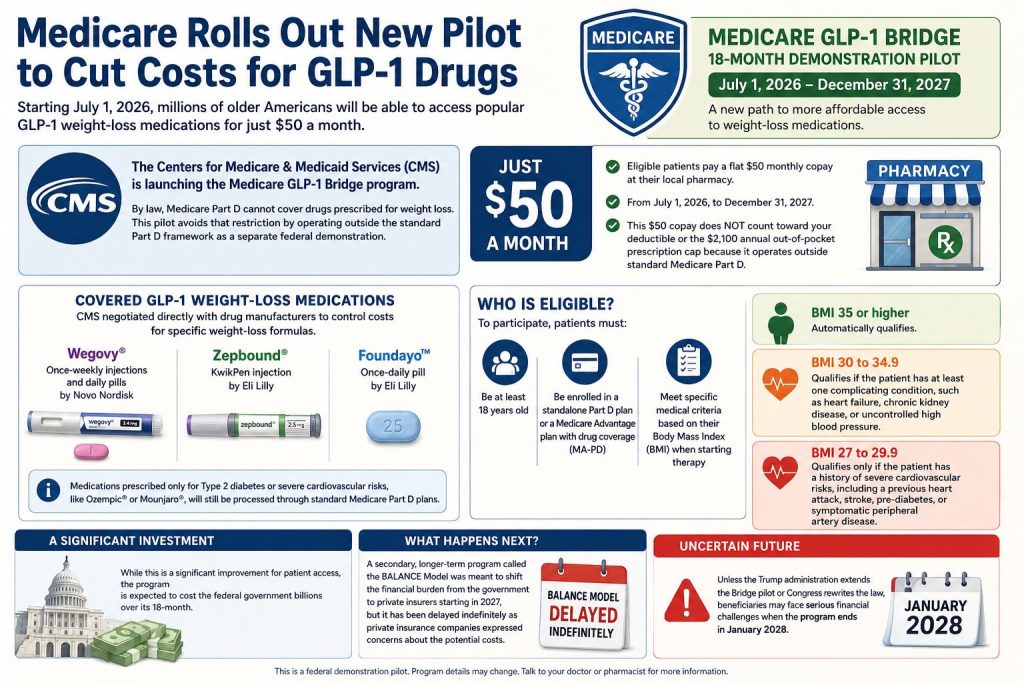
To participate, patients must be at least 18 years old, enrolled in a standalone Part D plan or a Medicare Advantage plan with drug coverage (MA-PD), and meet specific medical criteria based on their Body Mass Index (BMI) when starting therapy. A BMI of 35 or higher automatically qualifies.
A BMI of 30 to 34.9 qualifies if the patient has at least one complicating condition, such as heart failure, chronic kidney disease, or uncontrolled high blood pressure. A BMI of 27 to 29.9 qualifies only if the patient has a history of severe cardiovascular risks, including a previous heart attack, stroke, pre-diabetes, or symptomatic peripheral artery disease.
While this is a significant improvement for patient access, the program is expected to cost the federal government billions over its 18-month duration. A secondary, longer-term program called the BALANCE Model was meant to shift the financial burden from the government to private insurers starting in 2027, but it has been delayed indefinitely as private insurance companies expressed concerns about the potential costs. Unless the Trump administration extends the Bridge pilot or Congress rewrites the law, beneficiaries may face serious financial challenges when the program ends in January 2028.