Meant Introduces Certified GLP-1 Virtual Care Platform and Lifestyle Support

Meant, a new weight-loss telehealth startup, is entering an already crowded market. To launch, the company secured LegitScript certification. That may sound impressive, but today, it is essentially the bare minimum for running ads on Google, Facebook, and Instagram.
Meant runs the software, not the medical practice. OpenLoop Health, an outside network of licensed doctors and nurses, handles all medical decisions. Its clinicians review patient applications and determine who qualifies for medication. Eligible patients can receive brand-name GLP-1 drugs such as semaglutide or tirzepatide, plus health coaching and nutritional supplements.
Applicants who do not qualify for prescription medication are directed toward a plan that includes coaching and supplements instead. However, there is a catch: every user must pay for the supplement bundle at sign-up, regardless of whether a doctor ultimately approves them for medication. This means Meant generates revenue simply from enrolling customers, rather than from demonstrating that users achieve and maintain long-term weight loss. So far, the company has not published data showing that its supplements produce a measurable impact on weight loss.
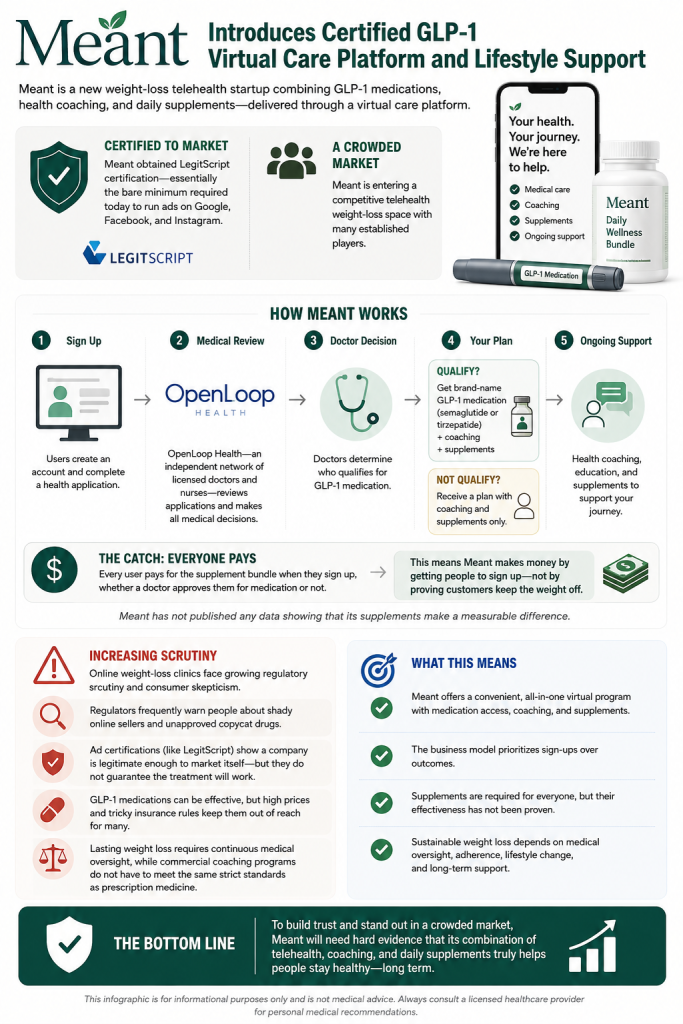
Online weight-loss clinics face increasing scrutiny. Regulators frequently warn people about shady online sellers and unapproved copycat drugs. While ad certifications prove a company is legitimate enough to market itself, they do not guarantee the treatment will work.
GLP-1 medications can be effective, but high prices and tricky insurance rules keep them out of reach for many. Lasting weight loss requires continuous medical oversight, while commercial coaching programs do not have to meet the same strict standards as prescription medicine.
To build trust over time, Meant will need hard evidence showing that its mix of telehealth, coaching, and daily supplements actually helps people stay healthy long-term.