FDA Warns 30 Telehealth Companies Over Weight-Loss Drug Ads
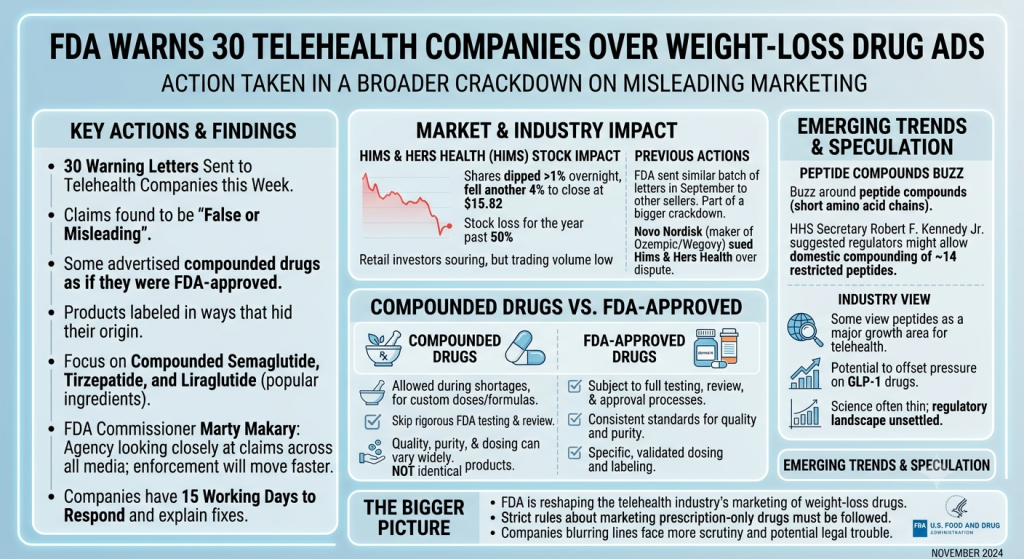
The FDA has sent warning letters to 30 telehealth companies this week, saying their marketing for compounded weight-loss drugs was false or misleading. According to the agency, some companies advertised their compounded drugs as if they were the same as FDA-approved treatments. A few also labeled their products in ways that hid where the drugs actually came from.
The warnings focus on compounded versions of semaglutide, tirzepatide, and liraglutide the active ingredients found in popular brand-name weight-loss and diabetes drugs. FDA Commissioner Marty Makary said the agency is now looking closely at misleading claims from telehealth and drug companies across all types of media, and that enforcement will move faster going forward.
The 30 companies now have 15 working days to respond and explain how they’ll fix the problem. This isn’t the first round of letters either the FDA sent a similar batch back in September to other weight-loss drug sellers. It’s part of a bigger crackdown on how these drugs get advertised. Hims & Hers Health has already been under pressure over this issue, having previously sold a compounded weight-loss pill for $49. Novo Nordisk, the maker of Ozempic and Wegovy, has since sued the company over the dispute.
After the new letters came out, Hims & Hers shares dipped more than 1% in overnight trading, then fell another 4% to close at $15.82 pushing the stock’s loss for the year past 50%. Retail investors seem to be souring on the stock too, though not many people are actively trading it right now.
Interestingly, not everyone sees this as a major problem for the company. Some traders think the FDA is really just cracking down on how these drugs are marketed, not whether they’re legal to sell at all. A few even called the stock undervalued, pointing to potential growth from expanding into peptide treatments and international markets.
Pharmacies are allowed to make compounded versions of drugs when the approved version is in short supply, or when a patient needs a custom dose or formula. But here’s the catch: compounded drugs skip the rigorous testing and review that brand-name drugs go through. That means quality, purity, and dosing can vary a lot from one pharmacy to another. So when a company markets a compounded drug as basically “the same thing” as the approved version, it’s not just misleading it could actually be risky for patients who assume they’re getting an identical product.
There’s also growing buzz around peptide compounds, partly fueled by comments from Health and Human Services Secretary Robert F. Kennedy Jr. He suggested regulators might allow around 14 peptides currently restricted to be compounded domestically again. Peptides are short chains of amino acids that play a role in things like tissue repair and immune function.
The problem is that the science backing many of these peptide products is thin, and most haven’t been FDA-approved for the uses telehealth companies are promoting. Still, some industry watchers think peptides could become a major growth area for telehealth providers and maybe even a way to offset the pressure they’re facing on GLP-1 drugs. That said, nothing is settled yet on the regulatory side.
This latest round of warnings is part of a broader FDA push to clean up how compounded GLP-1 drugs are advertised. Weight-loss and diabetes medications are prescription-only and come with strict rules about how they can be marketed. Companies that blur the line between compounded and approved drugs are now facing more scrutiny and possibly legal trouble unless they correct course. Given that, these warning letters could end up reshaping how the entire telehealth industry markets these drugs in the months ahead.