Is Pomegranate Effective for Weight Loss? Evaluating the Clinical Evidence

Doctors and health experts often talk about using natural foods to support healthy weight management. Pomegranate gets a lot of attention because it is packed with plant compounds called polyphenols. It also offers a great blend of key nutrients that support overall health. Recent clinical studies give us a clearer look at what pomegranate can actually do for weight control.
This review looks at how pomegranate affects body weight and daily metabolism based on current research. It also explores key markers of health like blood sugar and cholesterol levels. Because research studies vary in quality, we need to carefully look at how these studies were designed. Understanding who participated and how much pomegranate they consumed helps us see the true picture.
Nutritional Composition and Caloric Profile
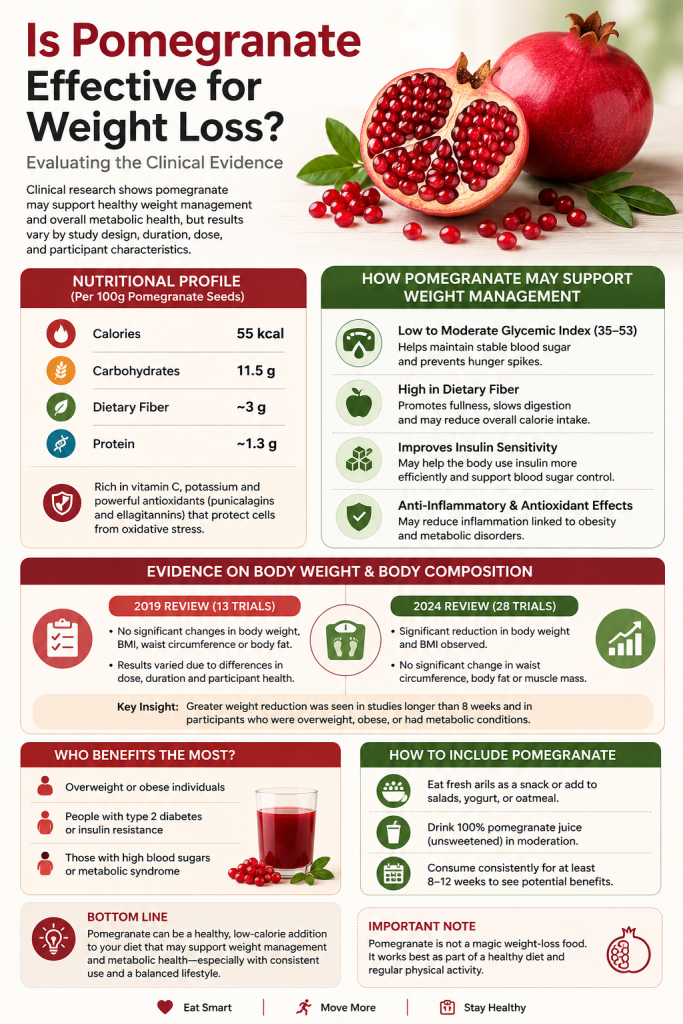
A simple 100-gram serving of pomegranate seeds has about 55 calories. This small portion provides around 11.5 grams of carbohydrates and nearly 3 grams of fiber. It only has a tiny bit of protein, coming in at roughly 1.3 grams per serving. Because of this balance, pomegranate gives you plenty of nutrients without adding too many calories to your day.
Dietary fiber is important because it slows down digestion and helps you feel full longer. When you feel full, you naturally eat less food throughout the day. This makes pomegranate an easy fit for low-calorie meal plans designed for weight management. For this reason, dietitians often recommend fiber-rich fruits to people trying to lose weight.
Pomegranates are also packed with essential vitamins like vitamin C and potassium. They contain powerful plant antioxidants known as punicalagins and ellagitannins. These antioxidant compounds help protect your cells from stress and inflammation. However, simply having antioxidants does not mean a food will directly cause you to drop weight.
Glycemic Response and Appetite Regulation
Pomegranate has a low to moderate glycemic index, usually scoring between 35 and 53. The exact number depends on how ripe the fruit is and how you prepare it. Foods with a low glycemic index cause a slow and steady rise in blood sugar rather than a sudden spike. This steady energy helps prevent the sharp blood sugar crashes that often trigger intense hunger cravings.
Keeping your blood sugar stable makes it much easier to stick to a healthy eating routine. People with steady blood sugar levels usually enjoy consistent energy and fewer sudden hunger pangs. Over time, this stability helps you control your portion sizes without feeling constant deprivation. Still, blood sugar is just one piece of the puzzle when it comes to managing appetite.
Research reviews show that eating pomegranate can help improve how your body handles sugar. These benefits are most noticeable in people who already struggle with high blood sugar levels. For example, people with type 2 diabetes often see bigger improvements than healthy adults. Because everyone’s body processes sugar differently, these health benefits vary from person to person.
Doctors always look at a patient’s overall health before recommending specific dietary changes. Large studies show that eating pomegranate regularly can help lower resting blood sugar levels over time. It can also help your body respond better to insulin, which is the hormone that manages blood sugar. However, its long-term effects on average blood sugar levels can still vary across different clinical trials.
Evidence on Body Weight and Body Composition
Clinical studies on pomegranate and direct weight loss show mixed results. A major study review from 2019 looked at thirteen different clinical trials on this topic. The researchers found no major changes in total body weight or body mass index among the participants. Measures like waist size and overall body fat percentage also stayed largely the same.
However, a larger study review from 2024 came to a different conclusion. This updated review looked at twenty-eight different trials involving a wide variety of people. This time, researchers noticed a real, measurable drop in total body weight after people added pomegranate to their diet. Average body mass index scores also went down across the groups studied.
Even with those weight changes, the study saw no big difference in waist size. Total body fat and muscle mass also stayed roughly the same throughout the test periods. These mixed results likely happened because different studies used different amounts of pomegranate over different lengths of time. The starting health of the participants also played a huge role in the final results.
Taking a closer look at the 2024 data helps explain why these differences happened. People lost noticeable weight mainly when they ate pomegranate for longer than eight weeks. Studies that lasted less than two months showed smaller and less consistent weight changes. This tells us that time and consistency are key if you want to see real results.
A person’s starting weight and health also changed how well the fruit worked. Studies that focused on people living with obesity showed clearer and more reliable weight loss. Their body measurements improved much more than those of people who started at a healthy weight. This matches what we know about nutrition: people with more weight to lose often show bigger responses to diet changes.
Starting health always plays a big role in how your body responds to a new diet routine. Because of this, lean individuals should keep realistic expectations about how much weight they might lose. Pomegranate offers its strongest health benefits to people who are carrying extra body fat. Keeping these facts in mind helps doctors give realistic advice to their patients.
Mechanistic Pathways Under Investigation
Scientists are studying several ways pomegranate might work inside the body to support weight management. Pomegranate seed oil contains a unique healthy fat called punicic acid. In laboratory tests, this natural compound helped slow down the creation of new fat cells. Early cell research shows that punicic acid can stop young stem cells from turning into fully grown fat stores.
Pomegranate compounds might also block the way your digestive system absorbs fat from food. Some early tests show these plant chemicals slow down the digestive enzymes that break down dietary fats. In one small study, people who drank pomegranate juice felt less hungry after meals. They also absorbed slightly less fat from the food they ate during testing.
This natural process works a bit like some common prescription diet medicines. However, scientists emphasize that we still need more research to understand exactly how this happens inside humans. These early lab findings give us exciting ideas to test, but they are not full proof yet. We need larger human studies before we can make firm medical promises.
The natural compounds in pomegranate also help fight long-term body inflammation. Ongoing inflammation is a well-known cause of insulin problems and poor metabolic health. Lowering this internal stress helps your heart and metabolism work better over time. Interestingly, these systemic health benefits can happen even if your scale weight does not change at all.
Fighting internal inflammation is a great supporting benefit, but it is not a primary shortcut for weight loss. It works best as a helper alongside proven healthy habits like regular exercise and smart eating. Doctors should share these lab findings carefully so patients do not rely on fruit alone for weight loss. Promising test tube results do not always turn into easy weight loss in daily life.
Cardiometabolic Considerations Beyond Weight
Aside from weight loss, eating pomegranate regularly offers great benefits for your heart and cholesterol levels. Multiple health trials show that it can help lower bad cholesterol in your bloodstream. Some of these same trials also showed a nice boost in good cholesterol levels. These healthy cholesterol changes are great for your heart, regardless of what happens to your weight.
Some research studies also noted gentle improvements in daily blood pressure readings. People who started with high blood pressure saw the clearest and most consistent benefits. These positive heart effects make pomegranate a smart addition to any everyday diet plan. They give you a great reason to enjoy the fruit even if you do not lose a single pound.
These heart benefits are especially helpful for people managing both extra weight and high blood sugar. Protecting your heart is always a top priority when working on long-term weight management. Pomegranate should never replace proven medical care or healthy eating habits. Instead, it works best as one small, nutritious piece of a larger lifestyle plan.
This distinction is important today because so many people use effective weight loss medications. Treatments like semaglutide have become standard options for managing weight and blood sugar. Other dual-action treatments are also giving patients more choices than ever before. Healthy foods like pomegranate work right alongside these medical treatments to support your overall health.
Clinical Guidance and Safe Consumption
Eating pomegranate is safe and healthy for almost all healthy adults. It easily fits into any standard, well-balanced meal plan focused on good health. However, eating huge amounts at once might cause mild stomach upset in sensitive people. Temporary bloating and minor changes in digestion are the most common issues reported.
People living with kidney disease need to watch their pomegranate intake carefully. This warning is important because pomegranates are naturally rich in potassium. Also, people taking certain daily medications should check with their doctor first. High-dose pomegranate extracts can sometimes change how your liver processes certain prescription drugs.
Eating the whole fruit is usually better for you than drinking store-bought juice or taking extracts. Whole fruit gives you rich dietary fiber while keeping sugar levels lower per serving. Pairing pomegranate seeds with lean protein or healthy fats also keeps your blood sugar super stable. Simple food pairings like this are an easy way to build balanced daily meals.
Focusing on moderate, consistent portions is the safest way to enjoy pomegranate in your diet. This simple routine helps you build healthy habits that you can actually stick with long-term. Relying on any single “superfood” to drive all your weight loss is never a good idea. Eating a wide variety of healthy foods will always give you better results than focusing on just one.
Conclusion
Current research shows that pomegranate is a healthy, valuable addition to a smart weight management plan. However, it is not a magic solution or a standalone cure for obesity on its own. Clinical study results on direct weight loss remain mixed across different medical trials. The newest and largest research reviews show modest weight benefits under the right conditions.
These weight benefits show up best in people with extra weight who eat pomegranate consistently over several months. Promising lab ideas, like how punicic acid affects fat cells, still need more testing in humans. How pomegranate polyphenols help control appetite also deserves deeper scientific study. Future research will help us figure out the best daily amounts for different people.
Doctors can safely encourage adding whole pomegranate to a balanced, everyday eating plan. This advice keeps things grounded in real science rather than flashy health trends. Proven lifestyle habits and proper medical care should always come first in weight management. Natural foods like pomegranate simply complement your core routine, helping you build a healthier life.
References
Bahari, H., Ashtary-Larky, D., Goudarzi, K., Mirmohammadali, S. N., Asbaghi, O., Kolbadi, K. S. H., Naderian, M., & Hosseini, A. (2024). The effects of pomegranate consumption on glycemic indices in adults: A systematic review and meta-analysis. Diabetes & Metabolic Syndrome: Clinical Research & Reviews, 18(1), Article 102940. https://doi.org/10.1016/j.dsx.2024.102940
Bahari, H., Pourreza, S., Goudarzi, K., Mirmohammadali, S. N., Asbaghi, O., Kolbadi, K. S. H., Naderian, M., & Hosseini, A. (2024). The effects of pomegranate consumption on obesity indices in adults: A systematic review and meta-analysis. Food Science & Nutrition, 12(2), 641–660. https://doi.org/10.1002/fsn3.3739
Basu, A., Newman, E. D., Bryant, A. L., Lyons, T. J., & Betts, N. M. (2013). Pomegranate polyphenols lower lipid peroxidation in adults with type 2 diabetes but have no effects in healthy volunteers: A pilot study. Journal of Nutrition and Metabolism, 2013, Article 708381. https://doi.org/10.1155/2013/708381
Gheflati, A., Mohammadi, M., Ramezani-Jolfaie, N., Heidari, Z., Salehi-Abargouei, A., & Nadjarzadeh, A. (2019). Does pomegranate consumption affect weight and body composition? A systematic review and meta-analysis of randomized controlled clinical trials. Phytotherapy Research, 33(5), 1277–1288. https://doi.org/10.1002/ptr.6322