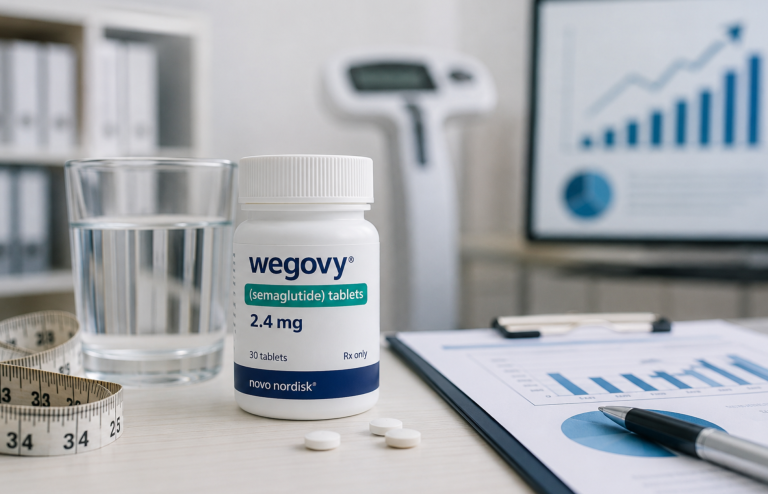
Starbucks Cuts GLP-1 Weight-Loss Coverage Amid Rising Employer Costs

Starting this October, Starbucks will stop paying for weight loss drugs under its employee health plans. A company spokesperson confirmed the change, but they did not give any extra details. This decision means employees who work at least 20 hours a week will lose coverage for these medications. However, the company will still pay for the exact same drugs if a doctor prescribes them for type 2 diabetes.
This choice fits into a much bigger trend as large companies struggle with rising pharmacy bills. Popular new weight loss drugs have caused spending on health benefits to jump across the nation. To be precise, these medicines work by mimicking natural signals in the body to lower blood sugar and curb hunger. Since these treatments can cost over $1,000 every month, insurance coverage is often the only way people can afford them.
In the past, Starbucks covered these weight loss treatments as part of its health package for staff. Consequently, this shift shows how hard it is for businesses to support worker wellness while managing high healthcare expenses. Along with this, many employers report that these drugs now take up a massive portion of their total health budgets. As a result, many companies are setting strict rules, adding spending limits, or cutting coverage entirely to save money.
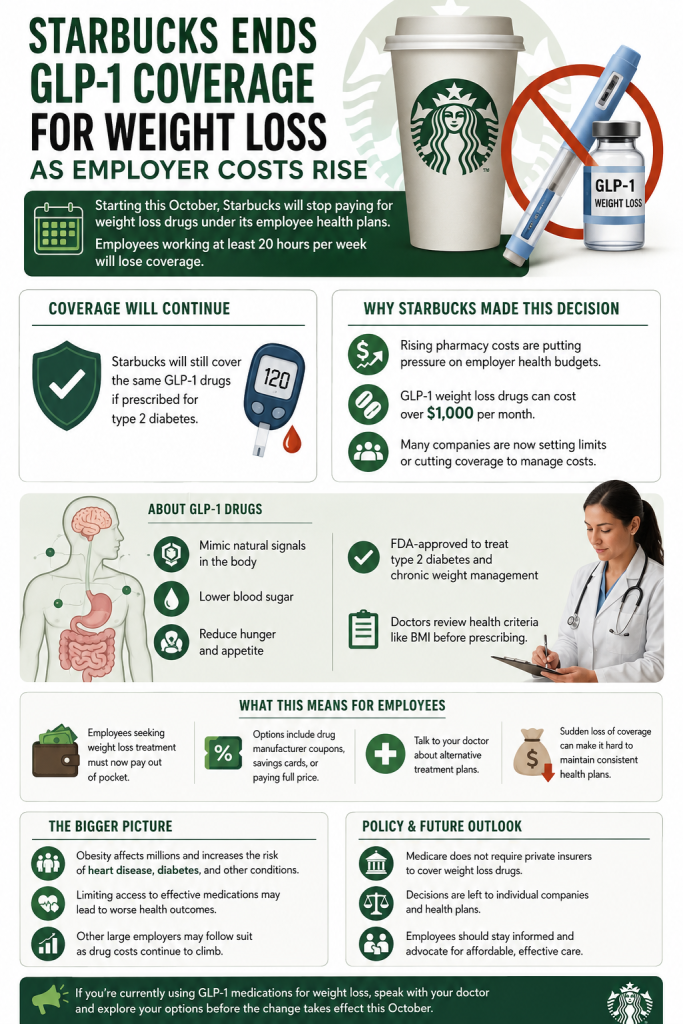
Federal health agencies have approved these active compounds to manage both diabetes and chronic weight issues. Doctors must review specific health criteria, such as body mass numbers, before writing a prescription. In light of this upcoming change, employees who want these drugs for weight loss must find other ways to pay for them. Therefore, patients may need to look for drug company coupons, cash savings cards, or pay full price at the pharmacy.
When companies limit access to weight loss medications, it creates bigger public health problems over time. Weight issues affect millions of adults and raise the risk of serious health problems like heart disease and diabetes. Taking away helpful medicine might force patients to use less effective options or delay care altogether. Furthermore, losing coverage suddenly makes it very hard for people to stay on a steady health plan.
Government programs like Medicare do not force private insurance plans to pay for weight loss drugs. Hence, this lack of strict rules leaves decisions up to individual companies and health plans. Building on this, other large businesses facing steep drug costs will likely make similar cuts in the near future. Meanwhile, affected workers currently taking these drugs should speak with their doctors right away to plan their next steps.