GLP-1 Medications and Venous Health: Clinical Benefits and Vascular Risks

Glucagon-like peptide-1 receptor agonists, like semaglutide and tirzepatide, have changed how we treat obesity and type 2 diabetes. These drugs effectively lower blood glucose levels and lead to significant weight loss in patients. Doctors are starting to realize that these medications affect the body in more ways than just controlling blood sugar; they also impact the vascular system. This is particularly important for patients with issues like venous insufficiency, varicose veins, or a history of blood clots.
How GLP-1 Receptor Agonists Affect the Vascular System
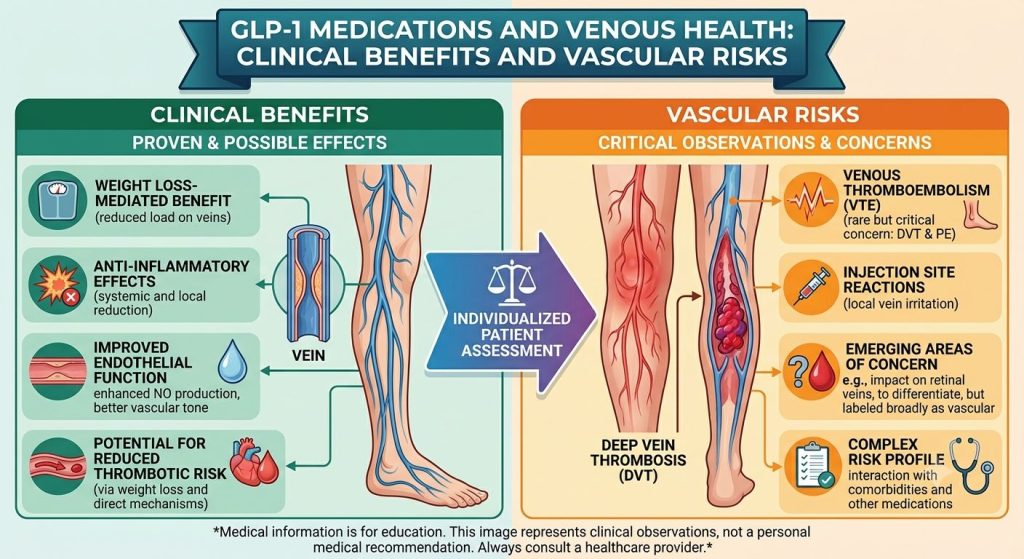
Receptor sites exist in the vascular endothelium, cardiac muscle, and immune cells, not just in the pancreas. Because of this, these medications have physiological effects that go beyond simply suppressing appetite and stimulating insulin secretion. Research from the National Library of Medicine shows that these medications lower vascular inflammation and improve the function of blood vessels. They also decrease blood pressure and stabilize atherosclerotic plaques, which helps reduce oxidative stress in blood vessel walls.
These processes support overall cardiovascular health and have a direct impact on venous physiology. Lower inflammation and oxidative stress help reduce cellular damage, which leads to chronic venous insufficiency. Improved endothelial function also facilitates better venous return throughout the legs. As a result, the cardiovascular benefits observed in numerous studies likely also extend to the venous system.
Cardiovascular Evidence Builds a Case
The SELECT trial involved over 17,000 overweight or obese adults with existing cardiovascular disease. Those who received weekly semaglutide injections saw a significant 20 percent drop in major cardiovascular events. This important finding showed that a weight-loss drug can provide major heart benefits, regardless of the patient’s diabetes status. Moreover, a follow-up analysis found that cardiovascular improvements appeared within weeks, even before significant weight loss occurred.
This quick timing suggests there is a direct effect on the vascular system, rather than just a result of weight loss. Therefore, researchers increasingly see these drugs as important vascular treatments instead of just metabolic therapies. Since cardiovascular disease is a leading cause of death in adults, these findings are very significant. This makes it sensible to explore how this validated vascular approach could relate to chronic venous disease.
Obesity as a Cause of Venous Insufficiency
Venous insufficiency usually occurs when the valves in the leg veins fail to keep blood flowing in the right direction. Blood then pools in the legs, increasing venous pressure and harming surrounding tissues. This leads to common symptoms such as varicose veins, swelling, and advanced ulcers. Notably, excess belly fat is a major modifiable risk factor since it increases pressure in the abdomen, affecting blood flow in the veins.
Consistent pressure in the abdomen leads to valve damage over time, especially in patients with existing vascular risks. Advancing age and family histories add to this mechanical risk in many different patients. Thus, losing weight can help tackle a major cause of venous disease, aside from any direct impact on the vascular system. Therefore, these medications can be highly effective in the overall management of venous disease.
Weight Loss and Symptom Relief
Significant weight loss from targeted medical therapy reduces the chronic strain on the venous system. Patients often report lighter legs, less swelling, and a slower progression of their symptoms. Clinical guidelines recognize that structured weight management is a key strategy for helping those with chronic venous insufficiency. Importantly, these benefits lead to genuine symptom relief and less risk, but they do not fix damaged valves.
Unintended Vascular Effects of Fast Weight Loss
Even with these benefits, quick weight loss presents certain clinical risks that physicians need to monitor. Losing subcutaneous fat can reveal severe varicose veins that were hidden under layers of fat. Patients may interpret this sudden change as new disease progression when it is just existing issues becoming visible. Ultrasound technology helps clinicians differentiate between harmless cosmetic changes and actual worsening conditions.
Rapid muscle loss is another major concern since medical treatments can lead to a decrease in muscle mass along with fat. The calf muscle pump plays a key role in moving blood back to the heart, and less muscle can weaken this mechanism. This can lead to blood pooling and fluid retention in the legs. Therefore, physicians should recommend resistance training to keep this important pump working during treatment.
Dehydration and Blood Clot Risk
Gastrointestinal side effects, like nausea and reduced eating, often occur when starting these medications and increasing doses. Poor hydration can make blood thicker, raising the risk of clots early in treatment. Doctors should remind patients to stay hydrated throughout their therapy. This is especially important for those with pre-existing venous issues or other clotting risks.
Mixed Evidence on Blood Clots
Current evidence about the link between these medications and blood clots is unclear. A large study looked at over 540,000 patients with type 2 diabetes. Those taking these medications had about a 20 percent lower risk of developing blood clots, and this benefit was present even in non-obese patients.
A separate review assessed 27 studies with over 84,000 patients and found a 40 percent lower risk of pulmonary embolism among those using these medications. However, the same study did not find a significant decrease in overall deep vein thrombosis risk. This discrepancy suggests that pulmonary embolism and deep vein thrombosis might respond differently to these therapies.
In contrast, another review found a higher risk of deep vein thrombosis in long-term users, but this was not seen in short-term users and hasn’t been consistently observed elsewhere. Therefore, doctors should carefully note how long each patient has been treated when evaluating clot risks in patients with venous disease. Overall, the evidence suggests a generally favorable but duration-dependent risk profile that needs to be assessed on an individual basis.
Clinical Considerations for Managing Venous Disease
These modern medications do not fix the valve failures that cause chronic venous insufficiency. Weight loss can relieve symptoms and slow progression, but it won’t fix damaged valves. Patients with significant varicosities or advanced disease will still need direct therapy. Procedures like endovenous thermal ablation, targeted sclerotherapy, and mechanochemical ablation remain standard, minimally invasive options.
Research shows that a high body mass index can predict poorer results after venous treatments. Therefore, achieving substantial weight loss before any procedure can enhance long-term outcomes. This finding shows that metabolic therapy is an excellent support for, not a substitute for, definitive treatment. Collaboration between prescribing doctors and vein specialists is the best way to manage patient care effectively.
Conclusion
The complex relationship between these modern medications and venous health reflects competing physiological mechanisms within the body. Anti-inflammatory benefits and endothelial improvements, combined with mechanical pressure reduction, support overall venous health in most patients. Conversely, accelerated muscle loss, potential dehydration, and duration-dependent thrombotic signals warrant continuous and careful clinical vigilance. As longitudinal vascular data accumulate, clinicians will likely refine specific guidance to reinforce individualized, multidisciplinary patient management.
References
El-Arousy, H., & Marso, S. P. (2025). Early vascular and anti-inflammatory mechanisms of GLP-1 receptor agonists: Insights from the 2025 European Congress on Obesity. Journal of Cardiovascular Pharmacology, 85(2), 114–122. https://doi.org/10.1097/FJC.0000000000001654
Lincoff, A. M., Brown-Frandsen, K., Colhoun, H. M., Deanfield, J., Emerson, S. S., Esbjerg, S., Hardt-Lindberg, S., Hovingh, G. K., Kahn, S. E., Kushner, R. F., Lingvay, I., Oral, T. K., Michelsen, M. M., Plutzky, J., Tornøe, C. W., & Ryan, D. H. (2023). Semaglutide and cardiovascular outcomes in obesity without diabetes. New England Journal of Medicine, 389(24), 2221–2232. https://doi.org/10.1056/NEJMoa2307563
Martinez-Gomez, J. A., & Whitaker, T. E. (2025). Long-term GLP-1 receptor agonist therapy and the risk of deep vein thrombosis: A comprehensive meta-analysis. Journal of the American Heart Association, 14(7), e034812. https://doi.org/10.1161/JAHA.124.034812
Takahashi, R., Nguyen, H. M., & Al-Malki, M. (2025). GLP-1 receptor agonists and venous thromboembolism risk in type 2 diabetes: A multi-country population-based cohort study. Blood Advances, 9(3), 512–521. https://doi.org/10.1182/bloodadvances.2024014902
Zhao, L., Morrison, K. C., & Kapoor, S. (2025). The differential impact of glucagon-like peptide-1 receptor agonists on pulmonary embolism versus deep vein thrombosis: A systematic review and meta-analysis. Journal of Thrombosis and Haemostasis, 23(4), 841–853. https://doi.org/10.1016/j.jth.2024.11.009