GLP-1 Medications and Your Teeth: What You Need to Know
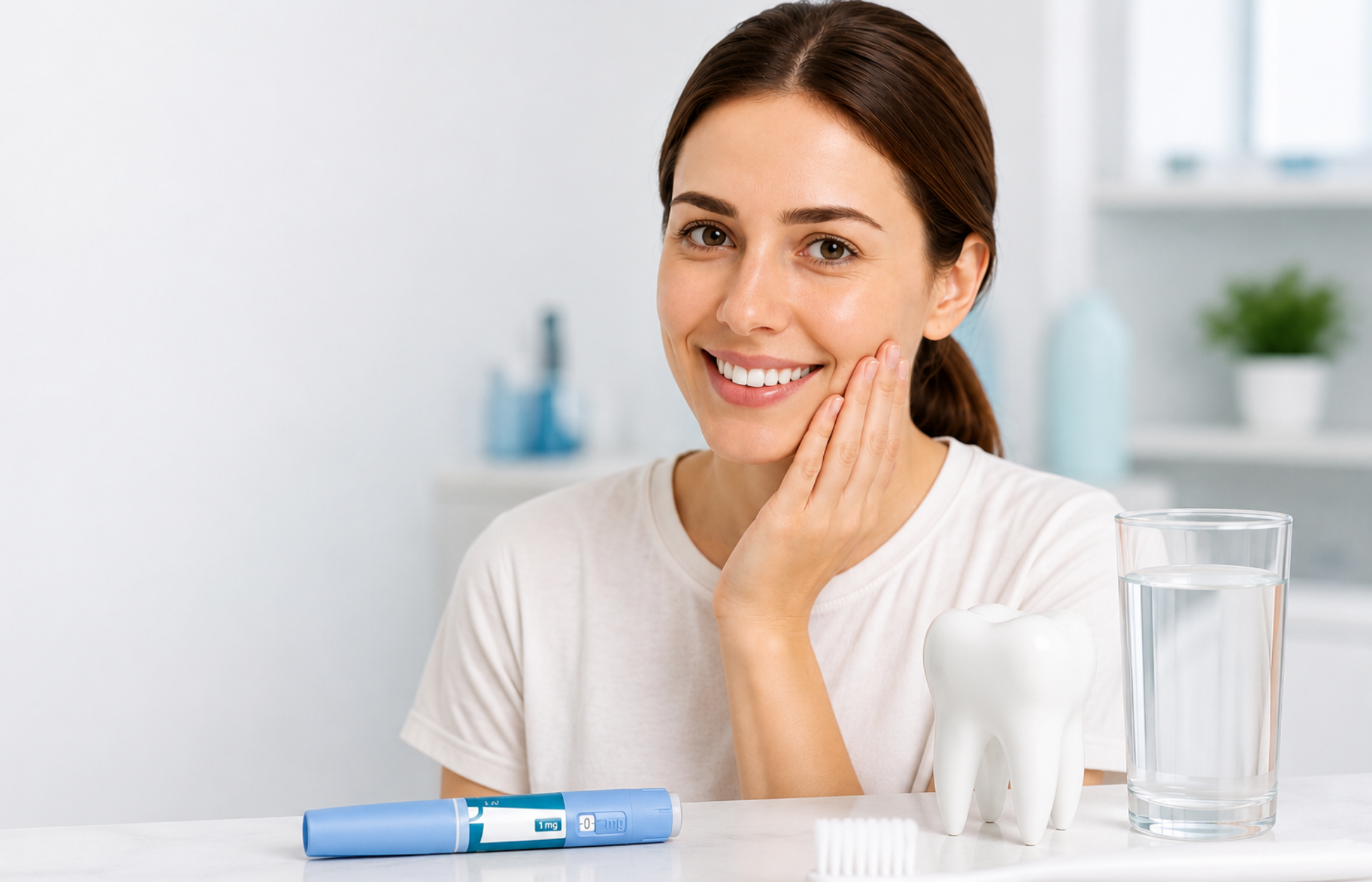
GLP-1 medications work wonders for weight loss and managing type 2 diabetes. However, many people don’t realize these popular drugs can also take a toll on their oral health. The main culprit behind these unexpected dental problems is usually common side effects like severe nausea, vomiting, and diarrhea, which quickly lead to dehydration.
When you’re dehydrated, your body produces much less saliva. Saliva isn’t just there to keep your mouth wet; it actively washes away bacteria and neutralizes acid levels. Without enough of it, your teeth lose their natural shield, making them far more vulnerable to damage.
Many people taking GLP-1s complain about a constantly dry mouth. Without enough saliva to wash away harmful bacteria, you are much more likely to develop bad breath, cavities, and swollen or bleeding gums. In some cases, persistent dry mouth can even cause thrush, a painful oral yeast infection.
At the same time, frequent vomiting and acid reflux bring strong stomach acids up into your mouth. Over time, these acids eat away at your tooth enamel, which is the hard outer layer protecting your teeth. As enamel wears down, your teeth become weak, sensitive to hot and cold, and prone to rapid decay.

It is rarely just one issue at a time. Patients often experience a combination of problems, including a strange or metallic taste in their mouth, sharp tooth sensitivity, and tender gums. Because these issues tend to pile up quickly, catching them early makes a huge difference. Your dentist can spot early signs of acid damage or dryness long before you feel severe pain.
Fortunately, you don’t have to stop taking your medication to protect your teeth, as a few simple daily habits can make a big difference. Staying well-hydrated by drinking plenty of water throughout the day is key, while chewing sugar-free gum, using lozenges, or trying alcohol-free mouthwashes and saliva substitutes can easily help spur natural saliva flow.
For your daily routine, brush gently with a soft-bristled toothbrush and fluoride toothpaste to protect weakened enamel, and cut back on sugary snacks and acidic drinks that feed harmful bacteria. If you experience vomiting or acid reflux, always rinse your mouth thoroughly with water or a baking soda solution before brushing, as scrubbing immediately can actually rub acid directly into softened enamel.
Finally, try sleeping with your head elevated and avoiding late meals to keep night-time reflux at bay, and don’t hesitate to speak with your doctor about acid-reducing medications if frequent heartburn remains an issue.
Always tell your dentist if you start taking a GLP-1 medication so they can adjust your care plan and monitor your teeth. You should schedule an appointment right away if you notice a dry mouth that lasts longer than two weeks, sudden tooth sensitivity, bleeding gums, white patches inside your mouth, or rapidly worsening cavities.
With so many people using GLP-1 medications today, doctors and dentists need to work together more than ever. If you are taking one of these drugs, keep both your doctor and dentist informed about any side effects you experience. Staying hydrated, keeping up with gentle dental care, and seeking early advice will help protect your smile while you manage your health.