Could Weight-Loss Drugs Be Curing Our Alcohol Cravings?
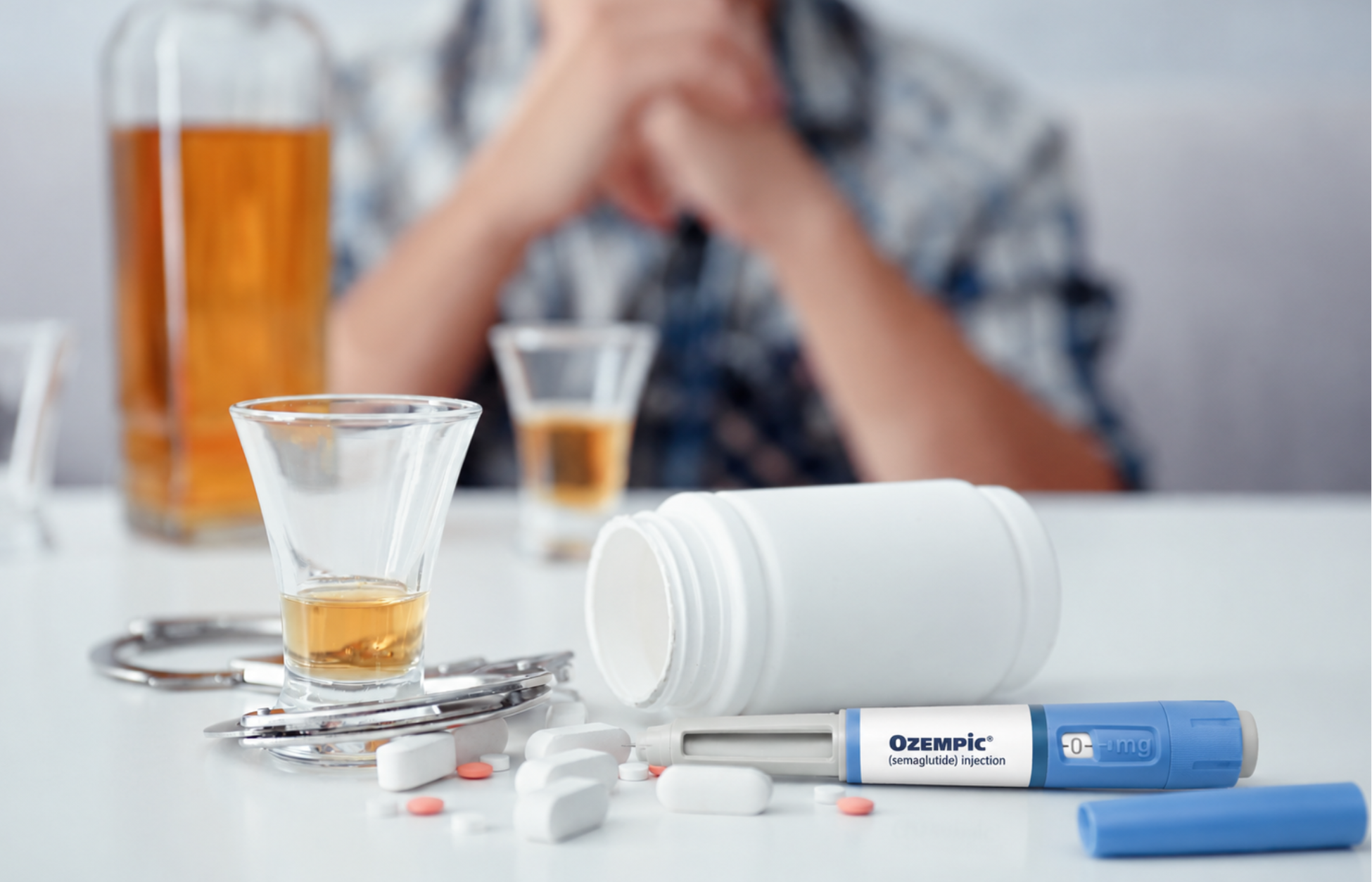
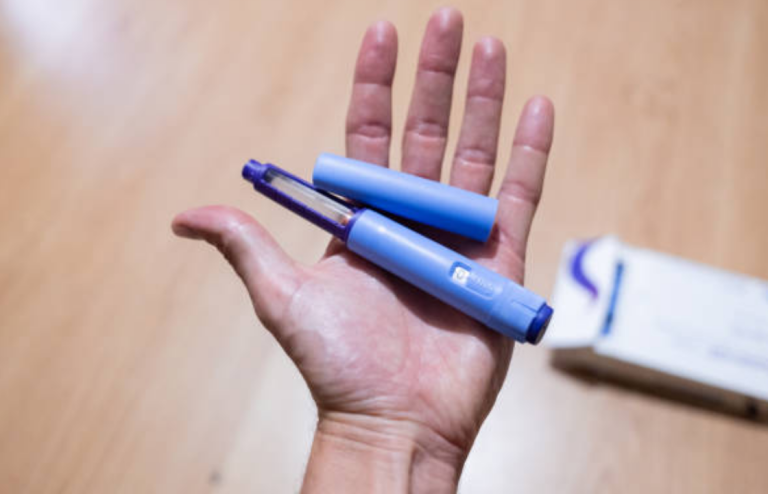
It turns out that semaglutide, the active ingredient in popular GLP-1 drugs like Wegovy and Ozempic, does more than just help people manage weight and blood sugar. Recent studies show it might also dial down the urge to drink. Since about 1 in 10 adults is currently on a GLP-1 medication, this unexpected side effect is catching the attention of both doctors and the alcohol industry.
Researchers are already seeing clear evidence of this shift in clinical trials. In a six-month study of 108 adults dealing with both obesity and alcohol use disorder, everyone received therapy, but the group taking semaglutide saw a much larger drop in their overall drinking and cravings. An earlier, smaller nine-week trial using a low dose found similar results. While it didn’t stop people from drinking entirely, they naturally drank far less whenever they did choose to have a glass.
Scientists think semaglutide works by dampening the “reward” signals in the brain, the same pathways that make us crave another glass of wine or a slice of pizza. That shift in human behavior is already making real waves in restaurants and bars. Bartenders and restaurant owners report a growing “one and done” trend, where guests on these drugs rarely order a second round, preferring to sip a single drink or swap to a mocktail.
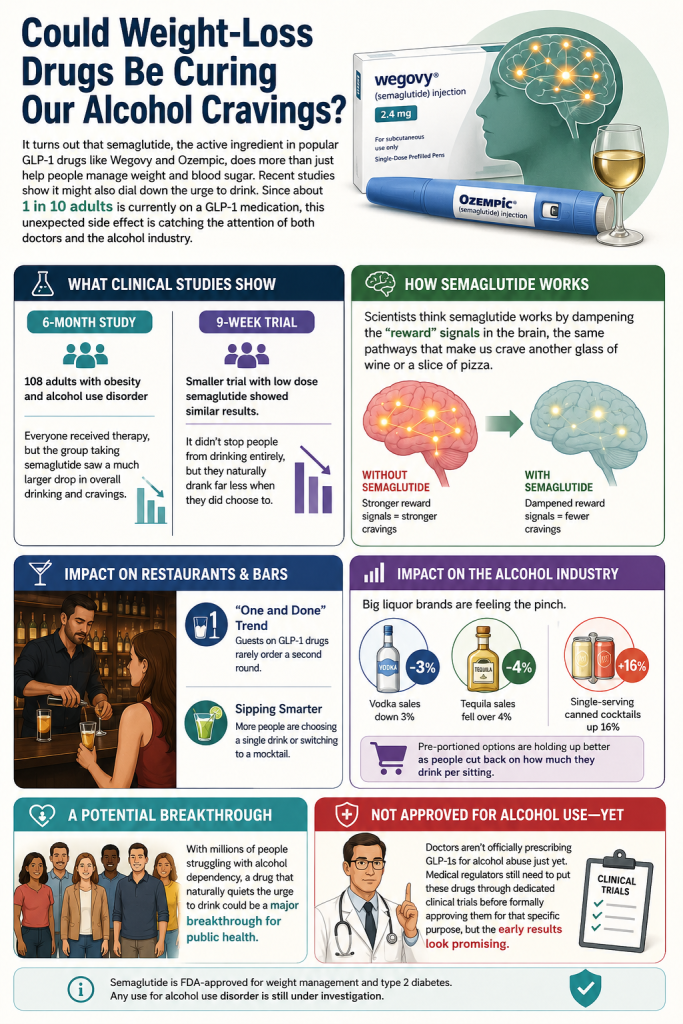
Big liquor brands are feeling the pinch as a result. Overall spirit sales recently dipped, with vodka down 3% and tequila falling over 4%. Interestingly, single-serving canned cocktails jumped by 16%, proving that pre-portioned options are holding up better as people cut back on how much they drink per sitting.
With millions of people struggling with alcohol dependency, a drug that naturally quiets the urge to drink could be a major breakthrough for public health. That said, doctors aren’t officially prescribing GLP-1s for alcohol abuse just yet. Medical regulators still need to put these drugs through dedicated clinical trials before formally approving them for that specific purpose, but the early results look promising.