Clinical Trial Evaluates Oral Orforglipron Against Semaglutide

A new once-daily tablet, orforglipron, outperformed oral semaglutide in a phase 3 clinical trial. Researchers evaluated this new receptor agonist in 1,698 adults with type 2 diabetes. The 52-week study compared the treatments at 131 research centers. To measure effectiveness, researchers tracked hemoglobin A1c to assess average blood sugar control.
At the start of the study, patient baseline hemoglobin A1c averaged 8.3 percent. After 52 weeks, orforglipron reduced these levels by up to 1.91 percentage points. In comparison, oral semaglutide achieved a 1.47 percentage point reduction. This difference shows better glycemic control with the newer agent.
Weight loss outcomes followed a similar trend during the yearlong study. Participants taking orforglipron lost between 6 and 8 percent of their body weight. In contrast, those on oral semaglutide lost only 4 to 5 percent. These results indicate a meaningful advantage for the new treatment.
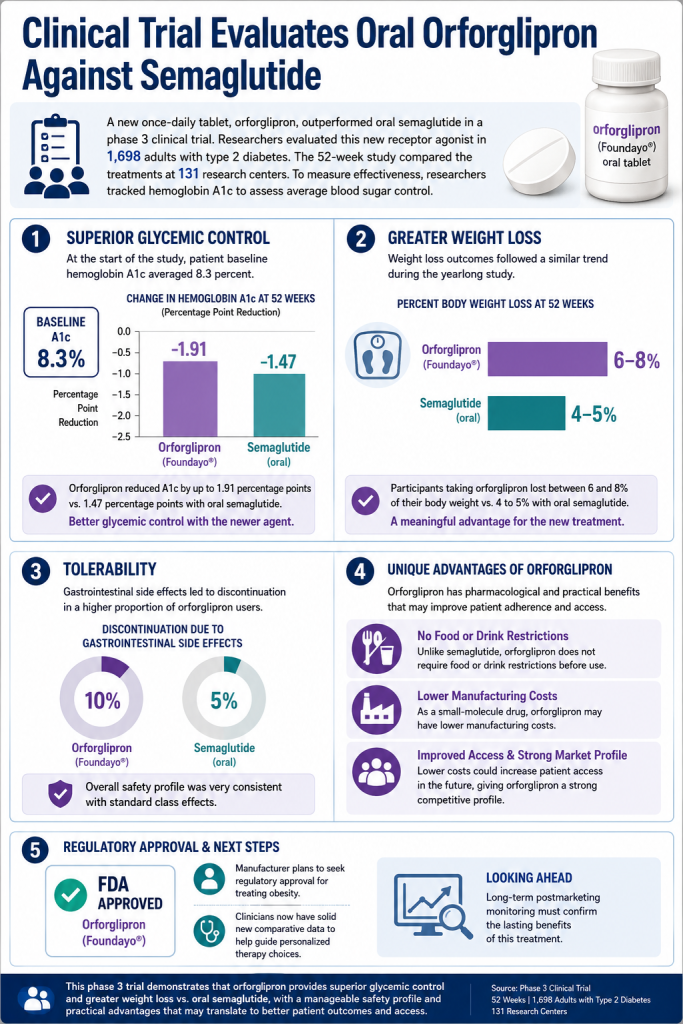
Tolerability profiles varied slightly between the two drug groups. Gastrointestinal side effects caused up to 10 percent of orforglipron users to stop treatment. In comparison, only 5 percent of the semaglutide group discontinued. However, researchers noted that the overall safety profile was very consistent with standard class effects.
Notably, orforglipron has unique pharmacological features that may improve patient adherence. Unlike semaglutide, this drug does not require food or drink restrictions before use. Additionally, lower manufacturing costs for this small-molecule drug could increase patient access in the future. Because of this, the agent has a strong competitive profile in the medical market.
The Food and Drug Administration approved orforglipron under the brand name Foundayo. The manufacturer also plans to seek regulatory approval for treating obesity. As a result, clinicians now have solid new comparative data to help guide personalized therapy choices. Ultimately, long-term postmarketing monitoring must confirm the lasting benefits of this treatment.