Semaglutide and Metabolism: What You Should Know

Semaglutide is a widely prescribed medication for obesity and type 2 diabetes. The drug is the active ingredient in several approved treatments, each with a distinct brand name, use, and delivery method. Millions of adults live with obesity or being overweight, highlighting the importance of GLP-1 receptor agonist therapy. Semaglutide has gained attention for its significant weight loss effects. Understanding how the drug works clears up a common misconception. Semaglutide does not directly speed up metabolism, despite many believing otherwise.
Approved Uses and Formulations
The manufacturer offers semaglutide under two main brand names for different uses. Federal agencies have approved the first version for chronic weight management in adults and adolescents over age 12. Eligible patients have obesity and at least one weight-related medical condition. Doctors prescribe this medication along with a reduced-calorie diet and increased physical activity.
The medication is also approved to lower cardiovascular risk in certain patients, specifically those with obesity and established heart disease. The second main brand name treats type 2 diabetes directly and reduces the risk of kidney disease in individuals with diabetes. The manufacturer provides this diabetes treatment in both injectable pen and oral pill forms. Another related option is a dual agonist that works through an additional receptor mechanism to address similar conditions. Each formulation targets overlapping hormonal pathways, but clinical uses differ.
Doctors choose among these options based on the specific use, insurance coverage, and patient tolerance. Treatment usually starts with a low dose, which gradually increases over several weeks. This titration schedule helps reduce gastrointestinal side effects when starting the medication. As a result, early treatment requires close clinical monitoring and thorough patient education.
Appetite and Metabolic Effects
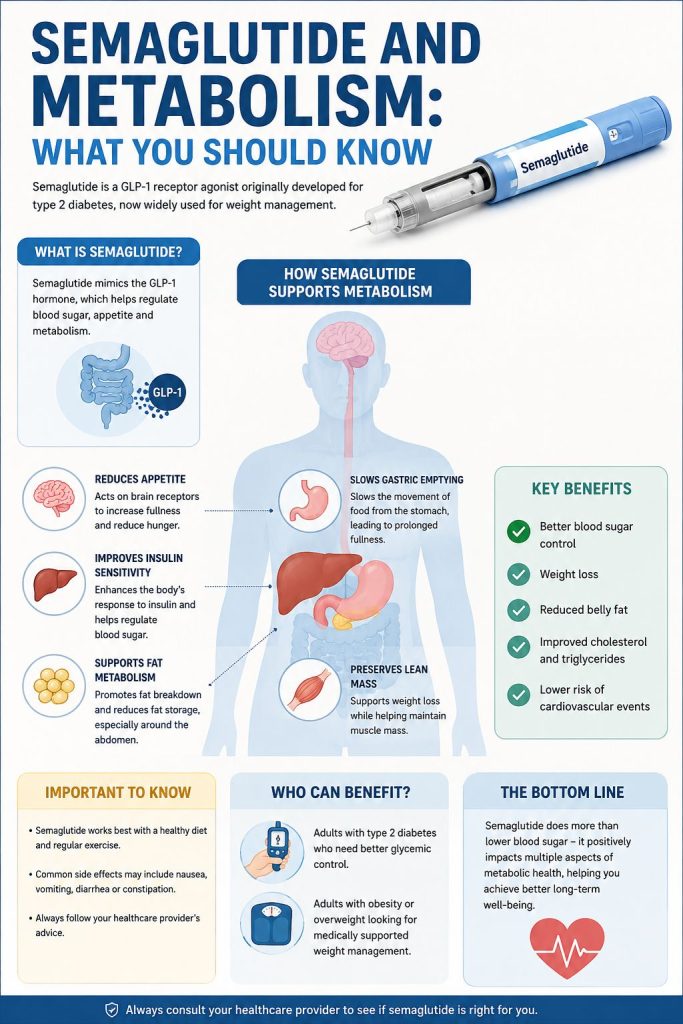
Semaglutide works as a GLP-1 receptor agonist in the body. It binds to and activates the same receptors that natural GLP-1 targets, which are present in the gut, pancreas, and blood vessels. Activation in the gut slows gastric emptying and promotes a feeling of fullness after meals. At the same time, activation in the hypothalamus suppresses appetite and reduces food cravings. The hypothalamus regulates hunger in the central nervous system. This combination of gut and brain effects explains most of the clinical outcomes. Neither pathway directly increases calorie burning.
Clinical evidence shows that semaglutide does not raise resting metabolic rate. Instead, weight loss mainly results from reduced calorie intake due to appetite suppression. This distinction is important for both doctors and patients, as some people mistakenly think weight loss comes from burning more calories. Hormonal appetite regulation is the key to the treatment’s effect, not increased thermogenesis. For patients with type 2 diabetes, receptor activation provides an additional benefit by lowering elevated blood sugar levels, regardless of weight change. This glycemic effect works through a different pathway than appetite suppression.
Weight Loss Outcomes and Plateaus
Clinical trial data show significant weight loss among patients using the therapeutic doses. One major study documented this effect directly. Participants taking 2.4 milligrams of semaglutide lost considerable weight over one year, with the average weight loss exceeding 32 pounds. Researchers credit this result to ongoing appetite suppression combined with early satiety. The extent of weight loss generally corresponds to treatment duration and patient adherence, though individual responses can vary based on metabolic and behavioral factors. Efficacy improves notably when patients use semaglutide alongside structured lifestyle changes.
Pharmacological appetite suppression alone rarely leads to optimal outcomes without behavioral changes. Therefore, doctors consider semaglutide as a supplement to lifestyle interventions. This approach aligns closely with federal labeling requirements, which specify use alongside a reduced-calorie diet and exercise plan.
Weight loss typically lowers resting metabolic rate, regardless of its cause. As body mass decreases, the body needs fewer calories for basic functions. This adaptive response helps explain why many patients reach weight loss plateaus, even with consistent medication adherence and unchanged dosages. Metabolic adaptation drives these plateaus, affecting most patients working toward significant weight loss. Nonetheless, doctors can address this issue with targeted, evidence-based strategies. Increasing weight-bearing exercises, particularly strength training, helps maintain muscle mass, which supports higher resting energy expenditure compared to fat mass alone. Resistance training is a vital strategy during active treatment, counteracting the metabolic slowdown that comes with significant weight loss.
Lifestyle Strategies
A recent joint clinical advisory outlined nutritional priorities for patients. Four professional organizations issued this guidance to enhance clinical strength. The advisory emphasized the importance of adequate protein and fiber intake during active treatment. These nutrients support a feeling of fullness and help preserve lean tissue during caloric restriction.
The recommendations aim to improve treatment efficacy and address common gastrointestinal side effects. Nutrient-rich diets therefore serve a dual purpose throughout therapy. Additionally, sleep quality, hydration, and stress management also affect metabolic outcomes. Poor sleep can disrupt hormones that regulate hunger and fullness. This disruption may undermine the medication’s intended effects over time. Chronic stress can increase cortisol, leading to fat retention regardless of diet. Given this evidence, comprehensive lifestyle management is essential, as pharmacological treatment alone rarely achieves lasting results without behavioral support.
Discontinuation Effects
To maintain its therapeutic effects, semaglutide requires indefinite use. This is similar to long-term medications for controlling hypertension or cholesterol. Stopping the medication typically leads to weight regain as soon as the drug leaves the body. The appetite-suppressing mechanism stops working shortly after treatment is discontinued.
A broad analysis reviewed this pattern extensively. Researchers looked at 37 studies involving 9,341 participants who stopped therapy and found that patients consistently regained weight each month. Projections indicated they would return to their original weight in about 1.5 years.
The cardiovascular benefits linked to treatment showed a similar reversible pattern after discontinuation. The same analysis projected that improvements in cardiovascular health would reverse in roughly 1.4 years. Notably, patients who maintained dietary and exercise changes experienced a slower reversal of benefits. This finding highlights the importance of ongoing lifestyle interventions.
Safety and Adverse Effects
Gastrointestinal symptoms are the most commonly reported side effects of treatment. Nausea is the most frequent issue for patients starting semaglutide therapy. Diarrhea, constipation, vomiting, and abdominal discomfort are also reported often. Other common effects include fatigue, headaches, bloating, and heartburn.
Most gastrointestinal side effects tend to lessen in severity as treatment continues and the dosage stabilizes. Gradually increasing the dose helps minimize the intensity of these early symptoms. However, less common but significant risks require careful ongoing monitoring. These include pancreatitis and severe dehydration that can lead to kidney stones.
Some patients experience allergic reactions and injection site issues. There is a risk of aspiration during anesthesia, prompting specific preoperative guidance for doctors. Evidence also links GLP-1 receptor agonists to a possible risk of thyroid tumors for individuals with a history of medullary thyroid carcinoma. The same restriction applies to multiple endocrine neoplasia syndrome type 2. Doctors must check for this history before starting semaglutide therapy. Rarely, reports describe vision changes, including temporary blindness. Any new visual symptoms should prompt immediate eye evaluation during treatment.
Regular follow-up appointments allow doctors to adjust dosages and monitor tolerability. These visits also provide opportunities to reinforce advice on diet and physical activity. Consistent monitoring throughout treatment helps ensure both safety and long-term success.
Clinical Implications
The evidence shows semaglutide is an effective appetite suppressant, not a metabolism booster. Weight loss outcomes depend on sustained calorie reduction achieved through mechanisms in the hypothalamus and stomach. Doctors who communicate this distinction effectively can set realistic expectations for patients. Patients benefit from understanding plateaus, what happens after stopping the medication, and the need for ongoing lifestyle support.
As therapies expand in clinical practice, research priorities are evolving. Ongoing studies into long-term metabolic adaptation will refine future treatment approaches. This research will also inform strategies for achieving long-lasting, sustainable weight management results.
References
Wilding, J. P. H., Batterham, R. L., Calanna, S., Davies, M., Van Gaal, L. F., Lingvay, I., McGowan, B. M., Rosenstock, J., Tran, M. T. D., Wadden, T. A., Wharton, S., Yokote, K., Zeuthen, N., & Kushner, R. F. (2025). Once-weekly semaglutide 2.4 mg and one-year weight outcomes in adults with obesity. Advances in Therapy, 42(3), 215–229. https://doi.org/10.1007/s12325-025-03012-4
Xie, Z., Yang, S., Deng, W., Li, J., & Chen, J. (2026). Durability of weight loss and cardiometabolic benefits following discontinuation of GLP-1 receptor agonist therapy: A systematic review and meta-analysis. BMJ, 382, e078234. https://doi.org/10.1136/bmj-2026-078234