TikTok Shop Sellers Push Unapproved GLP-1 Patches to Women

Unregulated online sellers are promoting fake weight loss patches on TikTok Shop and other platforms. Many target women with bold promises of effortless weight loss. The patches claim to deliver GLP-1, the active ingredient associated with popular weight loss drugs such as Ozempic and Wegovy. However, these products are not approved by the FDA.
Independent laboratory testing found a more troubling problem. The tested patches contained no active GLP-1 peptides at all. That means the products could not deliver the claimed medication through the skin. Buyers were left paying for products that did not contain the advertised active ingredient.
The findings highlight the risks of buying weight loss products from unregulated online sellers. Attractive packaging and medical-sounding claims can make fake products appear legitimate. Consumers should be cautious about patches that promise GLP-1 effects without FDA approval. Claims made on social media do not guarantee that a product contains what its seller promises.
Vendors frequently set up profile accounts pretending to be legitimate medical spas to gain trust. Marketers use videos featuring women and AI-generated models claiming the patches help with fast weight loss, postpartum recovery, and hormonal health. Once buyers engage, some sellers even try to redirect them to buy unverified, unregulated chemical powders for DIY home injections.
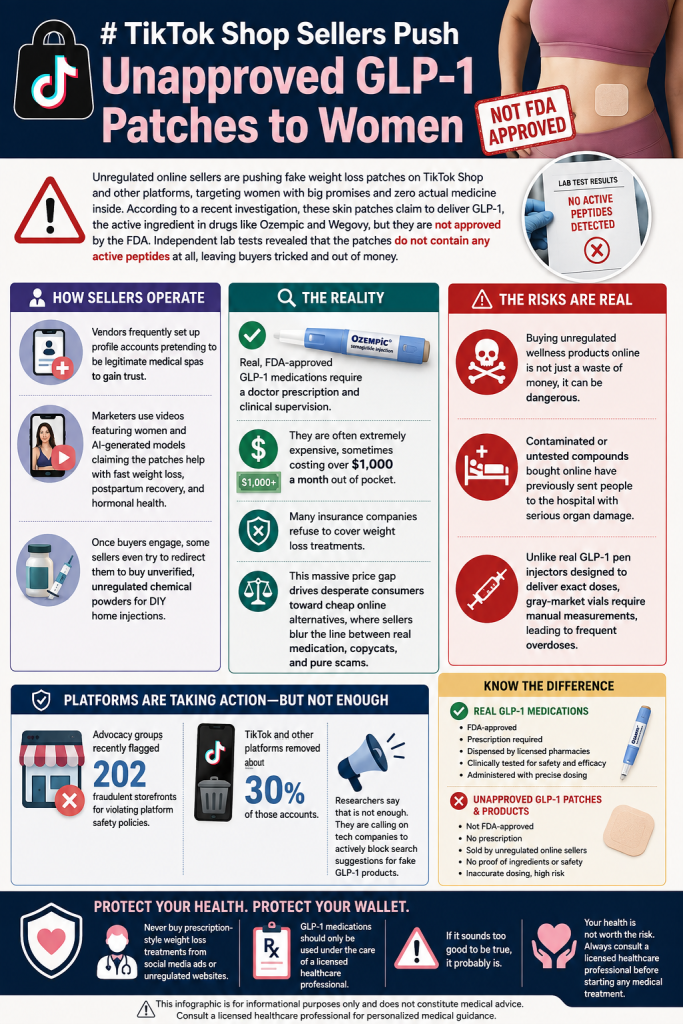
Real, FDA-approved GLP-1 medications require a doctor prescription and clinical supervision. However, they are often extremely expensive, sometimes costing over 1,000 dollars a month out of pocket, and many insurance companies refuse to cover weight loss treatments. This massive price gap drives desperate consumers toward cheap online alternatives, where sellers blur the line between real medication, copycats, and pure scams.
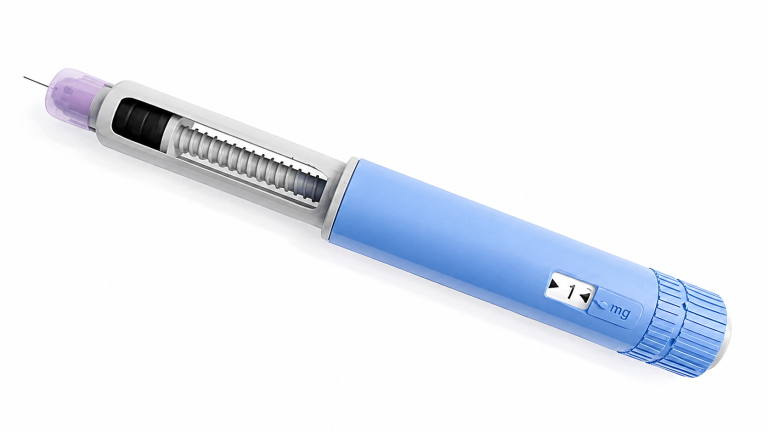
Buying unregulated wellness products online is not just a waste of money, it can be dangerous. Contaminated or untested compounds bought online have previously sent people to the hospital with serious organ damage. Furthermore, unlike real GLP-1 pen injectors designed to deliver exact doses, gray-market vials require manual measurements, leading to frequent overdoses.
Advocacy groups recently identified 202 fraudulent storefronts that allegedly violated platform safety policies. TikTok and other social media platforms removed roughly 30% of the flagged accounts. However, researchers say that enforcement is still not enough.
Moreover, researchers are urging technology companies to take a more proactive approach. In particular, they want platforms to block search suggestions that help users find fake or unapproved GLP-1 products. This could make it harder for fraudulent sellers to reach people searching for weight-loss treatments.
Most importantly, consumers should never purchase prescription-style weight-loss treatments through social media advertisements or unregulated websites. Instead, anyone considering a GLP-1 medication or another medical treatment should consult a licensed healthcare professional and obtain medication through a legitimate, regulated source.
Ultimately, stronger platform enforcement, combined with informed consumer choices, can help reduce the risks associated with fraudulent weight-loss products online.