Ozempic and Stomach Paralysis: Risks, How It Happens, and How to Manage It
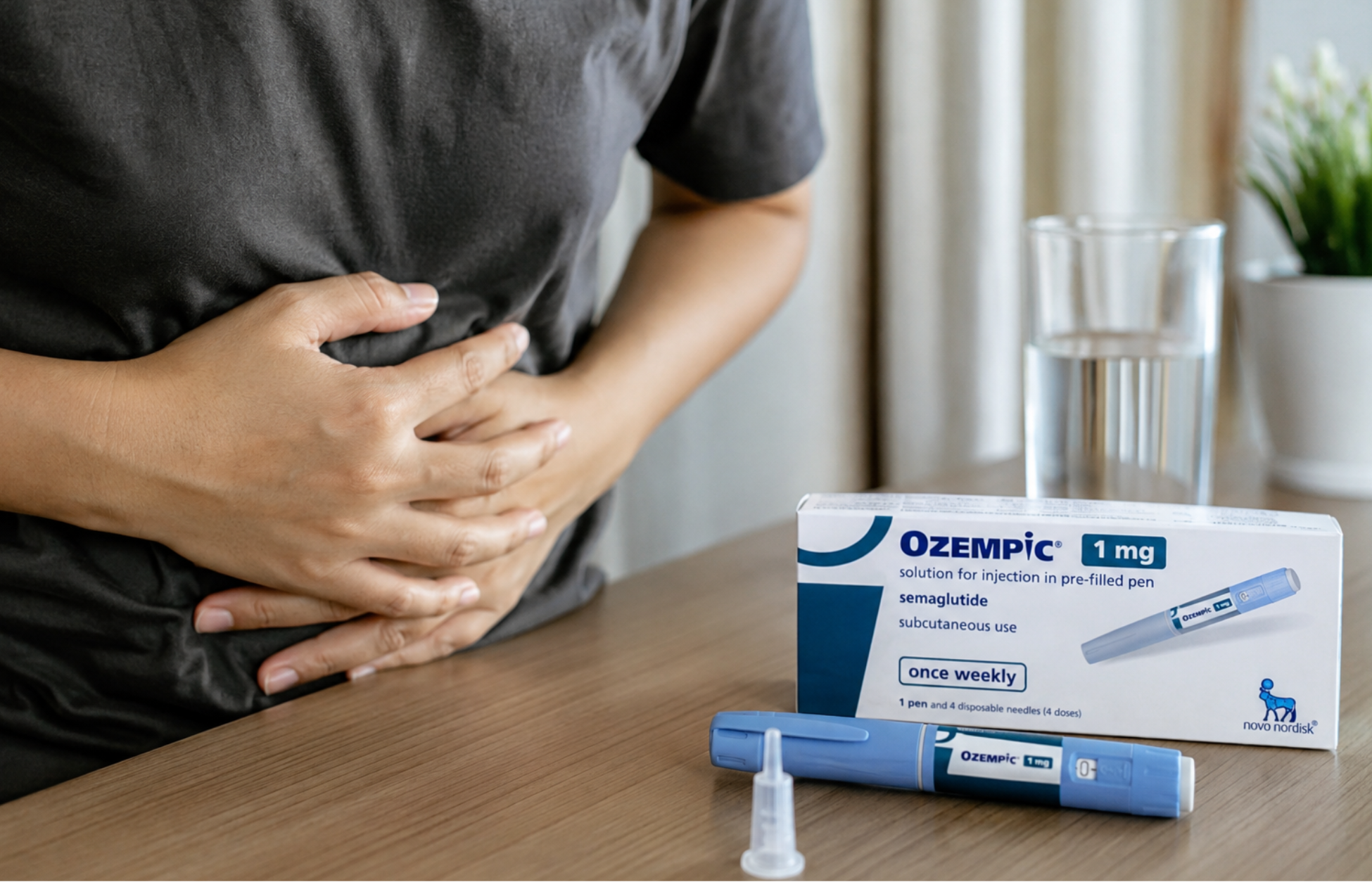
Ozempic (semaglutide) works partly by slowing down how fast your stomach empties food into your intestines. This is great for keeping blood sugar steady in people with type 2 diabetes, and it helps with weight loss, too. But in rare cases, that process slows down way too much, leading to a condition called gastroparesis commonly known as stomach paralysis.
For doctors and patients alike, understanding when simple digestive slowing turns into a real medical problem is crucial. Knowing who is most at risk and how to handle it if it happens makes all the difference.
How Semaglutide Changes Stomach Motility
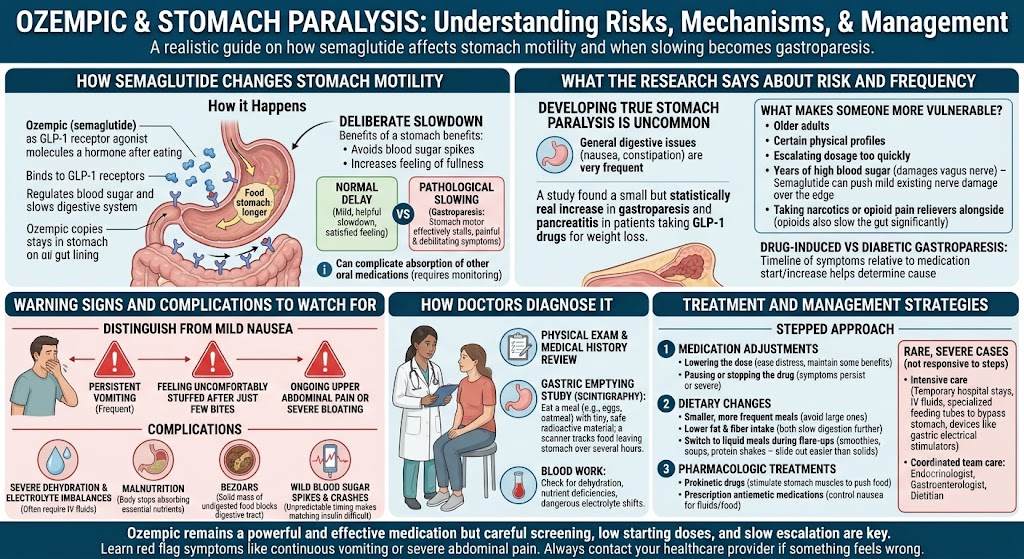
Ozempic belongs to a class of drugs called GLP-1 receptor agonists. They copy a natural hormone your gut releases after you eat. When you take the medication, it binds to GLP-1 receptors across your body, helping regulate both your blood sugar and how fast your digestive system moves.
The mechanism behind delayed stomach emptying
By telling your stomach to hold onto food a little longer, GLP-1 drugs prevent sudden spikes in blood sugar after meals. They also keep you feeling full for longer periods, which naturally helps people eat less. This deliberate slowdown is a big reason why the medication works so well.
Normal delay vs. pathological slowing
There is a fine line between a helpful slowdown and a medical issue. A mild delay is normal and expected it gives you that satisfied, full feeling without causing severe distress. Gastroparesis, on the other hand, is when the stomach motor effectively stalls out, causing painful and debilitating symptoms. Doctors use specific tests and look at how severe a person’s symptoms are to tell the two apart.
Why this slowdown matters clinically
While delayed stomach emptying helps control blood sugar and weight, it can also complicate how your body absorbs other oral medications. Because pills stay in the stomach longer, doctors have to carefully monitor patients who take drugs that require precise, sensitive dosing.
What the Research Says About Risk and Frequency
Developing true stomach paralysis from semaglutide is uncommon. Safety monitoring by health authorities shows that while general digestive issues like mild nausea or constipation are very frequent, actual gastroparesis makes up only a tiny percentage of reported side effects. Still, as millions more people start taking these drugs, reports have naturally ticked up.
A study analyzing patients taking GLP-1 drugs specifically for weight loss did find a small but statistically real increase in the risk of both gastroparesis and pancreatitis. Because of this, doctors now balance the clear metabolic benefits of the drug against a patient’s individual risk factors.
What makes someone more vulnerable?
Not everyone reacts to the medication the same way, as several distinct patient factors can raise the chances of having severe stomach trouble. Older adults and individuals with certain physical profiles tend to have higher rates of severe side effects. Similarly, escalating the dosage too quickly doesn’t give the stomach time to adapt, increasing the odds of a sudden shutdown.
A person’s health history plays a massive role as well. Years of high blood sugar from long-standing diabetes can damage the vagus nerve that controls stomach movement. If someone already has mild, nerve-related digestive damage from diabetes, semaglutide can push it over the edge. Furthermore, taking narcotics or opioid pain relievers alongside semaglutide creates a double-whammy, as opioids also slow the gut down significantly.
Warning Signs and Complications to Watch For
It is vital not to confuse gastroparesis with the mild, short-lived nausea that many people get when starting Ozempic. True gastroparesis involves persistent, frequent vomiting, feeling uncomfortably stuffed after eating just a few bites, and ongoing upper abdominal pain or severe bloating.
If left unmanaged, true stomach paralysis can lead to real health complications. Constant vomiting drains fluid and critical minerals, leading to severe dehydration and electrolyte imbalances that often require IV fluids. As the stomach fails to process food, the body stops absorbing essential nutrients, eventually causing malnutrition. Undigested food sitting in the stomach for too long can even harden into a solid mass called a bezoar, which blocks the digestive tract. Furthermore, when food enters the intestines at random, unpredictable intervals, matching insulin or diabetes medication timing becomes nearly impossible, leading to wild blood sugar spikes and crashes.
Drug-induced vs. diabetic gastroparesis
It can be tricky to tell whether the drug caused the paralysis or if long-term diabetes damage was already there. Often, semaglutide simply unmasks a pre-existing nerve issue that hadn’t shown major symptoms yet. Doctors usually look closely at the timeline when the symptoms started relative to when the medication was started or increased to figure out the primary cause.
How Doctors Diagnose It
If gastroparesis is suspected, a doctor will start with a physical exam and review your medical history. To confirm it, they typically order a gastric emptying study (scintigraphy). For this test, you eat a meal such as eggs or oatmeal containing a tiny, safe amount of radioactive material, and a scanner tracks how quickly the food leaves your stomach over several hours.
Along with imaging, blood work is usually ordered to check for dehydration, missing nutrients, or dangerous electrolyte shifts caused by persistent vomiting.
Treatment and Management Strategies
If a patient develops severe stomach slowing on Ozempic, doctors usually take a stepped approach starting with dose adjustments or stopping the drug completely. The simplest first step is lowering the dose, as many patients find that taking a smaller step down eases the stomach distress while still offering some weight or blood sugar benefits. If symptoms persist or become severe, the medication usually needs to be paused or stopped entirely.
Dietary changes also play a central role in managing the condition. Patients are advised to eat smaller, more frequent meals throughout the day rather than two or three large ones, and to lower their fat and fiber intake since both naturally slow digestion down even further. Switching to liquid meals like smoothies, soups, or protein shakes during flare-ups can help significantly, as liquids slide out of the stomach much easier than solid foods.
When lifestyle changes aren’t enough, doctors may prescribe short-term pharmacologic treatments. Prokinetic drugs can actively stimulate stomach muscles to contract and push food through, while prescription antiemetic medications help control nausea so patients can keep fluids and food down.
What if symptoms don’t go away?
In rare, severe cases that don’t respond to medication or diet changes, more intensive care is required. This can include temporary hospital stays for IV fluids, specialized feeding tubes to bypass the stomach, or devices like gastric electrical stimulators. Care typically involves a coordinated team including an endocrinologist, a gastroenterologist, and a dietitian.
Conclusion
Ozempic remains a powerful and effective medication for managing diabetes and weight, but it isn’t completely risk-free.
Careful patient screening, starting at low doses, and stepping up slowly are the best ways to avoid severe digestive complications. If you take this medication, learn the difference between standard initial nausea and red-flag symptoms like continuous vomiting or severe abdominal pain, and always contact your healthcare provider if something feels wrong.
References
Liu, L., Chen, J., Wang, L., Chen, C., & Chen, L. (2022). Association between different GLP-1 receptor agonists and gastrointestinal adverse reactions: A real-world pharmacovigilance study based on the FDA Adverse Event Reporting System. Frontiers in Endocrinology, 13, 1043789. https://doi.org/10.3389/fendo.2022.1043789
Sodhi, M., Rezaeianzadeh, R., Kezouh, A., & Etminan, M. (2023). Risk of gastrointestinal adverse events associated with glucagon-like peptide-1 receptor agonists for weight loss. JAMA, 330(18), 1795-1797. https://doi.org/10.1001/jama.2023.19574
Parkman, H. P., Rim, D. S., Anolik, J. R., Dadparvar, S., & Maurer, A. H. (2024). Glucagonlike Peptide-1 Receptor Agonists: The Good, the Bad, and the Ugly—Benefits for Glucose Control and Weight Loss with Side Effects of Delaying Gastric Emptying. Journal of Nuclear Medicine Technology, 52, 3–7. https://doi.org/10.2967/jnmt.123.266800 Cited by: 37
Little, T. J., Pilichiewicz, A. N., Russo, A., et al. (2006). Effects of Intravenous Glucagon-Like Peptide-1 on Gastric Emptying and Intragastric Distribution in Healthy Subjects: Relationships with Postprandial Glycemic and Insulinemic Responses. The Journal of Clinical Endocrinology & Metabolism, 91, 1916–1923. https://doi.org/10.1210/jc.2005-2220 Cited by: 274